
How to protect hair from bonfire night smoke UK: before, during and the morning after
Bonfire and firework smoke clings to hair for days and leaves the scalp dry and itchy. Here is what to do before you go out, where to stand, and the wash routine that gets it out without wrecking coloured or dry hair.
We earn commission from qualifying Amazon purchases. It costs you nothing and does not affect what we recommend.
Quick answer
Cover it before you go out: dry hair, a small amount of leave-in conditioner or light oil through the lengths, then a wool hat or scarf with the hair tucked in. Stand upwind of the fire. When you get home, rinse, do one gentle or clarifying wash, condition, and air dry. Do not sleep in it.
Knowing how to protect hair from bonfire night smoke UK displays throw out comes down to three decisions: what your hair is wearing when you leave the house, where you stand for the hour you are there, and what you do in the twenty minutes after you get home. Get those right and the smell, the dullness and the itchy scalp that usually follow a display never arrive.
The advice below is standard hair care applied to one cold, damp evening. Where the answer depends on your hair type, it says so.
What smoke actually does to hair and scalp
A garden bonfire burns wood, leaves, garden waste and often a pallet or two. The smoke carries fine particles of soot and tar-like combustion residue, and those land on whatever is downwind, including your hair. Hair is porous, with a cuticle that lifts in cold dry air, so it holds on to them well. That is why the smell survives a brushing and a night's sleep.
Firework smoke is a different mix: the residue of the metal salts and sulphur compounds that make the colours, finer and slower to fall. It smells less of woodsmoke but settles on the scalp just the same, and a scalp with a film of residue on it overnight tends to feel tight and itchy by morning.
Neither does lasting harm on its own. The damage, where there is any, comes from what people do next: sleeping in it, scrubbing it out with three washes in a row, then blasting it dry with heat. The recovery is where hair gets hurt, so much of this guide is about doing that part gently.
Which hair types take the most
Bleached, highlighted or colour-treated hair is more porous than virgin hair, which is the technical way of saying it soaks things up. It takes on smoke faster, holds the smell longer and dries out more. Fine hair shows the dullness first because there is less of it to hide a coating. Curly and coily hair traps particles between strands and is hardest to rinse clean, so it gains most from being covered rather than cleaned afterwards.
Thick, straight, uncoloured hair is the easy case: the hat and a same-night wash are enough and you can skip the leave-in.
 Featured
15% OFF*Limited offer
One Sunday. A week of food, sorted.
23 high-protein recipes, cycle-synced for women who lift.
23 recipes · 60-page PDF · Instant download
£19.20 £16.32
See it on Etsy*Seller's discount on Etsy - may end at any time.
Signs your hair has taken on more than you think
The smell is the obvious signal but it tells you less than you would expect, because your nose stops registering it within an hour of standing by the fire. The reliable check is to run a section of hair across the back of your hand when you get in: if it feels slightly waxy or gritty rather than smooth, it has picked up residue and needs a proper wash, not a rinse.
Look at your parting under the bathroom light. A faint grey or dull cast at the roots, where hair is normally shiniest, means the scalp has taken the residue too. A damp white flannel wiped along the parting will confirm it.
The morning-after signals are a tight or prickling scalp, lengths that look flat and refuse to hold shine, and static when you brush. Colour that looks a shade duller than yesterday is the coating, not the dye fading, and it comes back with the wash.
How much you got depends on where you stood
Two people at the same bonfire can go home with completely different hair. Smoke goes downwind, and on a still, damp November evening it hugs the ground rather than rising away. Direction matters more than distance. The firework fallout is the exception: it spreads wider and drops on everyone, so even the upwind crowd gets some scalp residue once the display starts.
Late October to mid November, week by week
The smoke season is short but it does not all land on 5 November. Displays are timed to the nearest weekend, so the dates shift by a week or so each year, and many towns hold theirs the weekend before or after. Check your council or fire service listing rather than assuming.
Late October: Halloween and the first displays
Halloween parties often end round a fire pit, and the first council displays run the weekend before the fifth. Check the cupboard now: a leave-in or light oil, a gentle shampoo, one clarifying shampoo, a conditioner or mask for afterwards. If a colour appointment is due, have it before the smoke week rather than after.
The 5 November week and the display weekend
This is the exposure week and the only part of the calendar where the full routine below matters. Going to two events on consecutive nights? Do not clarify twice: use the clarifying shampoo on the heavier night and a gentle wash on the other. Wear the hat both nights.
Mid November onwards
Nothing left to protect against. If hair still feels dry or the scalp still itches a week after the last display, the residue is no longer the cause; it is the washing plus the heating running full time. Drop the clarifying shampoo, add a weekly mask for a fortnight and treat it as ordinary winter dryness.
The routine, in order
Before you leave the house
Go out with dry hair. Damp hair is more porous and holds on to smoke particles far more readily, and it gets colder faster.
Work a small amount of leave-in conditioner or a light hair oil through the lengths, not the roots. It smooths the cuticle down so there is less surface for particles to grab, and it gives the residue something to sit on top of that washes off easily. Argan, jojoba or a lightweight leave-in all work; you want a coating, not a slick. A pea-sized amount for shoulder-length hair is plenty.
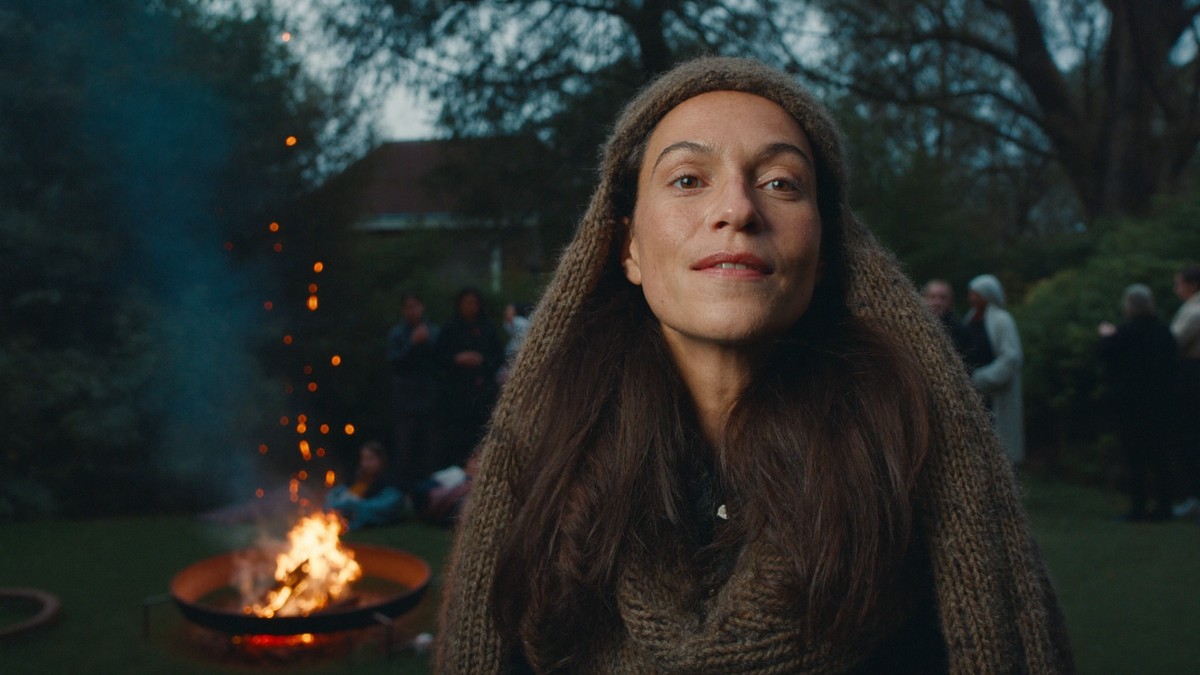
Then tie it up and cover it. A low bun or a plait under a wool or cotton beanie, a knitted scarf, or the hood of a coat covers most of the surface. For curly or textured hair, a silk or satin scarf under the hat stops the wool roughing up the curl pattern. Skip hairspray, dry shampoo and any sticky wax or paste: they form a film that traps soot against the strand.
While you are at the display
Work out which way the wind is blowing before you settle, and stand so the smoke drifts away from you. On a still night it pools near the ground, so higher up a slope beats the bottom of a field. When the wind changes, move.
Keep the hat on and the hair tied for the whole evening, including the walk home. The temptation is to take it off once the fire dies down, but the fireworks usually follow the bonfire and their fallout is the part that reaches the scalp.
When you get home
Take the hat off outside the bedroom and put it straight in the wash. Rinse hair under warm, not hot, running water for a full minute before any shampoo goes near it: a good proportion of the residue is loose and simply rinses away.
Then one wash. On a heavy night, or on bleached or coloured hair that has taken on the smell, a clarifying shampoo does it in one go; the apple cider vinegar shampoo in our Aveeno Clarify and Shine shampoo review is the type to reach for. Concentrate on the scalp with your fingertips, let the lather run through the lengths, and do not go back for a second round. On a light night, or on hair that is already dry, your normal gentle shampoo is enough.
Condition the lengths every time. A clarifying wash lifts the cuticle and a conditioner lays it back down. If hair is very dry or coloured, swap the conditioner for a five-minute mask; the banana mask in our Garnier Hair Food review is the sort of quick multi-use mask that suits a late night.
Finally, no heat. Squeeze the water out, wrap hair in a microfibre towel and let it air dry as far as you can before bed. A hairdryer or straighteners on hair that has just been clarified is where the real dryness comes from. A proper wrap, like the one in our microfibre hair towel wrap review, takes enough water out that thick hair is sleepable in half an hour.
What goes wrong and how to recover
Sleeping in it. The most common mistake. Residue moves from hair to pillowcase to face and scalp overnight, and the smell gets into the bedding. Recovery: wash in the morning as above, change the pillowcase, and do not add a second clarifying wash to make up for it.
Over-clarifying dry or coloured hair. Two or three clarifying washes in a week strip the oils that dry winter hair needs and can dull fresh colour. Recovery: stop the clarifying shampoo, use a mask in place of conditioner for the next two washes, then go back to your usual routine. The dullness lifts within a week.
Hot tools the next morning. Straightening or blow-drying hair that was clarified late the night before cooks whatever moisture is left. Recovery: a leave-in on damp hair before any heat for the rest of the week, and a heat-free day where you can manage one.
Ignoring the scalp. Washing only the lengths and leaving residue at the roots is what causes the itch two days later. Recovery: one scalp-focused wash with fingertips, then a light scalp oil or soothing serum if it is still tight. If it is sore or flaking after a week, that is not smoke any more and worth a pharmacist's opinion.
A synthetic hat. Acrylic and polyester beanies build static on dry hair, so the hat comes off to a halo of frizz, and they melt rather than char if an ember lands on them. Recovery: brush through with a drop of oil on your palms. Longer term: buy a wool one.
Frequently asked questions
Does bonfire smoke damage hair?
Bonfire smoke does not destroy hair on the night, but the soot and combustion residue it leaves behind dry out the strands and irritate the scalp if left in. The lingering smell is the obvious sign; dryness and dullness follow a day or two later. Wash it out the same night and there is nothing to recover from.
Can I just use dry shampoo instead of washing after a bonfire?
Dry shampoo masks the smell for a few hours but leaves the residue on the scalp, and powder on top of soot makes the next proper wash harder. Use it only to get through a morning if you could not wash the night before, then wash as soon as you can.
How do I get the smoke smell out of hair without washing it?
You cannot fully remove it without water, because the smell comes from particles held on the strands rather than a surface scent. Brushing through and airing hair outside will reduce it, but only a wash removes it. If washing is impossible, tie hair up and away from your face so you notice it less.
Is a clarifying shampoo too harsh for coloured or bleached hair after Bonfire Night?
One clarifying wash after a heavy smoke night is fine for most coloured hair, provided you follow it with a conditioner or mask and do not repeat it for a couple of weeks. Bleached hair is more porous and holds smoke more stubbornly, so it needs both the clarifying wash and the conditioning step more than most.
What is the best hat to wear to a bonfire to protect hair?
A wool or cotton beanie, or a knitted scarf wrapped over the hair, beats anything synthetic. Acrylic and polyester build static against dry hair and melt rather than char if an ember lands on them, while natural fibres do neither. A silk or satin scarf under a wool hat is the kindest combination for curly or textured hair.
Should I wash my hair the night of Bonfire Night or the next morning?
The same night, every time. Sleeping in smoky hair transfers residue to your pillowcase and then back on to your face and scalp for hours, and it gives the dryness a head start. If it is very late, a quick rinse and a wrap in a towel is still better than going to bed with it in.