
Snail Mucin and Hyaluronic Acid: Which Goes First? (The Order That Actually Hydrates)
Published 15 June 2026
Snail mucin and hyaluronic acid are two of the most loved hydrators in any K-beauty routine, but stack them in the wrong order and your skin can feel tight by lunchtime. This guide explains which goes first, why damp skin matters, and how to seal it all in.
We earn commission from qualifying Amazon purchases. It costs you nothing and does not affect what we recommend.
Quick Answer
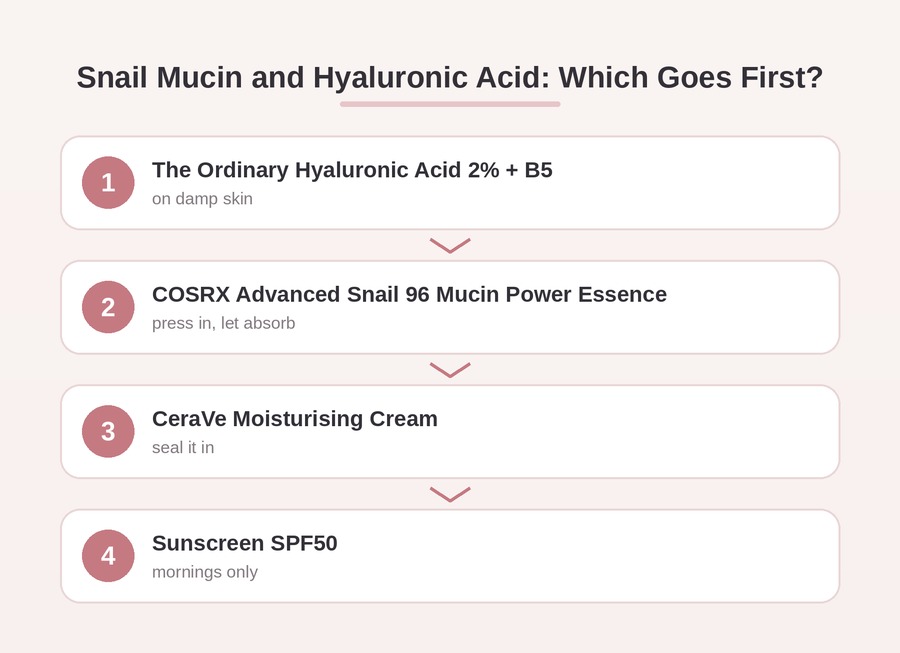
Hyaluronic acid goes first, snail mucin second. Apply your HA serum to slightly damp skin so it can grab that surface water, then layer snail mucin essence on top to add hydration and help hold it in. Always finish with a moisturiser to seal everything, otherwise both humectants can dry your skin out.
The diagram below shows the full order at a glance.
The Short Answer: Thinnest Layer First, Every Time
For most routines, hyaluronic acid serum goes on first and snail mucin essence goes second. The logic is simple: HA is the thinner, more water-loving layer, and it works best when there is surface moisture for it to grab onto.
Snail mucin then sits on top. It is slightly thicker, has a soft slip to it, and forms a light film that helps slow water loss from the HA underneath. That film is part of why so many people describe a dewy, glass-skin finish after using it.
You can absolutely use snail mucin with hyaluronic acid. There is no clash between the two, and both are gentle enough for daily morning and evening use. The order matters more than whether to combine them at all.
One honest caveat before we go further. Neither product is a moisturiser on its own. They pull water toward the skin, but without a cream on top to seal it, that water can evaporate and leave you feeling drier than when you started. We will cover the sealing step in detail below.
 Featured
15% OFF*Limited offer
One Sunday. A week of food, sorted.
23 high-protein recipes, cycle-synced for women who lift.
23 recipes · 60-page PDF · Instant download
£19.20 £16.32
See it on Etsy*Seller's discount on Etsy - may end at any time.
Why hyaluronic acid goes first
Hyaluronic acid is a humectant, which means it draws water toward itself like a sponge. The catch is that it grabs the nearest available water, and on dry skin in a dry room, the nearest water can be the deeper layers of your own skin. That is the opposite of what you want.
This is why the most useful tip from reviewers is to apply HA to damp skin. One long-time user put it plainly: apply a few drops to damp skin immediately after cleansing to prevent flash drying, then seal it with a cream. Damp skin gives the HA water to hold instead of stealing it from below.
Snail mucin essence is more forgiving and a touch heavier in feel. Putting it second means it can settle over that freshly hydrated layer rather than blocking the HA from reaching damp skin. Reviewers consistently describe the COSRX essence as something that layers well under moisturiser and sunscreen, which fits its role as a middle step.
There is a K-beauty tradition of applying an essence before serums, and some people do prefer snail mucin first. If your snail mucin feels lighter and more watery than your HA serum, flipping the order is fine. For the popular COSRX and The Ordinary pairing below, HA first is the more reliable choice because the HA needs that damp-skin contact most.
Can you layer snail mucin and hyaluronic acid?
Yes, and they are a natural pair. Both are water-based, fragrance-free in the versions we recommend, and free of strong actives that would react badly together. Layering them simply stacks two sources of hydration.
The trick is to keep each layer thin and to wait a few seconds between them. Piling on too much product at once is what leads to pilling, those little rolls of product that ball up under your fingers.
The full layering routine, step by step
Here is the order that hydrates without leaving a sticky mess. It works morning and night, with sunscreen added as the final daytime step.
Step 1: Cleanse. Wash with a gentle cleanser and pat your skin so it is still slightly damp. Do not towel it completely dry. That residual moisture is what makes the next step work.
Step 2: Hyaluronic acid serum on damp skin. Press two to three drops over your face while it is still damp. The 2026 version of The Ordinary Hyaluronic Acid 2% + B5 now includes ceramides and pro-vitamin B5, which help lock moisture in and support the skin barrier. Reviewers with combination and sensitive skin say the updated formula is smoother and far less tacky than the original, and that it layers cleanly under everything else.
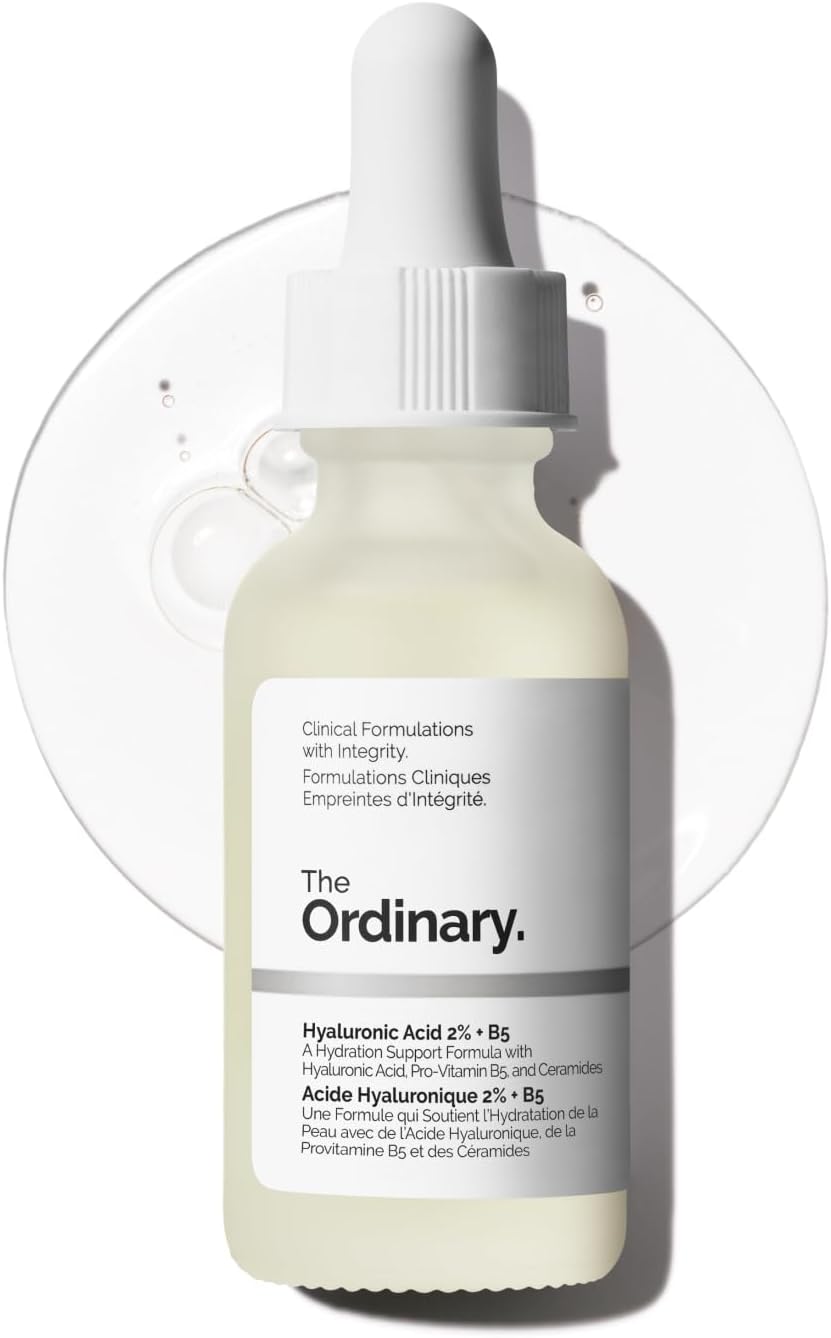
At around £7 for 30ml, it is one of the most affordable ways to add a hydration layer, and a few drops cover the whole face. If you want the full picture on the reformulation and who it suits, our review digs into more than 30,000 ratings.
Step 3: Snail mucin essence. Once the HA has sunk in for about thirty seconds, take one to two pumps of snail mucin and press it gently over your skin. Pressing rather than rubbing helps it absorb, a tip echoed by reviewers who said the essence takes a moment to sink in and that pressing it in speeds things up.
The COSRX Advanced Snail 96 Mucin Power Essence is the cult pick here, built around 96% snail secretion filtrate. Reviewers describe it as lightweight and watery with a slight slip, settling into a soft glow rather than surface shine. Several note it sits beautifully under makeup and pairs naturally with a moisturiser on top.
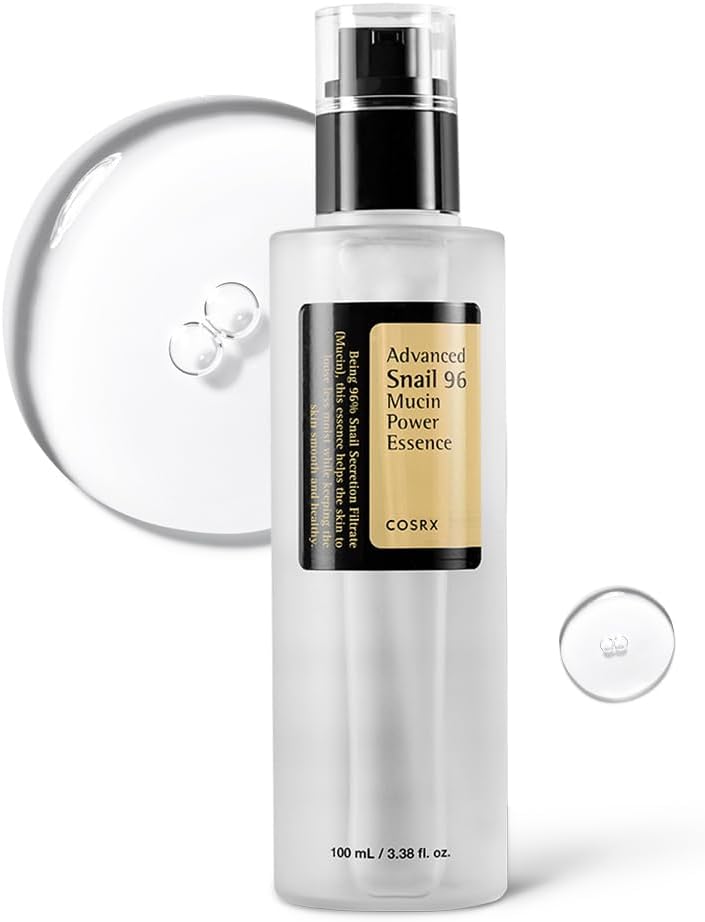
It is worth a patch test first. The essence splits opinion: most users with dry or sensitive skin find it soothing, but a small number report stinging or breakouts, so trying it on your inner arm for a couple of days is sensible. At around £12 for a generous 100ml bottle, it lasts months.
Step 4: Seal with a moisturiser. This is the step people skip, and it is the one that decides whether your skin stays hydrated. A moisturiser is the lid on the jar: it traps the water your humectants pulled in so it cannot evaporate into the air, which matters even more in a centrally heated UK home in winter.
The CeraVe Moisturising Cream is a dependable seal because it brings three ceramides plus its own hyaluronic acid, and its rich texture forms a proper barrier. Reviewers with very dry or barrier-damaged skin describe applying it thickly to protect and rebuild their skin, and praise how it absorbs without a greasy or sticky residue despite being a thick cream.
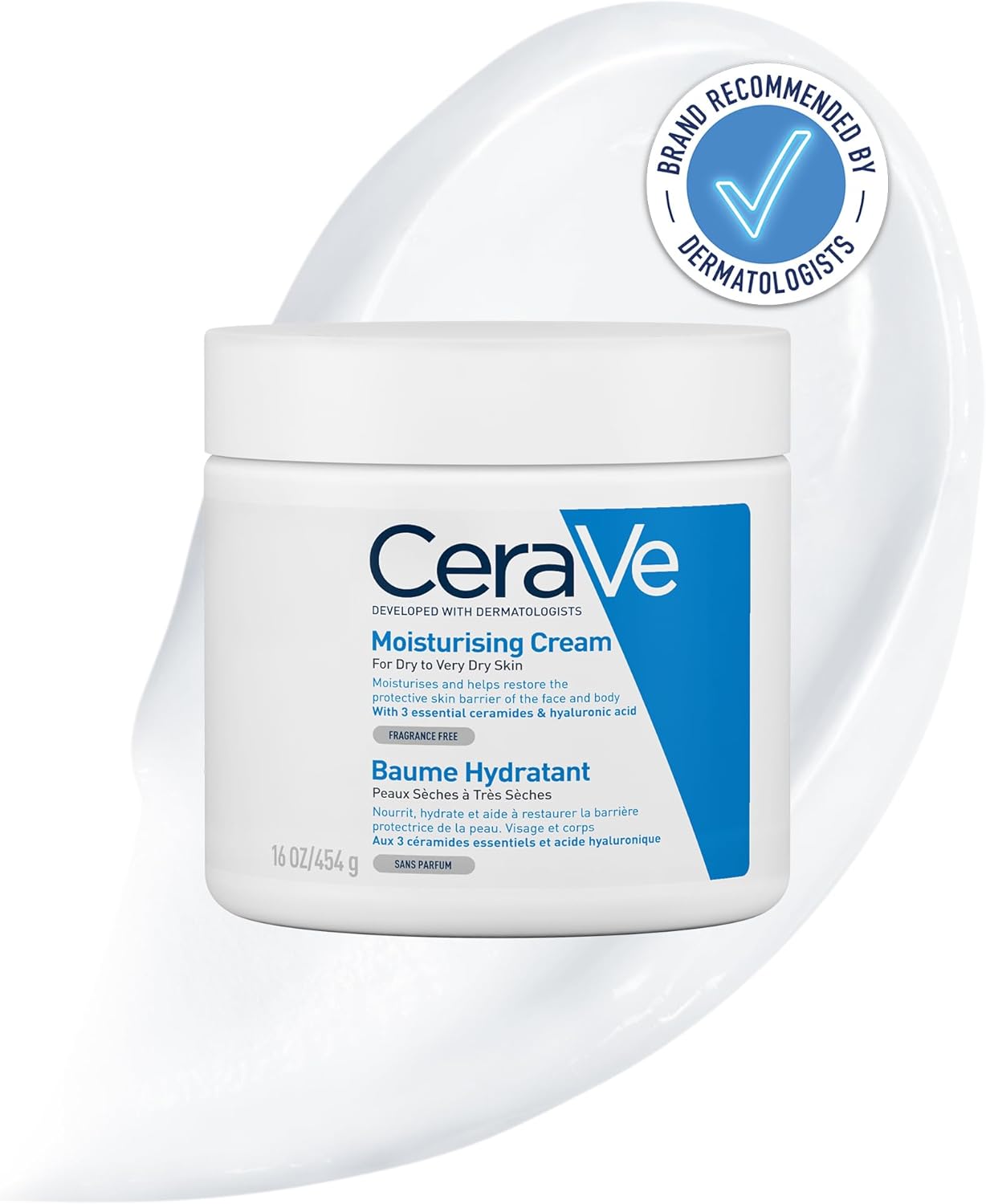
The tub is enormous and works on face and body, which is part of why it is such good value at around £11. If you have oilier skin you may prefer a lighter lotion, but for dry to very dry skin this cream is hard to beat as the final layer.
Step 5 (mornings only): Sunscreen. Finish your daytime routine with SPF over the moisturiser. Hydration and sun protection are the two habits that do the most visible good over time, so do not let the layering replace your sunscreen.
Common layering mistakes that leave skin tight
The biggest mistake is applying hyaluronic acid to bone-dry skin in a dry room. With no surface water to grab, HA can draw moisture up from deeper layers, which is exactly why some people complain a serum left them feeling tighter. Damp skin fixes this.
The second mistake is stopping after the snail mucin. Both products are humectants, and a humectant without an occlusive on top is only half a routine. Skipping the cream is the most common reason people say snail mucin dried them out, when the essence was never meant to be the last step.
The third is rushing. Layering too quickly or using too much product causes pilling, where the layers roll up instead of absorbing. A few reviewers found their moisturiser pilled if they applied it instantly, and that waiting ten to fifteen seconds between layers solved it. Thin layers, short pauses, gentle pressing.
One last point on honesty. If your skin stings, breaks out, or peels after adding snail mucin, stop and simplify your routine rather than pushing through. A small share of users react to snail secretion filtrate, and persistent irritation is worth raising with a pharmacist or GP.
Frequently Asked Questions
Do you use snail mucin before or after hyaluronic acid?
Use hyaluronic acid first, then snail mucin. Apply your HA serum to slightly damp skin so it can pull in that surface water, then layer snail mucin essence on top to add more hydration and help hold the first layer in place. Finish with a moisturiser to seal everything in.
Can you layer snail mucin and hyaluronic acid?
Yes, snail mucin and hyaluronic acid layer well together with no ingredient clash. Both are gentle, water-based hydrators, so stacking them simply gives you more moisture. Apply the thinner, more watery product first and let each layer settle for a few seconds before the next.
Does snail mucin already contain hyaluronic acid?
Many snail mucin essences do contain a small amount of hyaluronic acid. The COSRX Advanced Snail 96 Mucin Power Essence lists sodium hyaluronate, a form of HA, on its ingredients. The amount is low, so a dedicated HA serum still adds a meaningful hydration boost if your skin needs more.
Should you apply snail mucin to wet or dry skin?
Apply snail mucin to slightly damp skin, not soaking wet and not bone dry. A little moisture helps it spread and absorb, which reviewers say reduces the sticky feeling. If your hyaluronic acid serum went on first, your skin will already be at the right level of dampness.
What do you put on after snail mucin?
After snail mucin you apply a moisturiser to seal in the hydration, then sunscreen in the morning. Snail mucin and hyaluronic acid both draw water in, but they need an occlusive cream on top to stop that water evaporating. A ceramide cream like CeraVe is a reliable final layer.
Can you use snail mucin and hyaluronic acid every day?
Yes, both are mild enough for twice-daily use, morning and night. They contain no exfoliating acids or retinoids, so they will not over-exfoliate the skin. If you are also using stronger actives, apply those at the relevant step and keep these two as your hydration layers.