
NIVEA Derma Skin Clear Wash Gel: A Salicylic Acid Cleanser With a Two-Tier Reaction
We earn commission from qualifying Amazon purchases. It costs you nothing and does not affect what we recommend.
Most cleansers at this price point are a coin flip. NIVEA Derma Skin Clear Wash Gel is something stranger: a salicylic acid wash that buyers either credit with clearing years of breakouts or blame for setting their skin on fire. We pulled apart the reviews to figure out which group you're likely to land in.
- What You Are Actually Buying for £2.50
- The Group This Wash Was Quietly Built For: Teenagers and Peri-Menopausal Skin
- Why Some Buyers Walk Away Within a Week
- How to Use It So You Land in the Right Camp
- The Pump Problem Amazon UK Cannot Seem to Fix
- How It Stacks Up Against the Obvious Alternatives
- What the Number on the Star Rating Actually Means Here
- Quick Answers Before You Buy
£2.50 for a 150ml bottle of salicylic acid cleanser sounds like the kind of pricing mistake Amazon will quietly fix overnight. It hasn't, and that low number explains a lot about why this NIVEA wash sits on 3,214 reviews and a 4.5-star average while plenty of pricier blemish washes from the actives-heavy crowd never get close.
What the headline rating hides is a much more interesting split. When we worked through 100 of the most recent reviews, the average actually drops to 4.20 stars, with 70 percent rating it five stars and 15 percent rating it one or two. The middle barely exists. People either repurchase it forever or throw it in the bin within a week.
The good news: the reviews make it pretty clear which camp you're going to land in before you spend the £2.50. The less good news: it depends on factors NIVEA doesn't really mention on the bottle.
What You Are Actually Buying for £2.50
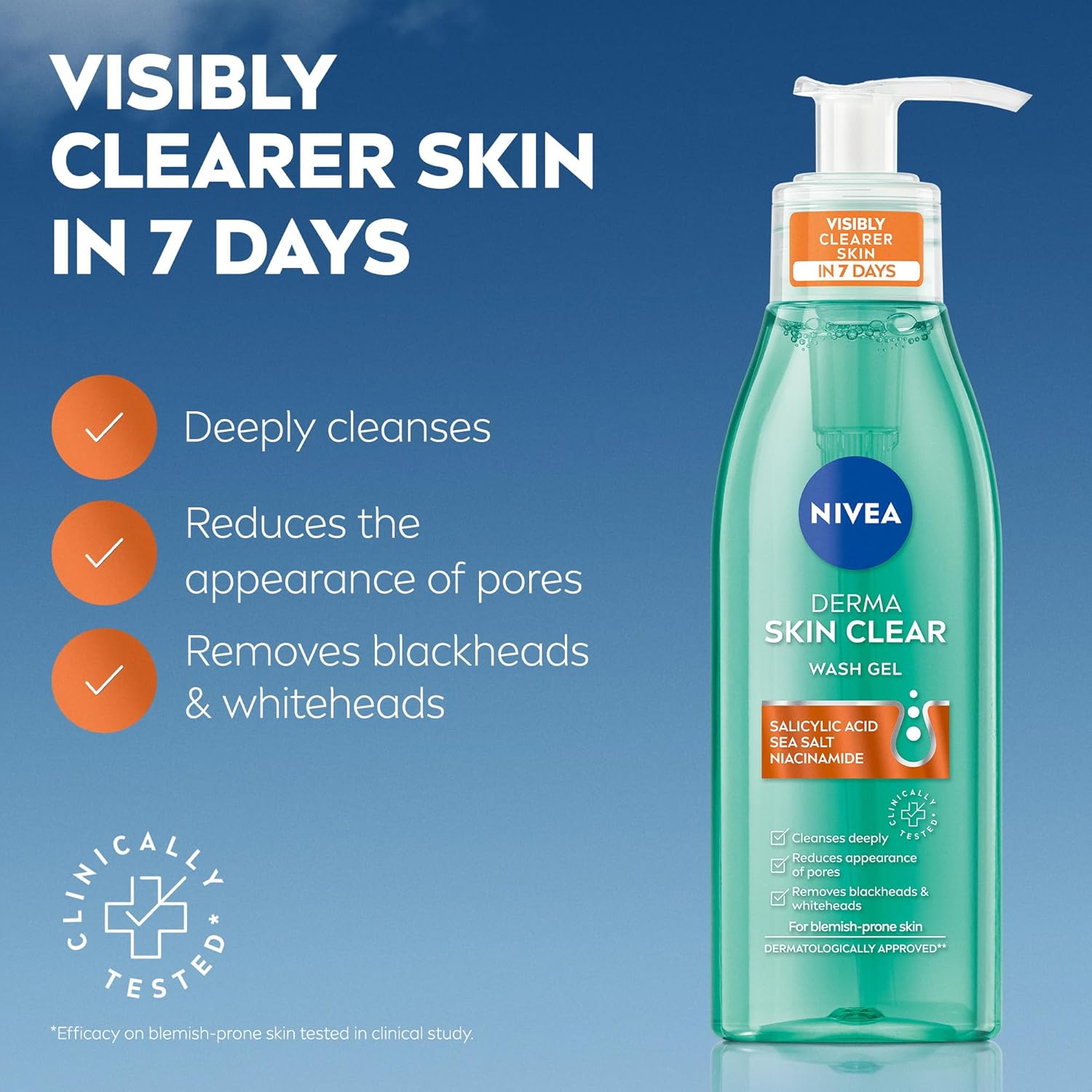
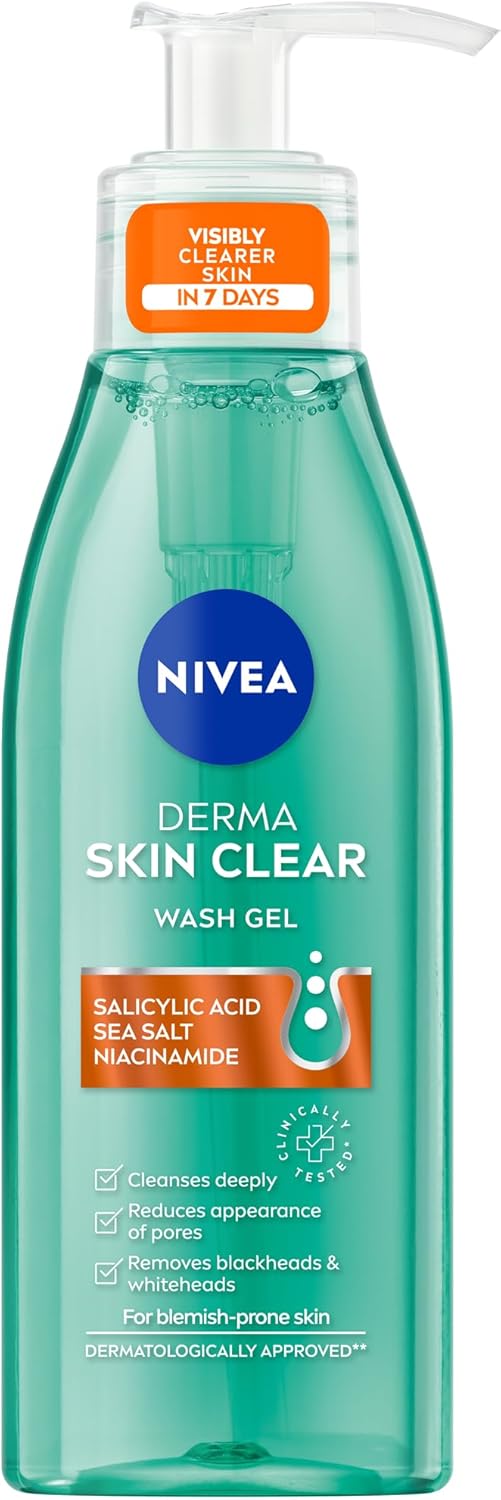
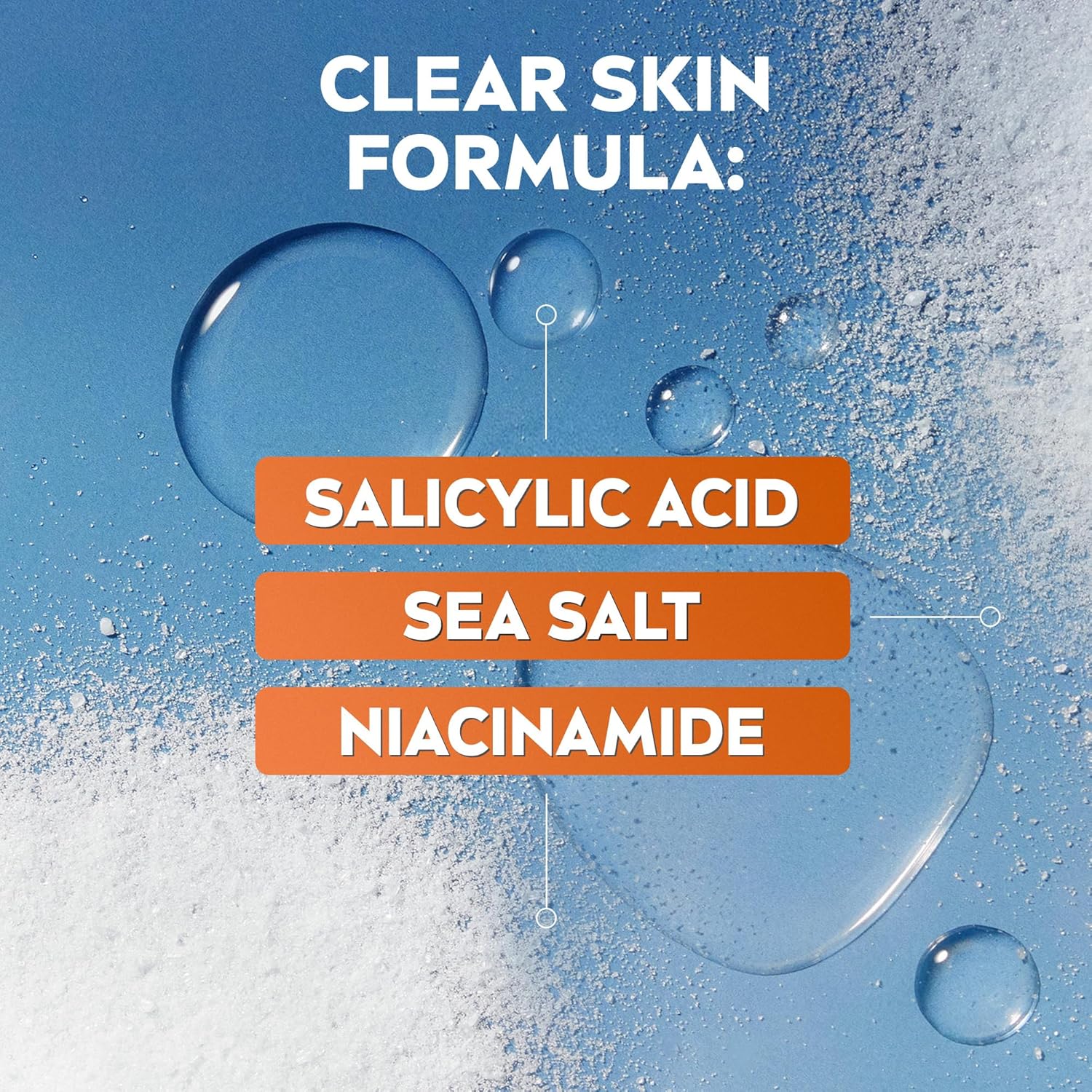
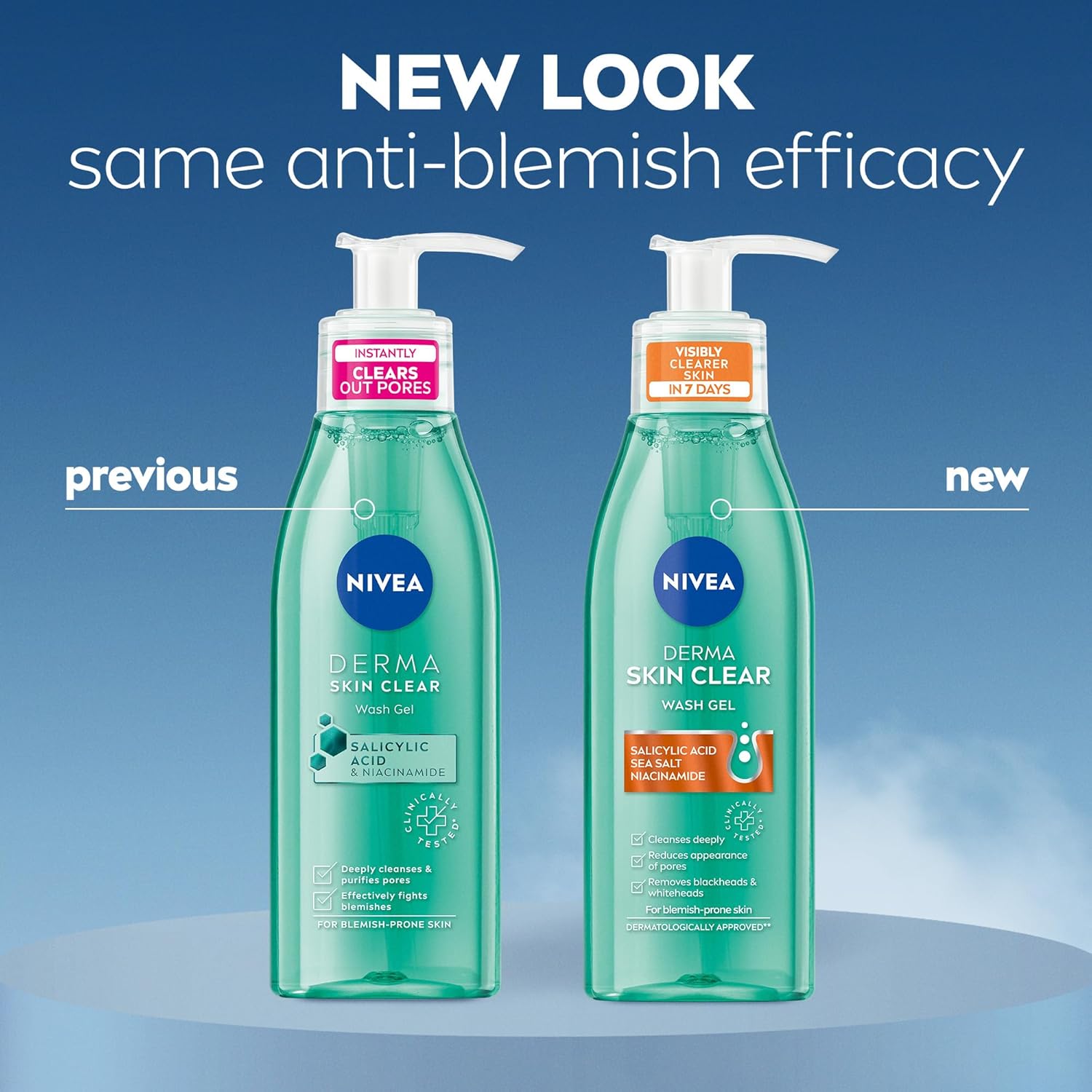
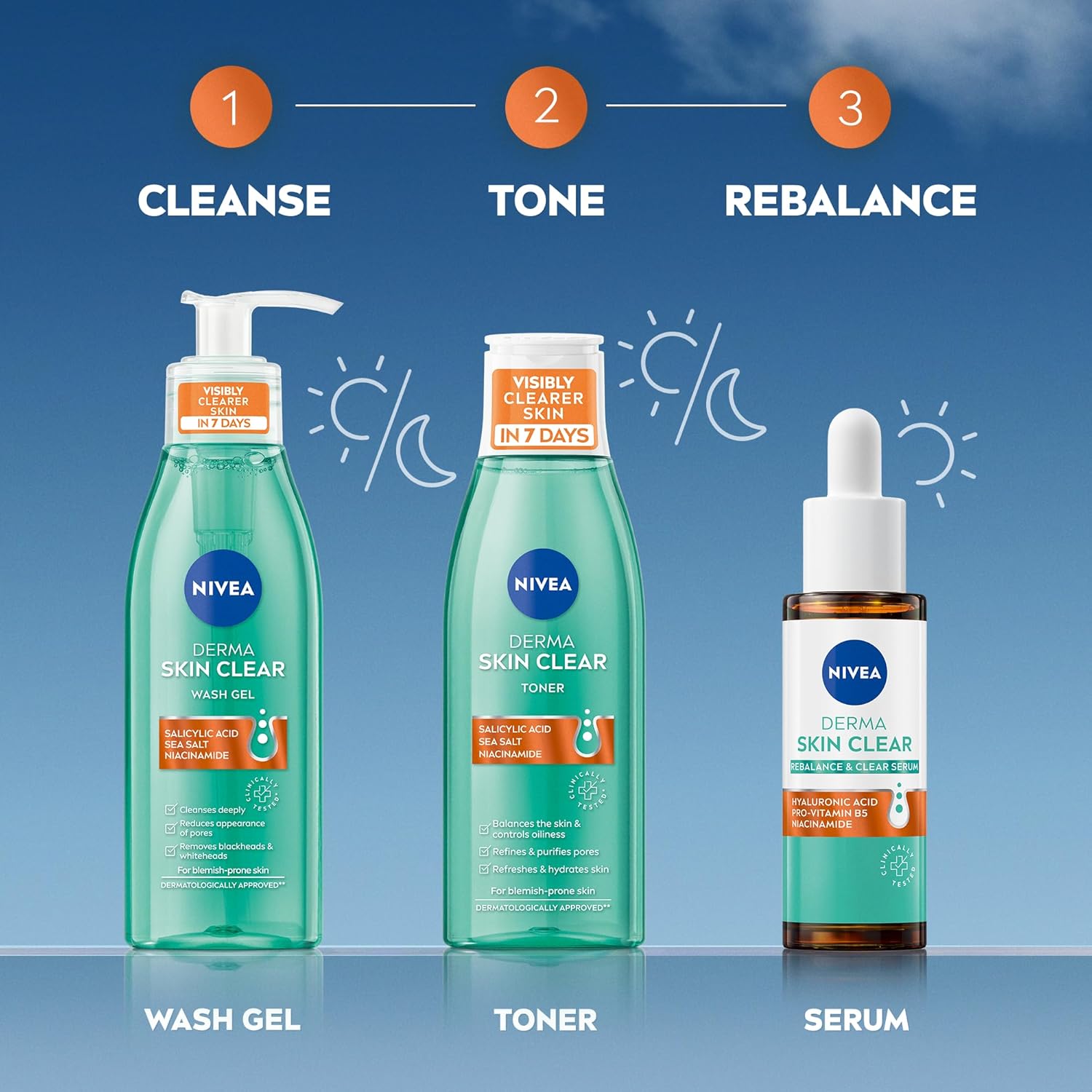
This is a 150ml pump-bottle gel cleanser from NIVEA's Derma Skin Clear range, made by Beiersdorf in the UK and aimed squarely at blemish-prone skin. The active stack is short and very deliberate: salicylic acid (the BHA exfoliant that dissolves the gunk inside pores), niacinamide (the all-rounder that calms inflammation and helps with oil regulation), and sea salt for mild physical cleansing.
The full ingredients list runs to ten items: aqua, sodium cocoamphoacetate, propylene glycol, sodium laureth sulfate, sodium chloride, citric acid, salicylic acid, maris sal, niacinamide, sodium benzoate. That's it. No fragrance listed, which matches what reviewers with sensitive noses report ("no perfume or alcohol so a face wash I'll keep going back to").
NIVEA's directions: massage onto a wet face twice a day, avoid the eyes, rinse with lukewarm water. They claim visible results in seven days for blemish-prone skin and back it up with dermatological testing. Whether your skin agrees with that promise is the whole point of the next few sections.
 Featured
15% OFF*Limited offer
One Sunday. A week of food, sorted.
23 high-protein recipes, cycle-synced for women who lift.
23 recipes · 60-page PDF · Instant download
£19.20 £16.32
See it on Etsy*Seller's discount on Etsy - may end at any time.
The Group This Wash Was Quietly Built For: Teenagers and Peri-Menopausal Skin
If you read the five-star reviews back to back, a pattern emerges that NIVEA's marketing barely acknowledges. The repeat buyers are overwhelmingly mums buying it for teenage children, and women in their forties navigating hormonal breakouts.
One review captures both at once: "This is for my teenagers and my peri menopausal outbreaks. You don't need a lot. Easy to use and leaves your skin feeling very clean, use twice a day. I love Nivea so it's my go to brand."
Another buyer reports being on her eighth bottle for her teenage daughter: "When you have a teenager with blemish-prone skin, you usually end up with a shelf full of half-used bottles that didn't work. This is the only one my daughter insists on. If we run out, she notices within 24 hours, it's become the literal foundation of her skincare routine." That kind of repeat-buy loyalty for a £2.50 cleanser is unusual, and it's not coming from once-in-a-lifetime acne sufferers, it's coming from the families who've already tried four other things.
A third buyer aimed it at her preteen: "This is brilliant face wash for pre teen hormonal skin. Best used only 2/3 times weekly but great for when acne starts appearing." The 2/3 times weekly note is worth reading twice, more on the over-use trap further down.
Why Some Buyers Walk Away Within a Week
The one and two-star reviews are clustered around two specific problems, and they're worth taking seriously rather than waving away as user error.
The first is breakouts that get worse, not better. "My skin was really healthy until I started using this product. 24 hours after using it to wash my face I started breaking out which hasn't happened in almost a year, I would not recommend this product." Another buyer: "After using this face wash for a few weeks, I started getting huge zits on my face like the ones I haven't seen since puberty." A third: "It made me really break out on my neck really badly. I've never had that before."
The second is dryness, sometimes severe. "It is very drying. I have oily skin and it dried out my skin so much that even moisturising lotions didn't help much. There were dry spots all over my face right after use." One buyer with otherwise robust skin called it "incredibly harsh" and pointed people toward CeraVe or L'Oreal alternatives in the same price band.
What's going on? Salicylic acid is doing exactly what salicylic acid does, particularly when paired with sodium laureth sulfate (a strong surfactant) and used twice a day on someone whose skin barrier wasn't asking for that level of intervention. The breakouts are likely a mixture of true purging (which can happen with BHAs in the first 2-4 weeks) and barrier disruption that lets opportunistic spots in. Either way, twice-daily use straight out the gate is too aggressive for a meaningful slice of buyers.
NIVEA Derma Skin Clear Wash Gel 150ml
Salicylic acid and niacinamide in a sulphate-based gel cleanser, made for blemish-prone skin and priced like an impulse buy. Best for hormonal and teen breakouts, not for compromised skin barriers.
How to Use It So You Land in the Right Camp
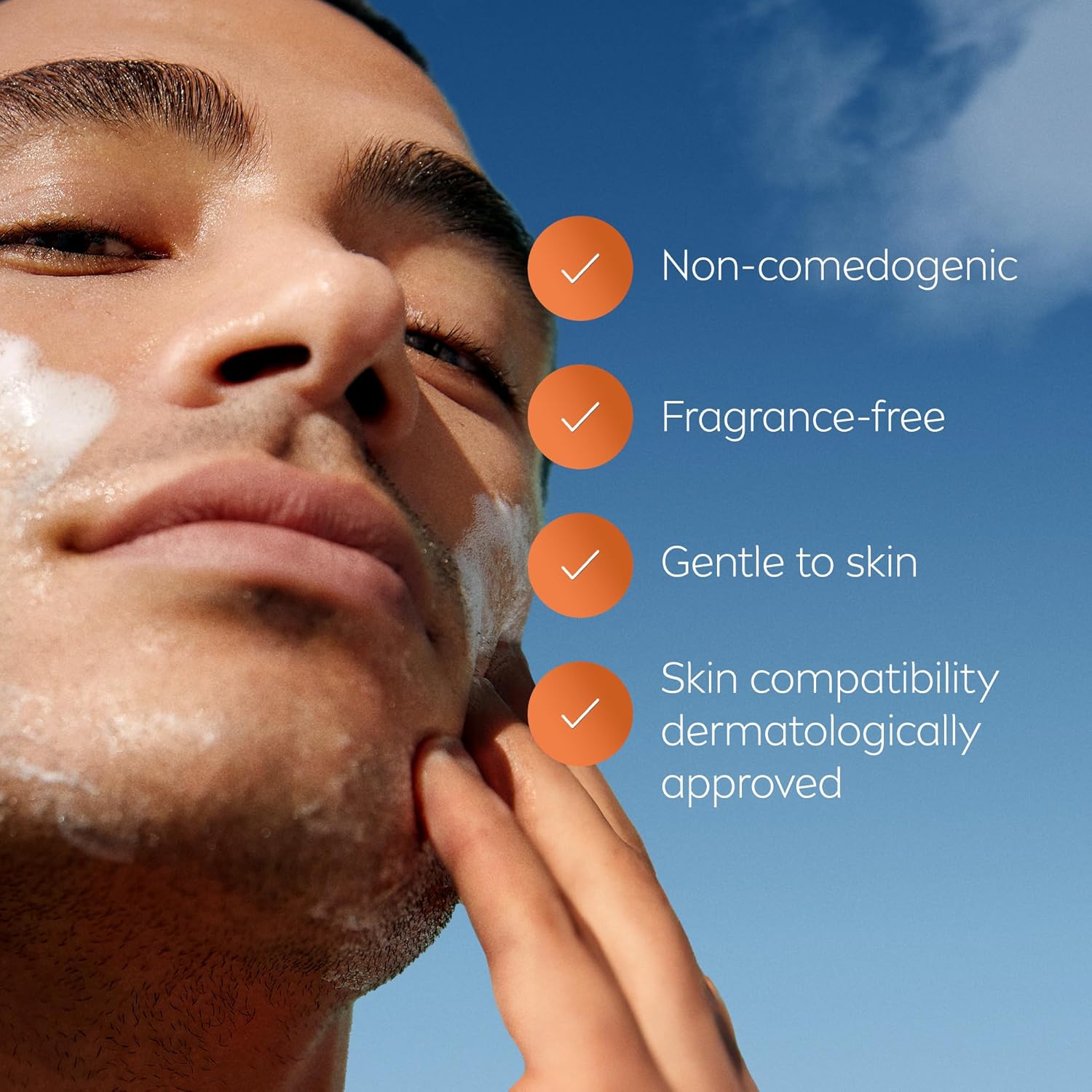
The product instructions say twice daily, morning and evening. The five-star reviews from people with sensitive or reactive skin almost universally describe doing something different. Three patterns emerge from the buyers who got results without the side effects.
First, start at 2-3 times a week, not twice a day. The mum buying it for her preteen specifically calls this out, and several adult repeat-buyers describe building up gradually. If your skin tolerates that, move to once daily before considering the full twice-daily protocol.
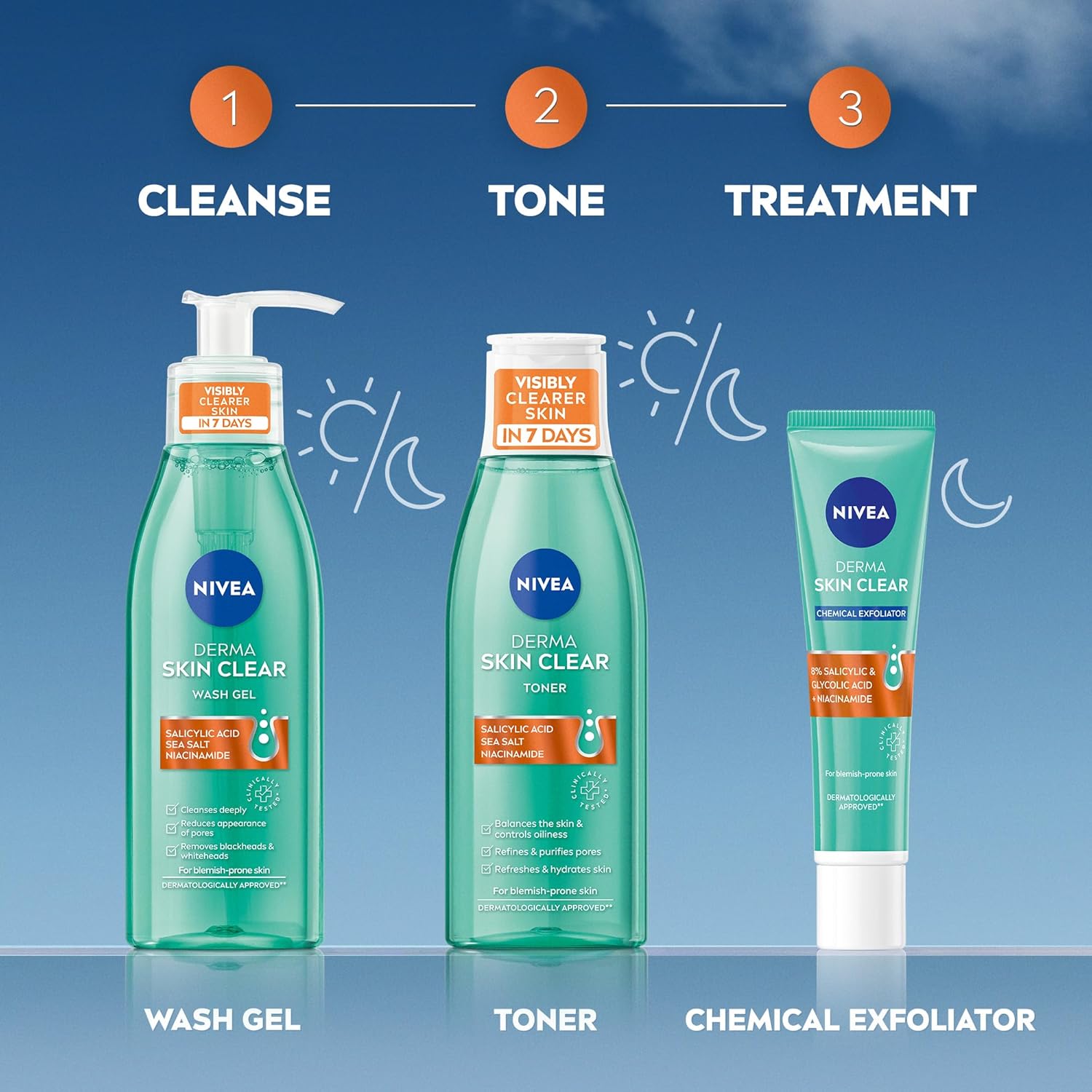
Second, follow with a serious moisturiser. One repeat buyer's full routine: "I use 2 pumps twice a day and its made such a difference... I also use nivea q10 serum after then Roche de Posay vitamin c serum then my moisturiser. Works for me!" Another stacks it with a separate Derma Skin Clear toner before applying serum. The buyers who report dryness are almost never describing what they layered on top.
Third, if you're using it on body acne (a few buyers do), don't expect miracles on the back: "I used this on my back for weeks and it hasn't really changed the appearance of my skin, however it does make your skin feel very clean." Salicylic acid struggles to dwell long enough on rinsed body skin to do meaningful work, you usually need a leave-on BHA for that.
The Pump Problem Amazon UK Cannot Seem to Fix
This needs flagging because it's not occasional, it's a steady drip across the recent reviews. Roughly five percent of the 100 reviews we worked through complain about the bottle arriving without its pump head, with the cap broken, or leaking in transit. "I haven't used it yet but when I opened the package, there is no pump on the top as displayed in the picture. Really not happy, I can't return it because policies. Won't be ordering again even if it is good for my skin."
Other versions of the same complaint: "Arrived without the pump head part on the top." "Cap was not properly lock." "It came already broken and missing the dispenser part." "The item was delivered without a pump, making it unusable. Cannot replace or refund."
This looks like a packaging design issue (a separate pump head that isn't reliably secured during shipping) combined with Amazon's variable returns experience for opened personal care items. If you're ordering, check the box on arrival before storing it, and don't wait days to flag a missing pump if you want a replacement, return windows on these items are unforgiving.
How It Stacks Up Against the Obvious Alternatives
At £2.50 for 150ml the closest comparisons buyers actually mention are CeraVe (around £10-12 for similar size) and L'Oreal's blemish wash range. Two reviewers with reactive skin specifically said they preferred those after struggling with the NIVEA, while a different reviewer switched the other way after finding her CeraVe cream too expensive: "My mom has oily skin and usually uses products from Nivea. I had bought a cream from CeraVe before, but this one worked just as well for her and was much more affordable."
What you're really paying for at higher price points isn't usually a stronger active, it's a gentler delivery system. The CeraVe Foaming Cleanser uses a milder surfactant base and adds ceramides; the La Roche-Posay Effaclar Gel is similarly buffered. If you've already had bad experiences with strong sulphate-based gel cleansers, the £2.50 saving here probably isn't worth re-running the experiment.
If you're new to salicylic acid cleansers and have moderately oily or hormonally breaking-out skin, the price difference makes this a sensible first try. The downside risk is one wasted £2.50 bottle. The upside, if it works, is a routine staple that lasts months because most reviewers only need 1-2 pumps per use.
What the Number on the Star Rating Actually Means Here
A 4.5-star average across 3,214 reviews looks definitive until you see how the recent 100 actually distribute. Seventy percent at five stars is a strong endorsement, but ten percent at one star and another ten percent at three or below is more polarisation than you usually see at this price point for a household brand.
What pulls the average up is brand loyalty (Nivea has been in British bathrooms for generations and gets benefit-of-the-doubt ratings from long-time buyers), repeat purchase patterns from the teen/perimenopausal segment, and the simple reality that £2.50 is not enough money to be furious about even when it doesn't work.
What pulls it down is a small but real cluster of negative reactions, a recurring packaging problem, and reviewers who tried it for the wrong skin concern ("travel size, not good quality", it isn't travel size, that buyer was just disappointed by the bottle look at the price).
Our rating: 4.0 out of 5. The product does what it claims for the audience it's actually for, the price is unbeatable for an actives-led cleanser, and the negative experiences are real but largely predictable from the ingredient list. We'd recommend it strongly for first-time salicylic acid users with hormonal or oily breakouts, and steer dry or barrier-compromised skin types toward something gentler.
Quick Answers Before You Buy
Will it work on adult hormonal acne? The reviews suggest yes, particularly for the perimenopausal breakout pattern (jawline, chin, sudden flares). Build up usage slowly.
Can my teenager use it? Yes, and they're arguably the target buyer. Start at 2-3 times a week and follow with a basic moisturiser.
Is it gentle enough for sensitive skin? Sometimes. Several sensitive-skin reviewers love it, several others found it too harsh. The lack of fragrance helps, the SLS surfactant doesn't. If your skin is already inflamed, this isn't the right starting point.
Can I use it as a body wash for back acne? The formula allows it (NIVEA describes it as suitable for face and body) but the rinse-off format limits how much salicylic acid can actually penetrate body skin. Manage expectations.
How long does one bottle last? Most repeat buyers report 2-3 months at twice-daily use with 1-2 pumps. At £2.50 that's a remarkable cost-per-day for an actives cleanser.
What if my pump arrives broken? It's a known issue. Photograph the unopened box, contact Amazon within the return window, and don't decant into another bottle until you've logged the complaint.
NIVEA Derma Skin Clear Wash Gel 150ml
Salicylic acid and niacinamide in a sulphate-based gel cleanser, made for blemish-prone skin and priced like an impulse buy. Best for hormonal and teen breakouts, not for compromised skin barriers.