
How to Reduce Puffy Eyes in the Morning: A UK Guide
Published 12 August 2026
A ten minute UK morning routine for puffy eyes: proper cold therapy, a two minute lymphatic massage and smarter breakfast choices, plus the evening habits that stop bags forming and the warning signs that need a GP.
We earn commission from qualifying Amazon purchases. It costs you nothing and does not affect what we recommend.
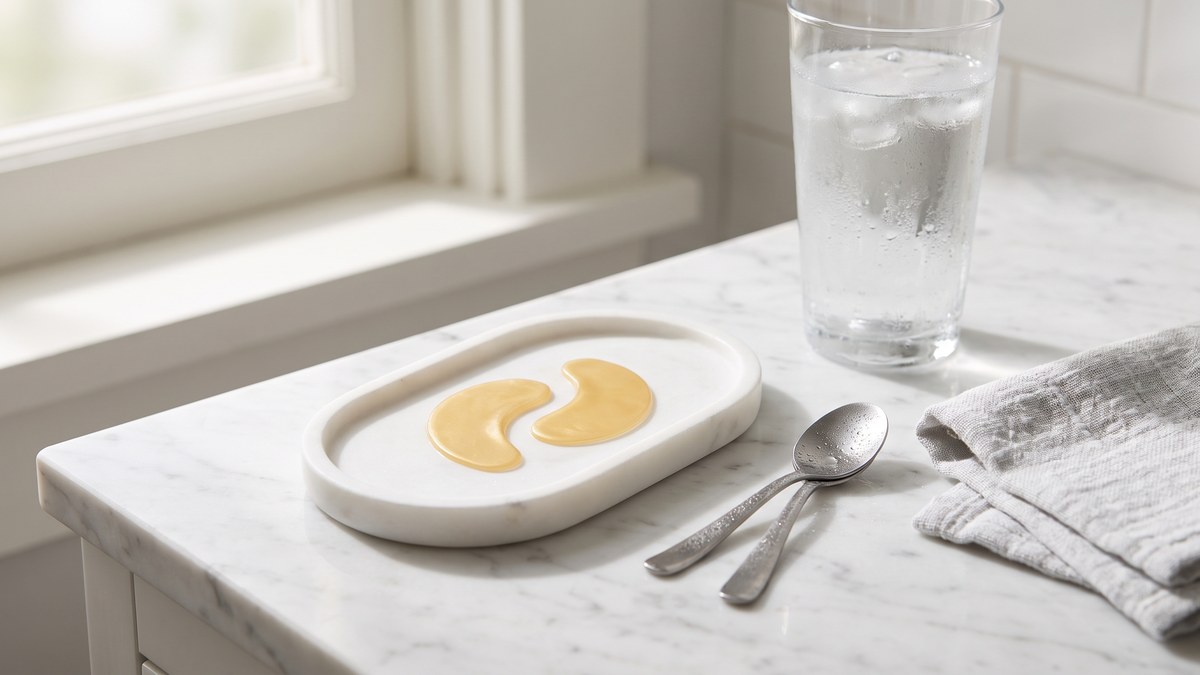
Quick Answer
Hold something genuinely cold from the fridge over closed eyes for three to five minutes, follow with a feather-light two minute drainage massage from the inner corners out to the temples, then drink a large glass of water and keep breakfast low in salt. Most overnight puffiness clears within the hour. Swelling that is painful, one-sided or still there in the evening needs a pharmacist or GP, not another remedy.
- Start With Cold: Five Minutes Before Anything Else
- Massage Away the Fluid in Two Minutes
- Drink Water First, Watch the Salt at Breakfast
- Set Tonight Up So Tomorrow Starts Better
- What Does Not Work for Puffy Eyes (Save Your Money)
- When Puffy Eyes Need a Pharmacist or GP
- Frequently Asked Questions
- Related Reading
Waking up with puffy eyes is close to universal. While you sleep you stop blinking, you lie flat for seven hours or more, and the fluid your lymphatic system would normally move along settles into the thinnest skin on your body, right under your eyes. Add a salty dinner, a couple of drinks or the UK pollen season and you get the full morning-bag effect staring back from the mirror.
The good news is that overnight fluid is the easiest kind of puffiness to shift, and about ten minutes of targeted effort speeds it up dramatically. This guide gives you a morning routine with actual timings, the evening habits that stop puffiness forming in the first place, an honest look at the remedies that do not earn their keep, and the small number of cases where puffy eyes deserve medical attention rather than a chilled teaspoon.
Start With Cold: Five Minutes Before Anything Else
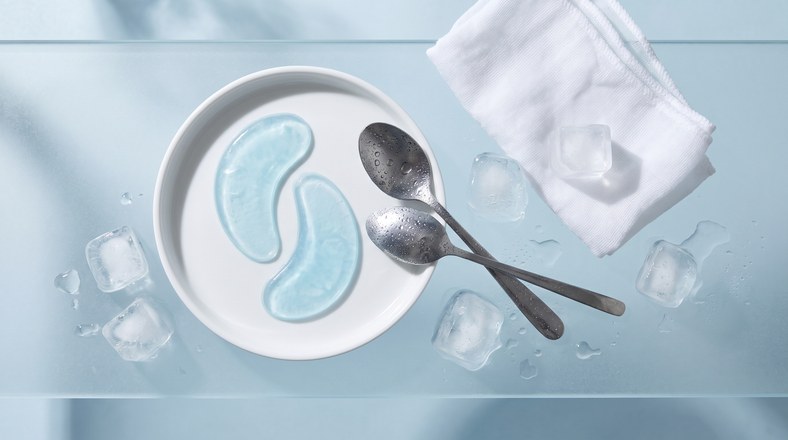
Cold is the fastest tool you have. It constricts the small blood vessels around the eyes and firms the tissue, which visibly deflates puffiness within minutes. The catch is that it needs to be genuinely cold: items straight from the fridge at around 4°C work far better than a splash of cold tap water, which in a UK summer can run closer to 20°C.
- Chilled teaspoons (free): keep two in the fridge door as standard. Press the backs gently against closed eyes for 30 seconds at a time, dipping them back into a glass of cold water between holds, for three to four minutes in total. Never use spoons from the freezer - metal that cold can stick to and damage the skin.
- A cold flannel: soak it in cold water, wring it out and lay it across both eyes for five minutes while you sit propped up. This is the best option after crying, when extra-watery tears have drawn fluid into the salty tissue around the eyes.
- Fridge-kept under-eye patches: the most practical choice on a work morning because they stay put while you shower, dress or make tea. Stored in the fridge, hydrogel patches hold their chill for a good 15 to 20 minutes.
Patches also do a second job: the gel layer floods the under-eye skin with moisture, softening the crepey texture that makes bags look more pronounced. These are the two we have tested and rated for this exact task.
 Featured
15% OFF*Limited offer
One Sunday. A week of food, sorted.
23 high-protein recipes, cycle-synced for women who lift.
23 recipes · 60-page PDF · Instant download
£19.20 £16.32
See it on Etsy*Seller's discount on Etsy - may end at any time.
Massage Away the Fluid in Two Minutes
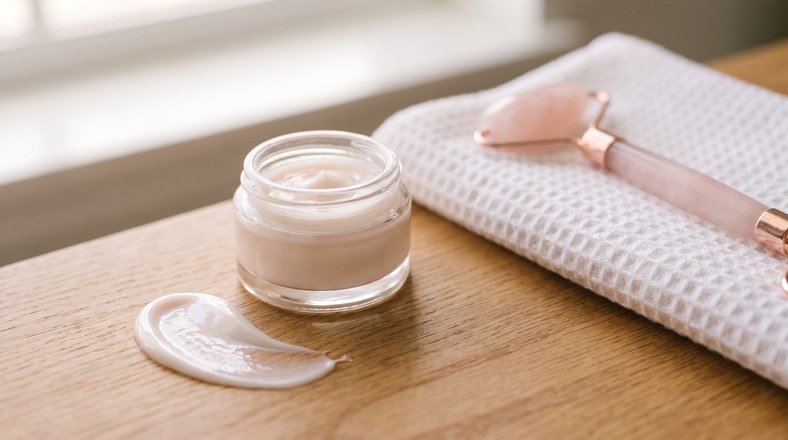
Cold shrinks the vessels; massage physically moves the remaining fluid on. Lymphatic drainage massage uses very light, slow strokes to push fluid from under the eyes towards the lymph nodes at the sides of the face and neck, where the body can clear it. Two minutes is enough, and the order matters:
- Apply a small amount of eye cream, eye serum or facial oil first. The skin under your eyes is around half a millimetre thick, and dry fingers drag it. You want glide, not friction.
- Place your ring fingers at the inner corners of your eyes, just below the tear ducts, and press gently for three seconds.
- Sweep slowly outwards along the bony rim under each eye towards the temples, pausing halfway to press and hold for a second. Repeat five times per eye.
- Finish each pass at the temple, then sweep down past the ear to the side of the neck. This last stretch is the drain itself, so do not skip it - five sweeps each side.
Pressure should be feather-light throughout. Lymph vessels sit just beneath the skin, and pressing hard flattens them rather than emptying them; if you can see the skin dragging, ease off. A chilled facial roller can stand in for your fingers, but it is a nice-to-have rather than a necessity.
Any light eye cream or serum works as your massage medium. Our tested pick below is a fast-absorbing serum with enough slip for the strokes, and it treats fine lines while you work.
Drink Water First, Watch the Salt at Breakfast
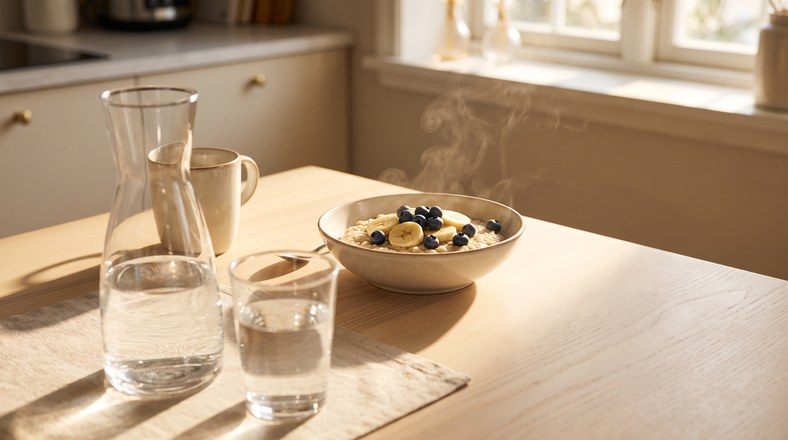
What you do at the kitchen counter matters as much as what you do at the bathroom mirror. Mild dehydration makes the body cling to water, including in the tissue around the eyes, so drink 250 to 500ml of water when you first get up rather than waiting for your mid-morning brew. One or two mugs of tea or coffee are fine alongside; at normal doses the diuretic effect is too weak to dehydrate a regular drinker.
Salt is the bigger lever. The NHS advises a maximum of 6g of salt a day, and a classic UK breakfast can burn through half of that before nine o'clock:
- Watch out for: bacon and sausages (a couple of rashers carry close to 2g of salt), baked beans, smoked salmon, halloumi and cheese, Marmite, and bread - two slices of toast add around 0.8g on their own.
- Swap in: porridge topped with banana, eggs, or Greek yoghurt with berries. Bananas and leafy greens bring potassium, which helps the body excrete sodium rather than store it.
If last night's dinner was a takeaway, this step matters double. Soy sauce, curry sauces and pizza are among the saltiest things in the UK diet, and this morning's puffiness is partly yesterday's sodium still working its way through.
Set Tonight Up So Tomorrow Starts Better
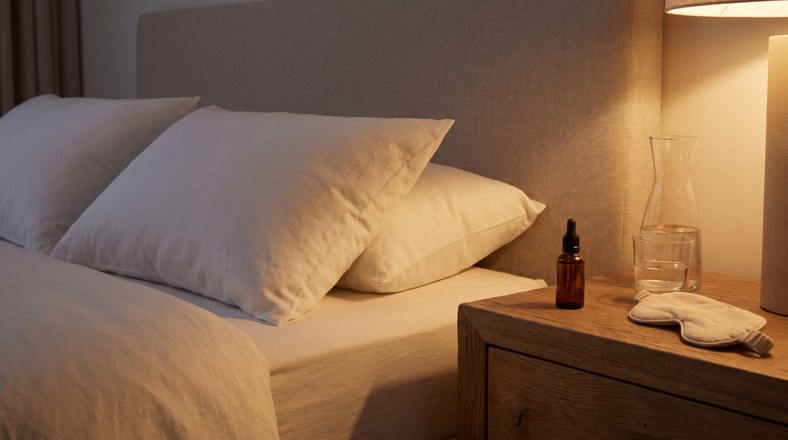
The cheapest fix for morning puffiness is not letting fluid pool overnight in the first place. None of these takes more than a few minutes in the evening:
- Raise your head by about 10cm: one extra pillow, or a wedge pillow if stacking feels awkward. Gravity then keeps draining fluid downwards overnight instead of letting it settle around your eyes. Back sleeping beats face-down, which presses fluid directly into the eye area and adds sleep creases for good measure.
- Finish alcohol three to four hours before bed: alcohol dehydrates you and fragments your sleep, and both show up under your eyes. A glass of water alongside each drink blunts the effect.
- Take eye makeup off gently, every night: leftover mascara and liner irritate the lash line, and rubbing at it makes things worse. Hold a soaked cotton pad against closed lids for ten to fifteen seconds, then sweep downwards without scrubbing.
- Deal with hay fever before bed, not after waking: from roughly March to September in the UK, pollen settles on your hair and pillow and keeps histamine raised all night. Shower in the evening, keep bedroom windows closed, and take a non-drowsy antihistamine in the evening if you know you react - generic cetirizine or loratadine costs a couple of pounds from any UK pharmacy or supermarket. Washing bedding weekly at 60°C also keeps dust mites down.
- Aim for seven to eight hours in a cool room: around 16 to 18°C suits most people. Short sleep dilates the blood vessels around the eyes, which brings puffiness and dark circles together.
- Add an overnight eye treatment: evening is the right slot for active ingredients. Ginseng supports circulation in the thin under-eye skin, and retinal gradually firms it over two to three months, so any fluid that does gather shows less. Our reviewed pick below combines both.
What Does Not Work for Puffy Eyes (Save Your Money)
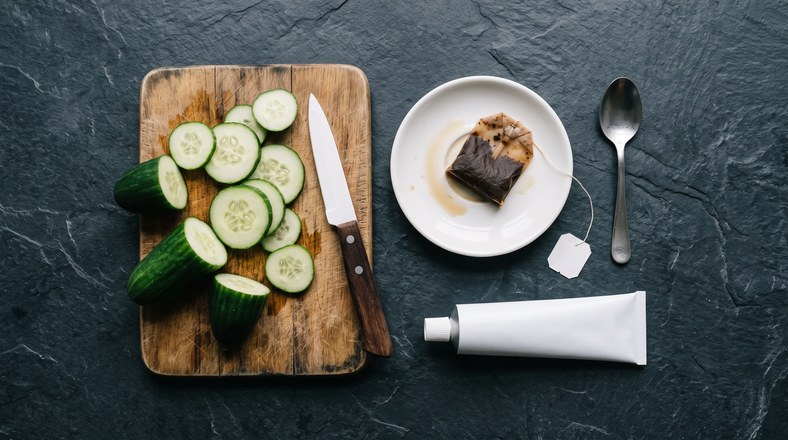
Plenty of famous puffy-eye fixes do little or nothing. Knowing which ones saves both money and disappointment:
- Haemorrhoid cream: an old backstage trick that does not translate. UK formulations are not designed for the eye area and can irritate it badly. Leave this one in the past.
- Cucumber slices: they work only because they are cold and water-rich. There is no special de-puffing compound in cucumber, and a chilled teaspoon does the same job. Use slices if you have them, but never buy a cucumber for your eyes.
- Collagen patches rebuilding your collagen: collagen molecules are far too large to pass through skin. Good patches earn their place through cooling, hydration and a temporary tightening film, which is genuinely useful on a puffy morning - just ignore any claim that they are topping up the collagen in your skin.
- Caffeine eye creams as a cure: topical caffeine gives a modest, temporary tightening that makes it decent makeup prep, nothing more. Any product claiming to remove bags permanently is overreaching.
- Any cream, for true fat-pad bags: if your under-eye bags are there every single day regardless of sleep, salt and alcohol, the likely cause is the fat pads under the eyes shifting with age. That is a structural change, and only surgery (blepharoplasty) removes it permanently. No honest skincare brand will tell you otherwise.
- Drinking less water: restricting fluids to look less puffy backfires, because mild dehydration triggers more water retention, not less.
When Puffy Eyes Need a Pharmacist or GP
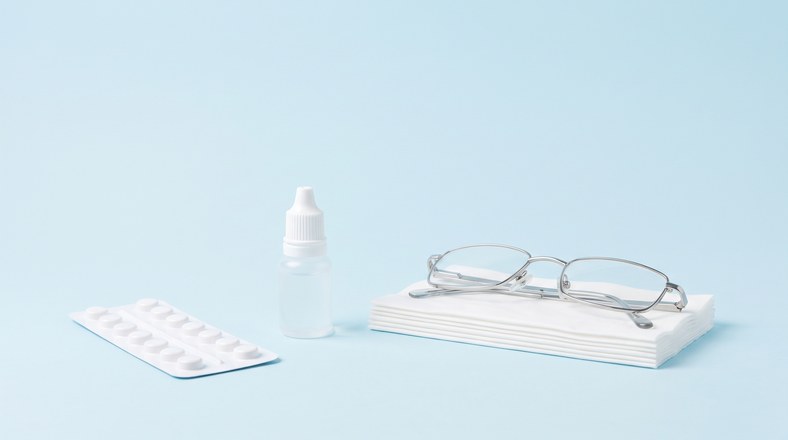
Ordinary overnight puffiness is symmetrical, painless and mostly gone by mid-morning. When it does not fit that pattern, escalate sensibly:
- Start with a pharmacist if both eyes are puffy, itchy and watery in pollen season - antihistamine tablets and eye drops are available over the counter. Crusty, sore lash lines in the morning point to blepharitis, which responds to daily lid hygiene a pharmacist can talk you through.
- Book a GP appointment if puffiness lasts all day every day whatever you do, or arrives alongside swollen ankles, unusual tiredness or unexplained weight change. Persistent fluid retention is occasionally linked to thyroid or kidney problems, and simple blood tests rule that out. A painless lump on the eyelid that hangs around for weeks (a stye or chalazion) is also worth showing them.
- Seek same-day help (GP or NHS 111) if one eye becomes swollen, red, hot and painful, if the swelling is spreading over hours, or if you have a fever or pain when moving the eye. That pattern can mean an infection around the eye socket that needs prompt treatment.
- Contact lens wearers: never sleep in lenses that are not designed for overnight wear. Lenses limit the oxygen reaching the eye and the cornea can swell in response. If puffiness comes with lens discomfort, see your optician.
None of these is common. They are simply the reason that swelling which shrugs off every remedy in this guide deserves a proper look rather than another cold spoon.
Frequently Asked Questions
How long does it take for morning puffy eyes to go down?
Left alone, most morning puffiness drains naturally within 30 to 60 minutes of being upright, as blinking and gravity restart normal fluid movement. The cold-then-massage routine in this guide usually cuts that to 10 to 15 minutes. Puffiness still visible mid-afternoon is not typical overnight fluid, so look at allergies, salt intake or the medical causes covered above.
Do chilled teaspoons and cucumber slices actually work?
Yes, but only because they are cold. There is nothing special in cucumber itself; a chilled teaspoon, hydrogel patch or clean cold flannel does the same job. Keep your tools in the fridge rather than the freezer, because frozen items can stick to and damage the thin skin around the eyes.
Why are my eyes puffy every morning during hay fever season?
Pollen that settles on your pillow, hair and face keeps histamine levels raised while you sleep, so you wake swollen and itchy. In the UK the season runs roughly from March (tree pollen) to September (weed pollen), peaking with grass pollen from May to July. Showering before bed, keeping bedroom windows closed overnight and taking a non-drowsy antihistamine in the evening all make a visible difference by morning.
Can I get rid of under-eye bags permanently?
It depends on the cause. Fluid-based puffiness responds well to the routine in this guide and to better sleep, salt and alcohol habits. Bags caused by the under-eye fat pads shifting with age are structural, and no cream, patch or massage removes them permanently; blepharoplasty (eyelid surgery) is the only lasting fix. A GP or qualified practitioner can tell you which type you have.
Related Reading
- OVALA Crystal Collagen 24k Gold Under-Eye Patches review
- BIODANCE Collagen Peptide Under Eye Patches review
- medicube Salmon DNA PDRN Eye Serum review
- Beauty of Joseon Revive Eye Serum review
- How to Start Using Retinol Without Irritation (UK Guide)
- At-Home Pedicure Routine for Dry, Rough Feet
Disclaimer: This article contains Amazon affiliate links. We may earn a small commission from qualifying purchases at no extra cost to you.