
How to Start Using Retinol Without Irritation (UK Guide)
Published 11 August 2026
A calm, week-by-week plan for starting retinol in the UK: which strength to buy first, how to sandwich it with moisturiser, and how to rescue your skin fast if it flares.
We earn commission from qualifying Amazon purchases. It costs you nothing and does not affect what we recommend.
Quick Answer
Start with a gentle retinoid - 0.1 to 0.3% retinol or a low-dose encapsulated retinal - and apply one pea-sized amount to completely dry skin at night, twice a week. Sandwich it between two layers of ceramide moisturiser, step the frequency up every fortnight only if your skin stays calm, and wear SPF 30 or higher every morning. Most retinol irritation comes from ramping up too fast, not from retinol itself.
- Step 1: Choose a Gentle Starting Strength
- Step 2: Get Your Supporting Routine in Place First
- Step 3: Apply It the Low-Irritation Way
- Step 4: Ramp Up Slowly and Expect Retinisation
- Step 5: Keep Clashing Actives on Separate Nights
- Step 6: Wear SPF Daily and Have a Rescue Plan
- Frequently Asked Questions
- Related Reading
Retinol has more evidence behind it than any other over-the-counter skincare active: decades of trials showing smoother texture, fresher tone and softer fine lines. It is also the product people abandon fastest. The usual story goes like this - buy a strength that is too high, use it every night from day one, then give up in week two when the flaking starts.
The truth is more boring than the horror stories. Irritation is not the price of results; it is a dosing error. You control the dose through three levers - strength, frequency and buffering - and when all three are set correctly, most skin gets through the adjustment period with nothing worse than a few dry patches. This guide walks through the whole process for UK shoppers: which strengths to look for on shelves here, the routine to have in place before your first application, the moisturiser sandwich, a week-by-week ramp with actual numbers, and a rescue plan for the week you overdo it anyway.
One note before we start. This is advice for healthy adult skin. If you are pregnant or breastfeeding, retinoids are off the table entirely (more in the FAQs below), and if you have eczema, rosacea or another diagnosed skin condition, run the plan past your GP or pharmacist before you begin.
Step 1: Choose a Gentle Starting Strength
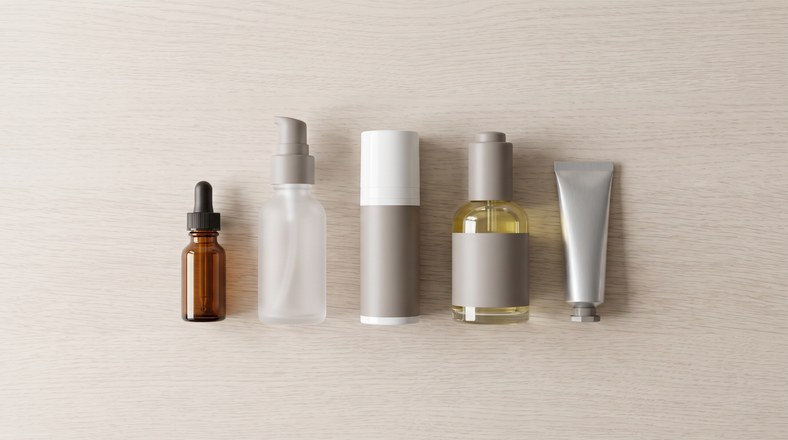
Every retinoid works the same way in the end: it converts into retinoic acid, the form your skin can actually use. What separates the options is how many conversion steps stand between the bottle and retinoic acid. Fewer steps means faster results and a higher chance of irritation, so the UK ladder looks like this:
- Retinyl palmitate - three steps away. The gentlest and weakest of the family. Fine as a supporting ingredient in eye creams, too feeble to be your main retinoid.
- Retinol at 0.1 to 0.3% - two steps away, and the classic starting zone. Bottles at 0.5 to 1% are everywhere in the UK, but 1% used nightly from day one is the most common self-inflicted retinol injury. Treat 1% as an upgrade for month six, not a first buy.
- Retinal (retinaldehyde) - one step away, so it acts noticeably faster than retinol. Gram for gram it is stronger, which is why sensible retinal products sit at 0.05 to 0.1% and usually come encapsulated, releasing slowly through the night instead of hitting the skin all at once.
- Tretinoin and adapalene - prescription-only in the UK, unlike the US where adapalene sits on pharmacy shelves. A GP, dermatologist or regulated online skin clinic can prescribe them for acne or stubborn photoageing. They are not a starting point.
The number on the label is only half the story. Delivery matters just as much: an encapsulated or time-release formula at a modest percentage will beat a harsh basic formula at double the strength, simply because you will still be using it in three months. If you want to trial retinal without spending much, the celimax The Vita A Retinal Shot Tightening Booster is a 12 pound encapsulated retinal booster, and its pale yellow colour is the retinal itself rather than a dye - a handy freshness check for any retinal product, since the molecule loses that colour as it degrades.
 Featured
15% OFF*Limited offer
One Sunday. A week of food, sorted.
23 high-protein recipes, cycle-synced for women who lift.
23 recipes · 60-page PDF · Instant download
£19.20 £16.32
See it on Etsy*Seller's discount on Etsy - may end at any time.
Step 2: Get Your Supporting Routine in Place First
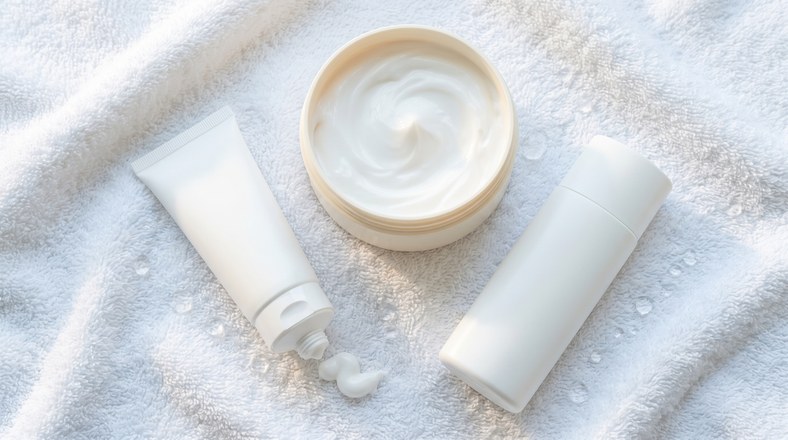
Retinol punishes a wobbly skin barrier, so the fortnight before your first application matters more than the application itself. Strip your routine back to three things: a gentle cleanser, a ceramide moisturiser and a morning SPF. No new serums, no acids, no scrubs. You are building a stable baseline, so that when you do add retinol you know exactly what caused any reaction.
Run two checks before you begin:
- The sting test. If plain moisturiser stings when you apply it, your barrier is already damaged - usually from over-cleansing or over-exfoliating. Delay retinol and stay on the bland routine for two to four weeks, until moisturiser goes on without complaint. Starting retinol on a broken barrier is how week-one disasters happen.
- The patch test. Apply your chosen retinoid to a two-centimetre patch in front of the ear or under the jaw on two or three consecutive nights. Mild dryness is fine; itching, burning or bumps mean the product or the strength is wrong for you.
On the cleanser: retinol nights need a cleanser that does nothing except clean. The CeraVe Hydrating Cleanser earns its place here - no foam, no fragrance, no acids, plus ceramides, so it removes the day without stripping the barrier you are about to lean on. For the moisturiser you will be sandwiching with, a thick ceramide cream like CeraVe Moisturising Cream does the job for around 11 pounds, and because it suits face and body you will use up the big tub anyway.
Step 3: Apply It the Low-Irritation Way
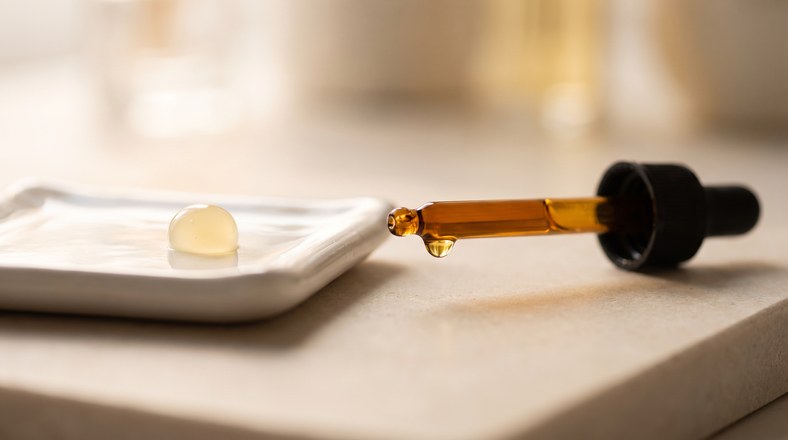
Retinoids belong in the evening routine: UV light degrades them, and skin does its repair work overnight. The habits below prevent more irritation than any product choice does.
- Cleanse, then wait 15 to 20 minutes. Damp skin carries retinol deeper and faster, which your nerve endings read as stinging. Completely dry skin slows absorption right down. This one habit is the cheapest irritation fix there is, and almost nobody does it.
- Use one pea-sized amount for the whole face. Dot it on the forehead, both cheeks and chin, then spread it thin. More product means more irritation, not more results.
- Steer around the danger zones. The corners of the nose and mouth, the eyelids and any broken skin flake first and worst. Let the thin layer you spread nearby drift into those areas on its own.
- Sandwich it if you are sensitive. Apply a thin layer of moisturiser, wait ten minutes, apply your retinoid, wait ten minutes, then moisturise again. The sandwich slows delivery, trading slightly slower results for far better comfort. Resilient skin can skip the first layer and simply moisturise on top.
The eye area deserves its own rule. Under-eye skin is around a third of the thickness of cheek skin, and it is where beginners flake first. Rather than pushing a face serum up to the lash line, use a formula built for the area: the medicube Eye Serum with Salmon DNA PDRN & Pink Peptides pairs retinol with peptides at an eye-area dose. Pat it along the orbital bone with your ring finger and never onto the moving lid. Leave your neck and chest alone for the first month; when you do extend to them, always sandwich, because the skin there is thinner than your face.
Step 4: Ramp Up Slowly and Expect Retinisation
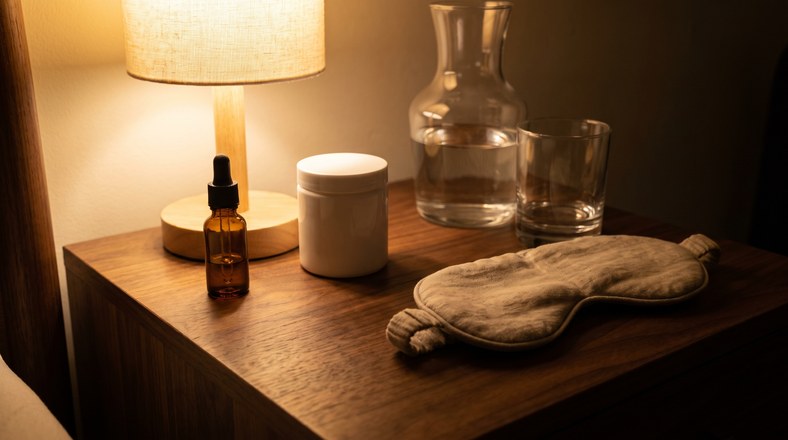
The ramp is where most people go wrong, so here it is with actual numbers. Weeks one and two: two nights a week, spaced apart - Monday and Thursday works well. Weeks three and four: every other night. Week five onwards: nightly, but only if your skin is calm. If flaking or tightness appears at any stage, hold your current frequency for an extra week before stepping up. Nothing is lost by ramping slower; a great deal is lost by ramping faster.
Nightly use is not the goal, either. Three well-tolerated nights a week kept up for a year beats seven nights a week for three weeks followed by quitting. Clinical work on retinoids shows meaningful improvement at two to three applications a week, so if that is where your skin is happy, stay there without guilt.
What you are riding out is retinisation: the adjustment period while your skin speeds up cell turnover and, in effect, learns to use vitamin A. It shows up as dryness, fine flaking around the nose and mouth, mild pinkness and a tight feeling. Expect it to begin around night three to five, peak somewhere in weeks two to four, and settle by week four to six; sensitive skin can take eight to twelve weeks. The crucial part: once it passes, it is gone at that strength. Retinised skin tolerates the product comfortably, which is exactly why the slow build is worth the patience.
Learn the difference between adjustment and a genuine reaction. Mild flaking and pinkness are normal. Burning that lasts hours, swelling, weeping, rash-like bumps or redness that spreads are not - stop completely, go to the rescue plan in step six, and speak to a pharmacist if things have not calmed within a few days.
On results, honesty keeps you consistent: texture smooths around weeks four to six, tone and old blemish marks improve over eight to twelve weeks, and fine lines need twelve weeks to six months. Any product promising visible change in a week is describing hydration, not retinoid results.
Step 5: Keep Clashing Actives on Separate Nights
Retinol does not need helpers, and on application nights it does not tolerate rivals. Keep these off your face on retinol nights:
- Exfoliating acids - glycolic, lactic and other AHAs, plus salicylic acid (BHA)
- Benzoyl peroxide, which stacks irritation on irritation and can degrade some retinol formulas
- Strong vitamin C serums, which belong in your morning slot anyway
- Physical scrubs, peel pads and at-home peels of any kind
None of these are banned from your week - they are banned from the same night. A schedule that works while you adjust: retinol on Monday and Thursday, one acid session on Saturday, plain cleanser and moisturiser every other evening. Drop exfoliating acids entirely for your first fortnight on retinol, then cap them at once or twice a week. If you already own The Ordinary Glycolic Acid 7% Exfoliating Toner, keep it; just move it permanently to retinol-free nights, and expect to reach for it less over time as retinol takes over the resurfacing work.
Plenty of ingredients layer happily with retinol on the same night: hyaluronic acid, glycerin, niacinamide, ceramides, peptides, panthenol and snail mucin all support the barrier rather than sanding it. A simple test if you are unsure about anything else - ask whether the ingredient hydrates or exfoliates. Hydrators are welcome; exfoliators wait their turn.
Two scheduling traps that catch beginners out: pause retinol three to five days before facial waxing, because retinised skin can lift with the wax, and always tell the practitioner you use a retinoid before any laser, peel or microneedling appointment.
Step 6: Wear SPF Daily and Have a Rescue Plan
Sunscreen is part of the retinol routine, not a separate virtue. Retinising skin is more sensitive to UV, and unprotected exposure breaks down both the collagen you are building and the retinoid itself. That means broad-spectrum SPF 30 as the floor and SPF 50 ideally, every single morning - including grey UK mornings, because UV is not temperature and a cloudy March sky still lets plenty through. La Roche-Posay Anthelios UVmune 400 SPF50+ makes the strongest case here: its filter covers ultra-long UVA up to 400 nanometres, and the light fluid texture sits comfortably under moisturiser and make-up, which is what actually gets a sunscreen worn daily rather than abandoned.
Now the rescue plan, for the week you overdo it anyway. Overdone looks like skin that stings when anything touches it, patchy shedding and redness that will not settle. The fix:
- Stop retinol for one to two weeks. You lose nothing; the results you have built do not evaporate in a fortnight.
- Cut the routine right back to gentle cleanser, ceramide moisturiser morning and night, and SPF. Nothing else.
- Coat flaky, angry patches with a barrier balm. La Roche-Posay Cicaplast Baume B5+ is built for exactly this job - panthenol and madecassoside in a thick balm that takes the sting out while the barrier rebuilds.
- Wash with lukewarm water, not hot, and skip acids and scrubs completely until you restart.
Restart when two things are true: the flaking has gone, and plain moisturiser no longer stings on application. Go back in at half your previous frequency, sandwiched between moisturiser layers, and ramp again from there. If skin is broken, weeping or painful, or you have an underlying condition like eczema or rosacea, see a pharmacist or GP before restarting rather than pushing through.
Frequently Asked Questions
How long does retinol irritation last?
The adjustment period, called retinisation, typically begins around night three to five, peaks during weeks two to four and settles by week four to six. Sensitive skin can take eight to twelve weeks. If irritation is still building after eight weeks, drop to a lower strength or halve your frequency rather than pushing through. And if skin is swollen, weeping or covered in rash-like bumps at any point, that is a reaction rather than adjustment - stop and speak to a pharmacist.
Can I use retinol while pregnant or breastfeeding?
No. All retinoids, including over-the-counter retinol and retinal, are advised against during pregnancy and breastfeeding in the UK. It is a precaution, but a firm one, because oral prescription retinoids are known to cause birth defects. Bakuchiol, a plant-derived alternative with early evidence for similar smoothing benefits, is the usual swap - and check any change with your GP, midwife or pharmacist.
Do I need prescription tretinoin to see results?
No. Over-the-counter retinol and retinal have solid evidence for texture, tone and fine lines; they simply work more gradually than tretinoin. Consider the prescription route - through your GP, a dermatologist or a regulated UK online skin clinic - if you are treating persistent acne, or if a year of consistent over-the-counter use has plateaued. Prescription strengths bring prescription-level irritation, so the low-and-slow rules in this guide apply twice over.
Should I stop retinol in summer or on holiday?
Not if you are wearing SPF 30 or higher every morning, which you should be doing anyway. Consistent use with daily sunscreen is safe and protects your progress. Two sensible exceptions: pause it during a beach holiday where you will be in strong sun for hours at a time, and always pause for a few days after sunburn while the skin recovers.
Related Reading
- celimax The Vita A Retinal Shot Tightening Booster review
- medicube Eye Serum with Salmon DNA PDRN & Pink Peptides review
- La Roche-Posay Anthelios UVmune 400 SPF50+ review
- How to Layer Skincare in the Right Order
- Do You Put Sunscreen On Before or After Moisturiser? (The Order That Actually Protects You)
Disclaimer: This article contains Amazon affiliate links. We may earn a small commission from qualifying purchases at no extra cost to you.