
How to Stop Hair Going Frizzy in Humid Weather (UK Guide)
Published 2 September 2026
A six step routine for stopping frizz on damp British days: hydrate and seal in the shower, dry without friction, add a humidity-blocking layer, use gel for waves, pick rain-proof styles and protect hair overnight.
We earn commission from qualifying Amazon purchases. It costs you nothing and does not affect what we recommend.
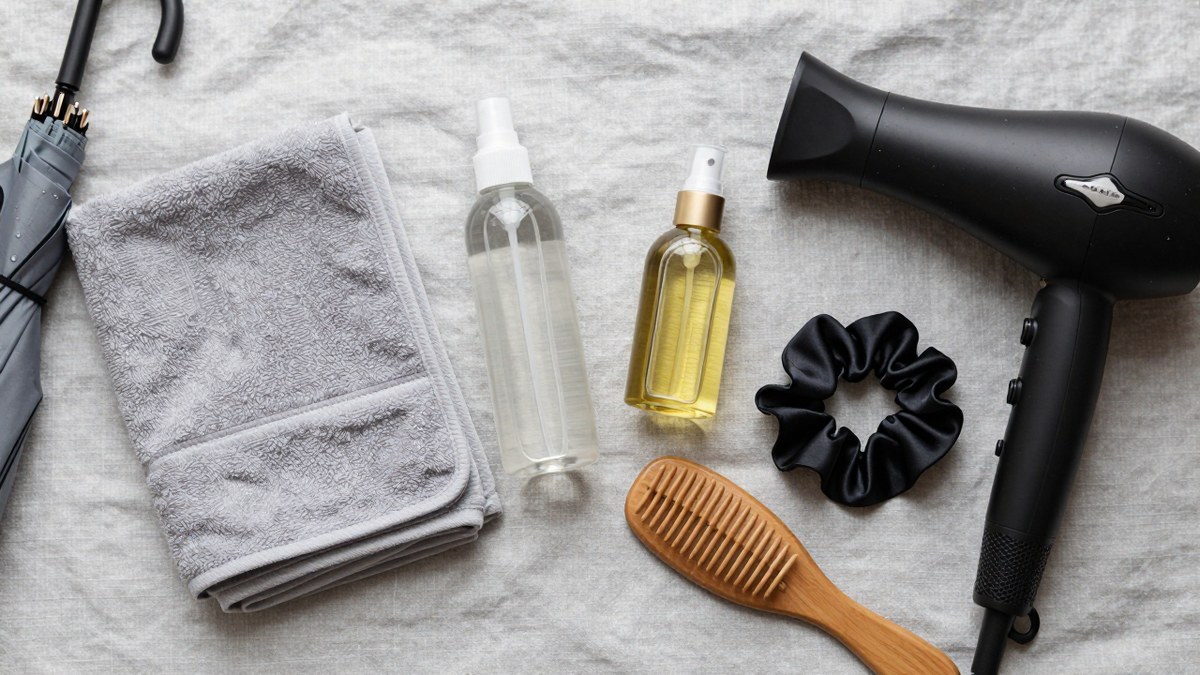
Quick Answer
To stop hair going frizzy in humid weather, keep it well hydrated so it does not pull water from the air, dry it completely without friction, and seal it with a humidity-blocking product applied to damp hair and blow-dried in. On the wettest UK days, add gel for waves and curls or switch to a low bun, braid or slick ponytail, and sleep on silk so the work survives overnight.
Frizz in the UK is not a summer-only problem. Relative humidity here sits high for most of the year, drizzle can arrive in any month, and a mild, muggy September afternoon does as much damage as a July heatwave. If your hair leaves the house smooth and looks like it has been through a hedge by the time you reach the office, the air is the reason.
The science is simple. Hair is mostly keratin held in shape by hydrogen bonds, and those bonds break and re-form when water gets in. Dry or porous hair, whether from colour, heat or hard water, has a lifted cuticle that lets moisture in fast, so each strand swells at a different rate and the whole head puffs up. Wavy, curly and chemically treated hair absorbs the most and frizzes the most.
None of that means you have to accept it. The routine below works in order: reduce how thirsty the hair is, dry it properly, put a barrier between the strand and the air, then choose styles and habits that cope when the forecast is against you. Every step uses products and techniques you can buy or do at home in the UK, with our own tested picks where they genuinely help.
Hydrate and Seal Your Hair in the Shower
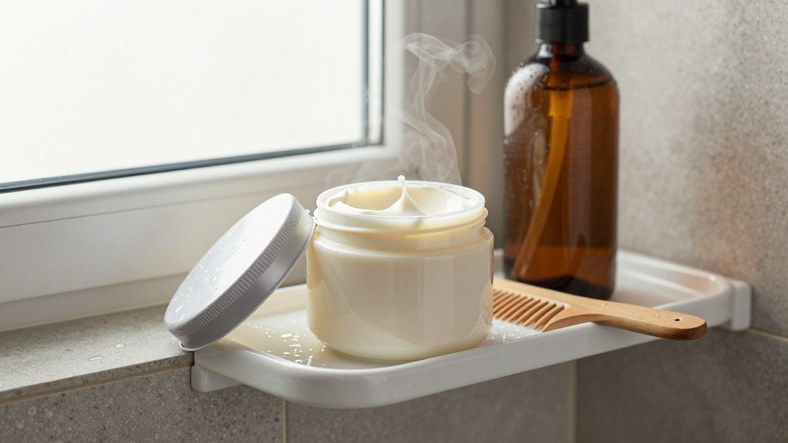
Frizz is a moisture problem before it is a styling problem. Hair that is already dry and porous pulls water out of damp air, the strands swell unevenly and the cuticle lifts. Hair that is properly conditioned with a flat, sealed cuticle has far less room to take water on, so the routine that stops frizz starts under the shower head, not at the plug socket.
Wash with lukewarm water rather than hot. Very hot water strips the natural oils that keep the cuticle lying flat and leaves lengths rougher and thirstier. Two or three washes a week is plenty for most people; daily washing in a UK hard-water area is one of the most common reasons hair feels dry and puffs up the moment it meets drizzle.
- Shampoo the scalp only and let the suds rinse through the lengths. Look for sulphate-free formulas if your hair is coloured, coarse or already prone to frizz.
- Condition the mid-lengths and ends every wash and leave it on for two to three minutes. Comb it through with a wide-tooth comb while the conditioner is still in, which is the gentlest moment to detangle.
- Use a deep-conditioning mask once a week. Ten minutes under a shower cap is enough; heat from the shower steam helps it absorb.
- Finish with 20 to 30 seconds of the coolest water you can stand. A cool rinse contracts the cuticle and locks in the moisture you have just added.
One ingredient caveat: glycerin. It is a humectant, which means it draws water in from the air. In mildly humid conditions that hydrates hair, but on a very damp British day it can pull in so much that fine or wavy hair swells and frizzes. If you have tried everything and still frizz, check whether your conditioner, leave-in or heat protectant lists glycerin high up and swap it for a month to see if it makes a difference.
 Featured
15% OFF*Limited offer
One Sunday. A week of food, sorted.
23 high-protein recipes, cycle-synced for women who lift.
23 recipes · 60-page PDF · Instant download
£19.20 £16.32
See it on Etsy*Seller's discount on Etsy - may end at any time.
Dry Hair Gently and Dry It Completely
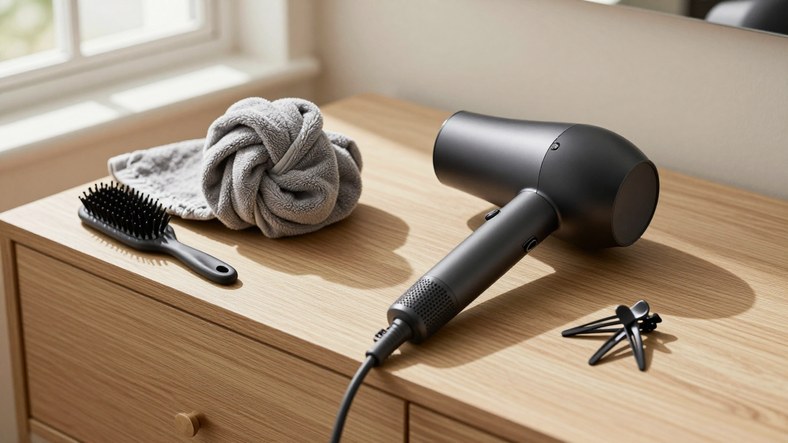
How hair is dried decides how it behaves for the rest of the day. Rubbing with a rough cotton bath towel scuffs the cuticle and builds static, and both show up as frizz within minutes of stepping outside. Leaving hair damp is just as bad: it carries on drying unevenly on the walk to the bus stop, absorbing more water from the air as it goes, and sets in whatever shape the wind gives it.
Swap the bath towel for a microfibre hair towel or a soft cotton T-shirt. Squeeze and press rather than rub, then wrap the hair up for 10 to 15 minutes to take it from soaking to damp without any friction. Apply your leave-in and styling products at this stage, while the hair is still wet enough to distribute them evenly.
Blow-drying without the frizz
- Let hair air-dry to around 60 to 70 per cent before switching the dryer on. Less time under hot air means less water lost from inside the strand.
- Keep the nozzle about 15 cm from the hair and point the airflow down the strand, from root to tip, so the cuticle is smoothed flat rather than ruffled.
- Use a medium heat and finish each section with the cool-shot button. Cool air sets the cuticle in its closed position.
- Wavy and curly hair should be diffused, not brush-dried. Cup sections in the diffuser bowl, hold still, and do not touch the hair with your hands until it is bone dry. Handling wet curls is the single biggest cause of frizz for wavy hair.
- Ionic dryers help, but technique matters more than the badge on the box. A £30 dryer used correctly beats a £400 one used with a paddle brush at full heat.
Whatever you do, do not leave the house with damp hair on a wet day. If time is short, dry the front sections and hairline fully and clip the rest up; the pieces around your face are the ones that show frizz first.
Add an Anti-Humidity Sealing Layer
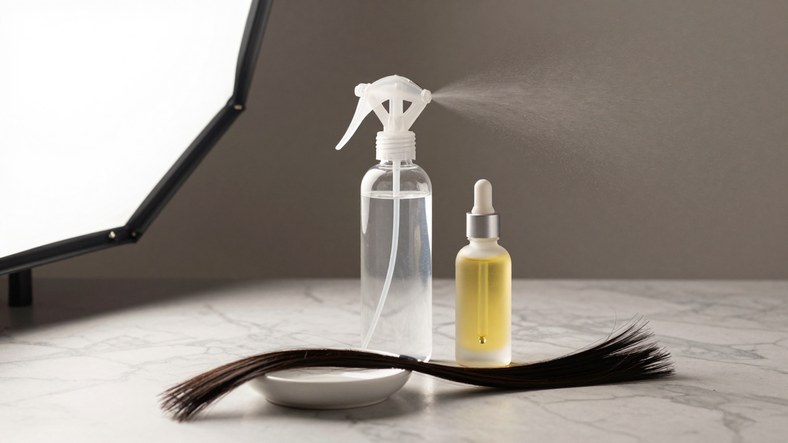
Everything above makes hair healthier and less thirsty. This step is what actually stops damp air getting in. Anti-humidity products work by coating each strand with a water-repellent film, usually a silicone or a styling polymer, so moisture beads off instead of soaking through. It is the same idea as waxing a jacket. Hydration alone does not do this, which is why a well-conditioned head of hair can still explode in a downpour.
Layer in this order on towel-dried hair, using far less of each than you think you need:
- Leave-in conditioner or treatment spray through the mid-lengths and ends. This is your hydration and heat protection base. Three to five sprays for shoulder-length hair is plenty.
- A humidity-blocking sealer applied to damp hair and blow-dried in. Products in this category are activated by heat and need tension from a brush or a firm pass of the dryer to form the film. Done properly, one application lasts through two or three washes. This is the single most effective product change for anyone whose hair frizzes on rainy days, and it works on straight and blow-dried wavy hair alike.
- A few drops of oil or serum smoothed over the dry surface with the palms. Argan and jojoba oils sit on top of the strand and add slip and shine. Coconut oil is different: it penetrates the hair, which some people love and some find makes them frizzier and stiffer. If coconut oil has never seemed to help, that is your answer.
Two things undo the sealing layer. Heavy conditioners or oils applied over the top can dilute the film, and rough handling scuffs it off. Keep the finishing oil light, keep your hands out of your hair, and re-apply the sealer after each wash rather than waiting until the frizz comes back.
Use Gel or Cream to Hold Waves and Curls
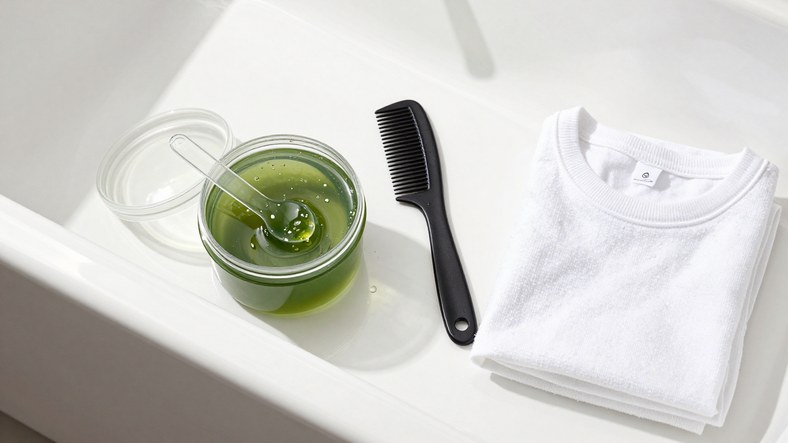
If your hair has any wave or curl, the humidity playbook is different from the sleek blow-dry approach. Wavy hair frizzes because individual strands separate from their curl clumps and take on water at different rates. The fix is to glue the clumps together while the hair is wet and let them dry inside a protective cast.
- Work on soaking wet hair, either still in the shower or straight after a squeeze with a microfibre towel. Wet hair clumps; damp hair separates.
- Rake a leave-in or curl cream through in sections, then apply a generous amount of gel. For shoulder-length hair start with a 50p-sized blob per side and add more if the hair does not feel coated.
- Use praying hands, smoothing the gel down the lengths between flat palms, then scrunch upwards towards the scalp. Cupping a little extra water into the hair as you scrunch spreads the gel more evenly.
- Diffuse or air-dry without touching. You are aiming for a firm, crunchy cast that looks slightly wet.
- Once completely dry, scrunch the cast out with a drop of oil on your palms. The crunch disappears and the curls underneath stay clumped and defined for days.
Firm-hold gels outperform mousses and creams in wet weather because the cast physically blocks moisture from reaching the strand. On a day with heavy rain in the forecast, use more gel than usual and leave the cast in until you are indoors. A wet-look slicked style is the other option: comb gel through from root to tip on damp hair and leave it. It is a deliberate finish that humidity cannot ruin because the hair is already saturated and held.
Pick Styles That Survive a Wet British Day
Some days the forecast wins. When it is 14°C, 90 per cent humidity and sideways rain, no product will keep a loose blow-dry looking like it did in the mirror. The smart move is to choose a style that uses the humidity rather than fighting it, and to keep a couple of fixes in your bag.
- Low bun or twisted chignon. Smooth the top with a little cream, twist, and pin. Any frizz that develops is hidden inside the shape.
- Braids. A single French or Dutch braid holds every strand in place, and the waves it leaves behind when you take it down are often better than a curling wand.
- Slick ponytail. Brush a small amount of gel or a firm-hold hairspray through the roots and hairline before tying, then run a boar-bristle brush over the top. Fine, flat hair suits this best.
- Half-up. Ties back the front and crown, the sections that frizz first, while leaving the lengths down.
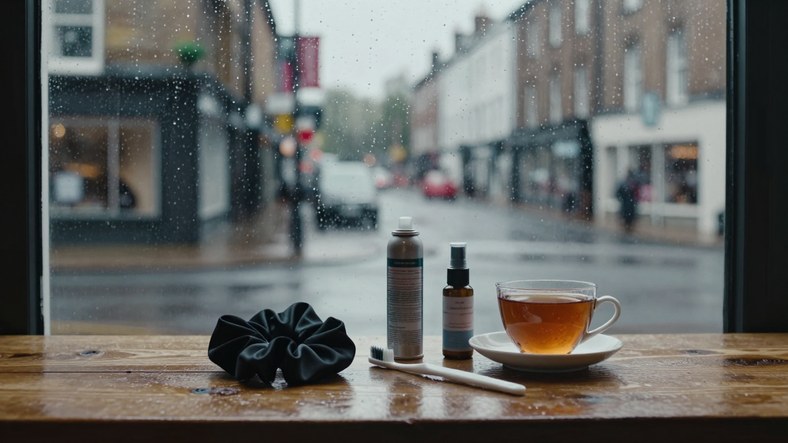
Taming baby hairs and flyaways
The tiny hairs around the hairline are the first to spring up in damp air. Spray a strong-hold hairspray onto a clean toothbrush or a spoolie rather than directly onto the hair, then brush the flyaways flat. It gives precise control without stiffening the whole style. A silk or satin scrunchie instead of an elastic band stops the tie itself roughing up the hair and causing frizz at the crown.
For the walk home, a small mist of water mixed with a few drops of conditioner in a travel spray bottle will re-wet and re-smooth waves that have separated, then scrunch and leave. It works better than piling on more dry product.
Protect Hair Overnight and Between Washes
What happens while you sleep and in the days between washes sets up how well your hair copes with the next damp morning. A few habits make a bigger difference than any single product.
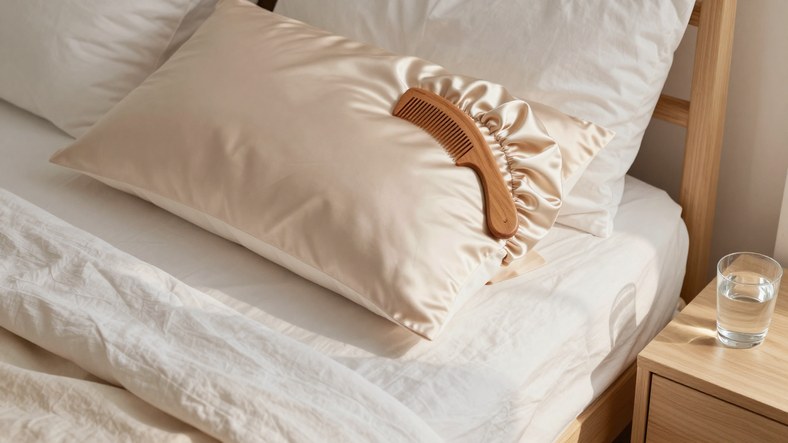
- Sleep on silk or satin. Cotton pillowcases absorb moisture from the hair and create friction that lifts the cuticle overnight, so you wake up already halfway to frizz. A smooth pillowcase or a silk bonnet keeps the cuticle flat and the previous day's products in place.
- Brush less, and better. Over-brushing builds static and snaps weak strands, and every broken strand is a short hair that sticks up. Detangle with a wide-tooth comb on wet, conditioned hair and use a soft brush sparingly on dry hair.
- Keep your hands off. Touching and twirling transfers oil, sweat and moisture into the hair and disturbs any sealing layer you applied. It is a hard habit to break but one of the most effective.
- Trim every 8 to 12 weeks. Split, damaged ends absorb water fastest and frizz first. A regular dusting of the ends keeps the bottom of the hair from looking like a separate, fluffier layer.
- Protect from UV in summer. Sun makes hair more porous, which is why frizz often gets worse in August and September. A hat or a UV-filter spray on holiday keeps the cuticle intact for the autumn rain.
Longer-term options
If humidity frizz runs your life, a professional smoothing treatment (keratin, so-called hair botox, or a Brazilian blow-dry) coats and partially bonds the hair for three to five months and is the closest thing to a guaranteed fix. UK salon prices typically run from around £100 to £300 depending on length and treatment. The trade-offs are the cost, the very high heat used during application, and the need to keep to sulphate-free shampoo afterwards. Results are strongest the first time and can lessen on repeat treatments. It is worth it for a wet-climate holiday or a wedding season; it is not a substitute for the daily routine above.
Frequently Asked Questions
Why does my hair frizz in the UK but not on holiday somewhere hotter?
It is humidity, not temperature, that causes frizz. Much of the UK sits at high relative humidity all year because of the maritime climate and frequent rain, while a 35°C day in southern Spain or Greece can be very dry. Hair in dry heat loses moisture and may feel coarse, but it does not swell and puff in the same way. The same routine that protects you at home is even more important in genuinely humid destinations such as south-east Asia, Florida or the Caribbean.
Is glycerin bad for frizzy hair in humid weather?
Not always, but it can be. Glycerin is a humectant that pulls water from the air into the hair. In moderate humidity that is hydrating. In very damp conditions it can pull in too much and make fine, wavy or porous hair swell and frizz. If it appears in the first five ingredients of your leave-in, gel or heat protectant and your frizz is worst on wet days, try a glycerin-free alternative for a few weeks and compare. Coarse, very dry hair often tolerates it fine.
Do keratin treatments stop humidity frizz for good?
They are the most reliable fix, but not permanent. A professional keratin or smoothing treatment coats and partially bonds the hair so it repels water for roughly three to five months, then gradually washes out. You need sulphate-free shampoo to make it last, the application uses very high heat which can weaken already damaged hair, and many people find the first treatment gives the best result. Prices in UK salons vary widely by length and treatment type, so ask for a quote and a strand test first.
Can I stop frizz without using a hair dryer or straighteners?
Yes, especially if you have wavy or curly hair. Air-drying with a firm-hold gel cast, applied to soaking wet hair and left untouched until dry, holds curl clumps together and blocks moisture very effectively. For straighter hair the trick is to wait until it is completely dry before going out, use a microfibre towel to cut drying time, and apply a leave-in and a light oil while damp. Heat-activated sealing sprays do need a dryer to work properly, so choose a gel or cream-based approach instead if you are heat-free.
Related Reading
- Garnier Banana Hair Food review
- YoulerTex Microfibre Hair Towel Wrap review
- Remington Hair Dryer Diffuser review
- Color Wow Dream Coat review
- Revlon Professional UniqOne review
- Eco Style Olive Oil Styling Gel review
- got2b Glued Blasting Freeze Hairspray review
- ZIMASILK Mulberry Silk Pillowcase review
- How to Protect Hair from Wind and Cold: A UK Guide
- How to Protect Hair from Heat Damage: A UK Guide
Disclaimer: This article contains Amazon affiliate links. We may earn a small commission from qualifying purchases at no extra cost to you.