
How to Protect Hair from Heat Damage: A UK Guide
Published 26 August 2026
A practical five step routine for protecting your hair from heat damage: strengthening prep in the shower, heat protectant technique, safe tool temperatures and ways to keep your style going without daily heat.
We earn commission from qualifying Amazon purchases. It costs you nothing and does not affect what we recommend.
Quick Answer
To protect hair from heat damage, apply a dedicated heat protectant before every styling session, keep straighteners at 180°C or below for most hair types, and only ever style completely dry hair. Support that with a strengthening wash routine, gentler drying habits and no more than two to three heat sessions a week. Damaged keratin cannot rebuild itself, so prevention matters far more than any aftercare.
Most of us in the UK lean on heat for much of the year: a proper blow-dry so you are not leaving the house with wet hair in January, straighteners to see off drizzle frizz, a wand before a night out. The problem is that hair proteins start to break down at around 180°C, and once the keratin and cuticle are damaged they never knit back together. The damage is cumulative, so every unprotected session adds a little more dryness, dullness and breakage.
None of this means giving up your straighteners. Stylists broadly agree on the same system: make hair strong before you style it, put a barrier between strand and tool, dry gently, keep the temperature sensible and reach for heat less often. This guide works through those five steps in order, with the temperatures, timings and habits that actually protect your hair, plus tested products that earn their place in the routine.
Strengthen Your Hair Before You Style It
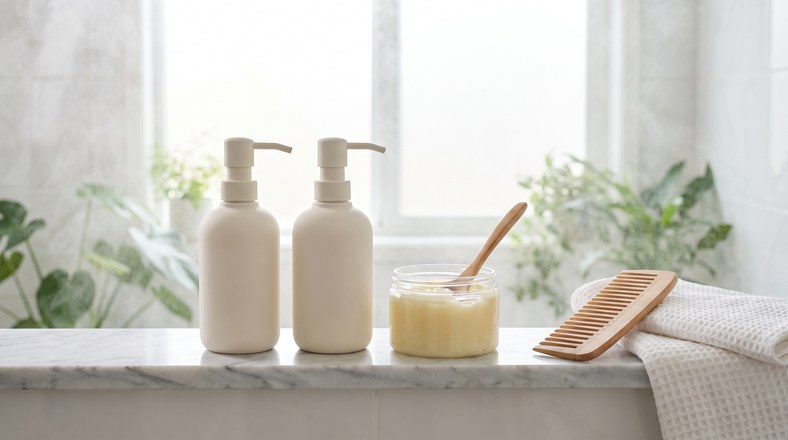
Heat protection starts in the shower, not at the plug socket. Well-conditioned hair has a smooth, sealed cuticle that holds on to moisture under heat, while dry, porous hair loses water the moment hot air touches it and scorches far more easily.
Wash with lukewarm water rather than hot, because hot water strips the natural oils that keep the cuticle lying flat. Two to three washes a week is enough for most people. Concentrate shampoo on the scalp where oil actually builds up, keep conditioner on the mid-lengths and ends, and leave it to absorb for two or three minutes before rinsing. A cool final rinse helps seal the cuticle and adds shine before you even reach for a styler.
Choose formulas that strengthen as they clean. Proteins such as keratin and wheat protein reinforce weak spots along the strand, while humectants like glycerin draw in moisture and keep hair flexible when heated. If you use hot tools several times a week, switching to a wash set designed for heat-stressed hair makes a real difference; the Bed Head by TIGI Recovery shampoo and conditioner is formulated specifically for dry, heat-damaged lengths.
Add one deep treatment a week. A mask that combines protein with moisturising ingredients rebuilds some resilience between styling sessions, and a multi-use option like Garnier Hair Food can work as a mask, rinse-out conditioner or leave-in depending on what your hair needs that week. If you live in a hard water area, which covers much of the south and east of England, an occasional clarifying wash stops mineral build-up leaving hair dull and hard to style, which otherwise tempts you into using more heat to compensate.
 Featured
15% OFF*Limited offer
One Sunday. A week of food, sorted.
23 high-protein recipes, cycle-synced for women who lift.
23 recipes · 60-page PDF · Instant download
£19.20 £16.32
See it on Etsy*Seller's discount on Etsy - may end at any time.
Apply a Heat Protectant Every Time
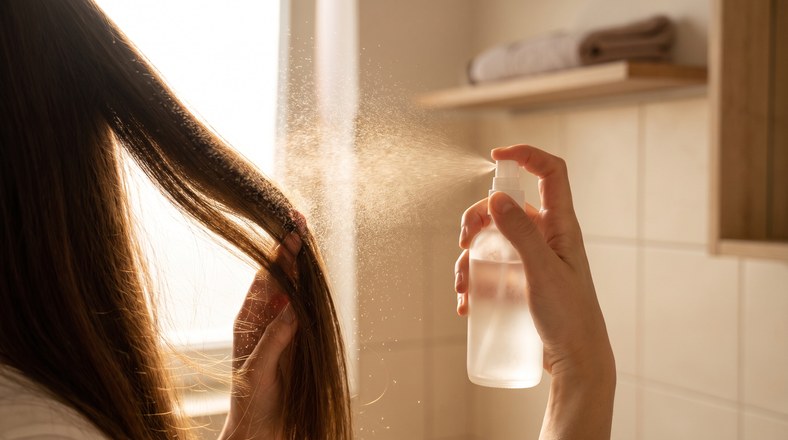
One rule sits above all the others: never let a hot tool touch bare hair. A heat protectant forms a thin film of polymers around each strand that slows the transfer of heat, seals the cuticle and locks moisture inside. Stylists describe it as armour for your hair, and it is needed for every kind of heat, including the hairdryer, not just straighteners and wands. It applies on day two touch-ups as much as on wash day.
Application technique matters as much as the product itself:
- Work in sections. Lift each section and mist it along its full length rather than spraying vaguely over the top layer.
- Focus on the mid-lengths and ends, where damage shows first.
- Comb it through with a wide-tooth comb so every strand gets an even coating.
- Let it dry fully, around 60 seconds for a fine mist, before using straighteners or tongs. Trapped moisture sizzles against hot plates and cooks the cuticle.
- Apply it before any other styling products such as mousse or texture spray.
Match the format to your hair type: lightweight sprays suit fine hair, richer creams suit thick or coarse hair, and serums help frizz-prone or curly types. On the ingredients list, look for film-forming polymers, conditioning humectants such as glycerin and panthenol, and strengthening keratin or amino acids. If your hair is coloured, a formula with UV filters helps stop fading through the brighter months too.
Most protectants shield hair up to 220°C or 230°C, but treat that figure as a ceiling rather than an invitation. A protectant reduces damage; it does not make high heat harmless.
Dry Your Hair the Low-Damage Way
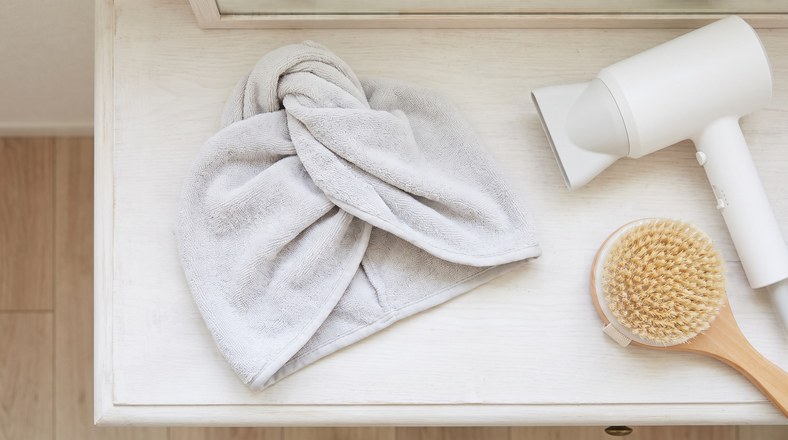
Wet hair is hair at its weakest. The bonds that give it strength loosen temporarily in water, so rubbing it with a bath towel or blasting it on the hottest setting causes snapping and cuticle damage before you have even started styling.
Squeeze out excess water gently, then blot or wrap with a microfibre towel. Microfibre absorbs far more water than cotton and smooths the cuticle instead of roughing it up; a turban-style wrap such as the YoulerTex microfibre towel cuts blow-drying time noticeably, which directly reduces how much heat your hair sees. While hair is still damp, detangle with a wide-tooth comb, working from the ends up to the roots. A leave-in treatment makes that easier on hair already weakened by styling: the Revlon Professional UniqOne treatment sprays straight onto damp hair to detangle and smooth frizz, and it adds UV and colour protection on top.
Let hair air-dry to roughly 80 percent before you pick up the dryer, then follow four rules:
- Hold the dryer at least 15cm from your hair and keep it moving. A frequently cited 2011 study found this caused less surface damage than concentrating heat in one spot, and even less than leaving hair soaking wet for hours, since prolonged swelling stresses the strand too.
- Point the nozzle down the hair shaft so the airflow smooths the cuticle as it dries.
- Stick to a medium heat setting and save the hottest one for rough-drying very thick hair, if you use it at all.
- Finish with the cool shot to set the style and close the cuticle.
The dryer itself makes a difference. An ionic model like the Remington ionic dryer breaks water droplets down faster, so hair dries quicker at lower temperatures with less static, and its diffuser attachment spreads the airflow gently enough to dry curls and waves without pushing them into frizz.
Get Your Temperatures Right
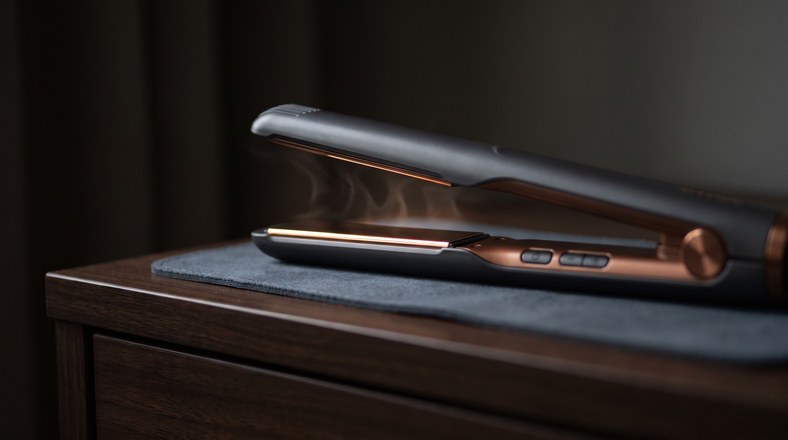
Most heat damage comes from one simple mistake: styling at a far higher temperature than your hair needs. Straighteners commonly reach 230°C, yet hair proteins begin to weaken from around 180°C, and fine hair suffers well below that.
Use these ranges as a starting point and only step up if the style refuses to hold:
- Fine, bleached or damaged hair: 120-160°C
- Normal, healthy hair: 160-180°C
- Thick or coarse hair: 180-200°C
Technique matters at every temperature. Take one slow, deliberate pass over each section instead of three or four rushed ones, since repeated passes at a lower heat can add up to more total damage than a single controlled pass. Keep the tool moving, never clamp and hold, and only ever straighten or curl hair that is completely dry. Water left inside the shaft boils when hot plates close over it and blisters the cuticle from within, which is why damp hair sometimes audibly sizzles.
Your tool matters too. Look for straighteners with accurate, adjustable digital temperature control and smooth ceramic plates that glide without snagging, because drag forces you into repeat passes. The Remington Shine Therapy straightener is a budget-friendly example with adjustable settings and ceramic plates infused with argan oil for an easier glide. Whatever you use, wipe cooled plates clean regularly; burnt-on styling product creates hot spots and pulls at the hair.
Style Less Often and Make It Last
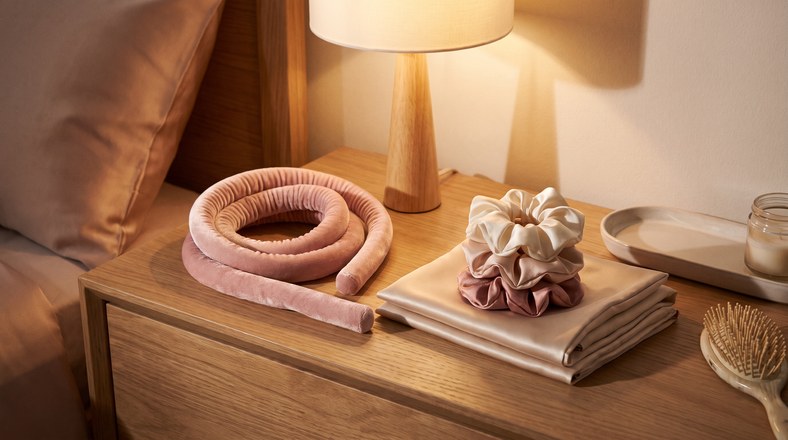
Even perfect technique adds up if you straighten every day. Most stylists suggest capping direct heat at two to three sessions a week, so the final step is making each style survive longer, especially through damp British weather.
Stretch each blow-dry
On day two or three, refresh the roots with a dry shampoo instead of washing and starting again. A quick blast of got2b Instant Fresh Up absorbs oil and brings back volume in a couple of minutes with no heat involved. Sleeping on a silk or satin pillowcase helps too, reducing friction overnight so blow-dries stay smoother and curls keep their shape for an extra day or two.
Go heatless where you can
- Loose overnight plaits turn into soft waves by morning without a wand.
- Foam rollers or a heatless curling ribbon build bounce while you sleep.
- Twists and low buns protect fragile ends from friction on off days and help spread natural oils along the lengths.
Finally, keep up with trims. Split ends travel up the shaft if they are left alone, and frazzled ends never style smoothly, which tempts you straight back to the straighteners. A trim every eight to twelve weeks keeps the ends sealed, so your hair needs less heat to look finished.
Frequently Asked Questions
How do I know if my hair is already heat damaged?
The classic signs are split ends that snap off easily, small white nodules along the strands, a rough or stringy texture, constant tangling, dullness and styles that no longer hold their shape. If your hair used to curl and now dries limp and frizzy, heat is the likely culprit. Damaged lengths cannot fully heal, but a month of masks, leave-in conditioners and reduced heat will noticeably improve how they look and behave.
Do I need heat protectant for blow-drying or just for straighteners?
Every form of heat counts, including the hairdryer. Indirect heat from a dryer is gentler than plates pressed directly against the hair, but it still dries out the cuticle over time, especially on high settings. Apply protectant to damp hair before blow-drying, then top up lightly on dry hair before any straightening or curling.
Can heat damaged hair be repaired without cutting it?
Partially. Nothing rebuilds burnt keratin completely, but protein treatments, weekly moisture masks and leave-in conditioners can smooth the cuticle, reduce breakage and restore enough shine that a big chop becomes optional. Give a repair routine four to six weeks; if the ends still feel crunchy and snap when gently stretched, a trim of a few centimetres is the honest fix.
Is it better to apply heat protectant to wet or dry hair?
Check the label, because formulas differ. Most sprays work on both: apply generously to damp hair before blow-drying, then mist lightly over dry hair before straighteners or tongs. The rule that never changes is to let the product dry completely before hot plates touch the hair, as styling over wet product causes the sizzle that blisters the cuticle.
Related Reading
- Bed Head Recovery Shampoo & Conditioner review
- Garnier Hair Food Banana Mask review
- YoulerTex Microfibre Hair Towel Wrap review
- Revlon Professional UniqOne Treatment review
- Remington Ionic Hair Dryer D3190 review
- Remington Shine Therapy Straightener review
- got2b Instant Fresh Up Dry Shampoo review
- How to Reduce Puffy Eyes in the Morning: A UK Guide
- How to Start Using Retinol Without Irritation (UK Guide)
Disclaimer: This article contains Amazon affiliate links. We may earn a small commission from qualifying purchases at no extra cost to you.