
How to Fix Dry Skin from Central Heating (UK Guide)
Published 26 August 2026
Central heating starts pulling water out of your skin within hours of switching on. Here is the exact order to fix it: humidity first, then gentler cleansing, humectants on damp skin and ceramide-rich barrier repair.
We earn commission from qualifying Amazon purchases. It costs you nothing and does not affect what we recommend.
Quick Answer
To fix dry skin from central heating, raise indoor humidity back towards 40 to 50 per cent, turn the thermostat down a notch, and switch to lukewarm water with a gentle hydrating cleanser. Then apply a humectant serum to damp skin and seal it with a ceramide-rich moisturiser morning and night. Tightness usually eases within days, and the skin barrier typically recovers over two to four weeks.
- Raise the Humidity Before You Touch Your Skincare
- Cleanse Cooler and Gentler to Stop Stripping Your Skin
- Layer Humectants onto Damp Skin
- Rebuild Your Skin Barrier with Ceramide-Rich Moisturiser
- Rescue Lips, Hands, Eyes and Scalp
- Back It Up with Diet, Water and Daily SPF
- Frequently Asked Questions
- Related Reading
One evening in September, the heating will click on for the first time since spring. The warmth is welcome; what follows for your skin often is not. Heated indoor air holds on to very little moisture, and within hours it starts pulling water out of the outer layer of your skin faster than the layers beneath can replace it. The result is the familiar British winter package: tightness by mid-afternoon, flaky patches around the nose and eyebrows, itchy shins, and flare-ups of eczema or rosacea that seemed settled all summer.
The fix is not one miracle cream. It is a short sequence: put some moisture back into the air, stop stripping your skin when you cleanse, then layer hydration and seal it in so the barrier can rebuild itself. This guide walks through that sequence in order, with the household habits that suit UK homes (radiators, hard water, condensation-prone windows) and the reviewed products worth adding where they genuinely help. Start now, before the heating season begins, and your skin goes into winter with its defences already up.
Raise the Humidity Before You Touch Your Skincare
Central heating dries skin by changing the air, so the air is where the fix has to start. Warm air can hold far more water than cold air, which means heating a room without adding moisture sends its relative humidity tumbling, sometimes below 20 per cent. At that level the air is actively desiccating: it draws water from anything that contains it, including you. Skin copes best when the air around it sits at roughly 40 to 50 per cent relative humidity, so the goal is to close that gap.
Household habits that put moisture back
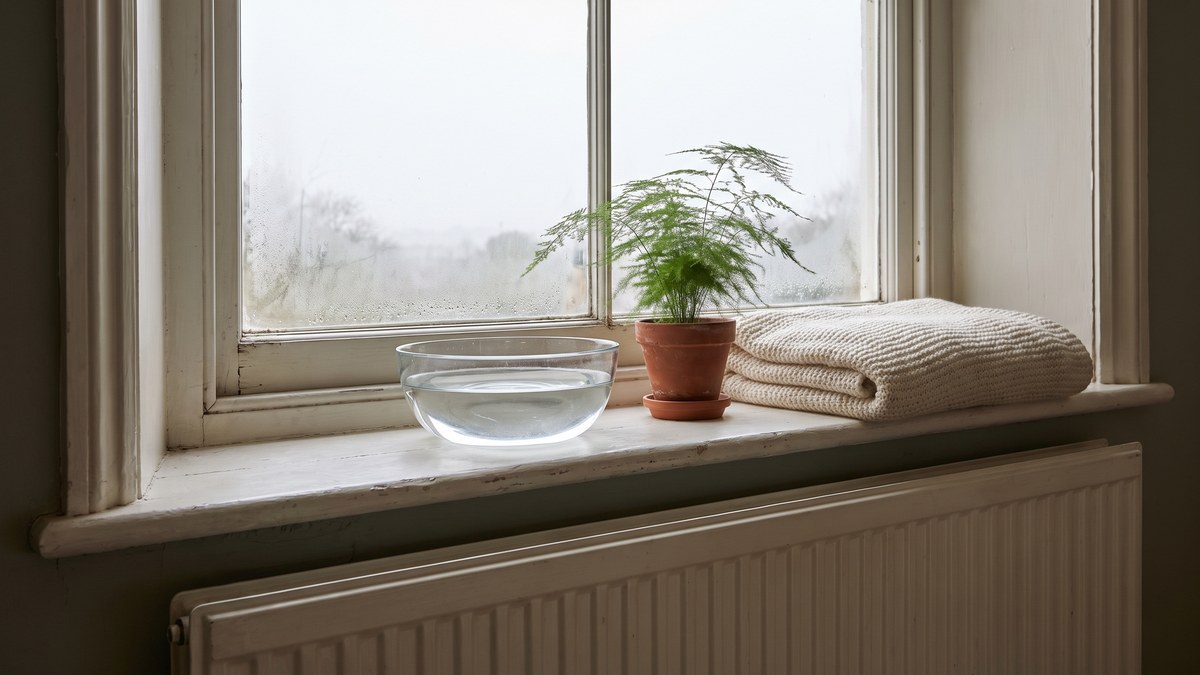
- Stand a wide, shallow bowl of water near a radiator in the rooms you use most. Shallow and wide beats deep and narrow, because more surface area means faster evaporation.
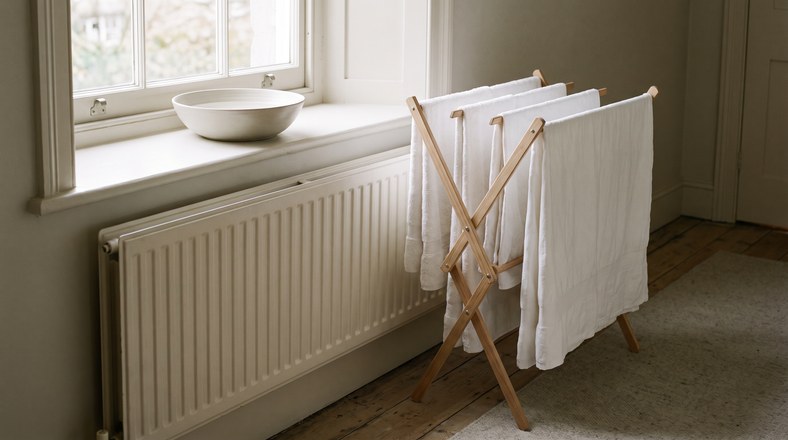
- Dry washing on an airer indoors instead of tumble drying. A rack of damp laundry near a radiator humidifies the whole room while it dries.
- Leave the bathroom door open after a shower and let the steam drift into the rest of the house.
- Cook with lids off when boiling anything, and let your hair dry naturally rather than blow drying it.
One UK-specific caution: plenty of British homes already struggle with condensation and mould in winter. If your windows are streaming in the morning, ease off the indoor laundry and ventilate briefly instead. You are aiming for comfortable mid-range humidity, not a rainforest.
For proper control: a bedroom humidifier
A humidifier does the same job with more precision, and the bedroom is the room to prioritise because overnight is the longest unbroken stretch your skin spends in heated air. Match the unit to the size of the room, and look for a tank that runs 8 to 10 hours so it lasts until morning. Clean it roughly every two weeks, and use distilled or filtered water if you live in a hard water area, otherwise mineral deposits build up inside and performance drops.
And nudge the thermostat down
Most heated homes sit somewhere between 20 and 24°C. The top of that range dries the air noticeably harder for little comfort gain, so drop the setting a degree, wear an extra layer and keep a throw on the sofa. Setting the heating to switch off or step down overnight helps too: a bedroom that is not being actively heated while you sleep holds on to its humidity far better.
 Featured
15% OFF*Limited offer
One Sunday. A week of food, sorted.
23 high-protein recipes, cycle-synced for women who lift.
23 recipes · 60-page PDF · Instant download
£19.20 £16.32
See it on Etsy*Seller's discount on Etsy - may end at any time.
Cleanse Cooler and Gentler to Stop Stripping Your Skin
Hot water and foaming detergents strip the thin film of oils that slows water loss, and they disturb the mildly acidic surface that the skin's repair enzymes need to work. In a heated house, that stripping is often the difference between skin that copes and skin that cracks. The cleansing rules for heating season are short:
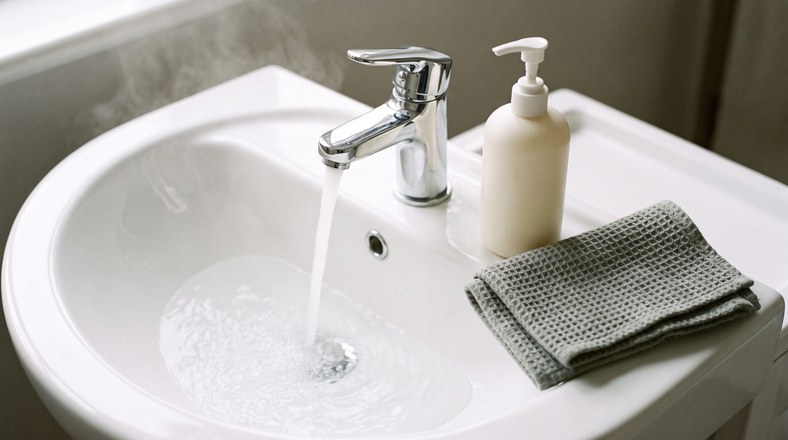
- Wash with lukewarm water, never hot, and keep showers and baths shorter than you would like them to be in January.
- Swap foaming face washes and soap bars for a cream or hydrating cleanser made for dry skin, ideally one with humectants and barrier lipids built in.
- Pat skin dry with a towel rather than rubbing, which physically disturbs the outer layer.
- Park the scrubs, glycolic toners and strong exfoliating acids while your skin is flaky. The roughness you can feel is interrupted skin shedding caused by dryness, not dirt, and scrubbing it away thins an already struggling barrier. Reintroduce acids gently once everything is calm again.
For the basin step, the CeraVe Hydrating Cleanser we reviewed fits the brief exactly: it lifts off grime and make-up without foaming your face dry, and it deposits hyaluronic acid and three ceramides as it rinses away. UK buyers rate it highly for exactly this tight-skin scenario, and one bottle covers morning and evening.
Layer Humectants onto Damp Skin
Humectants are ingredients that attract and hold water: glycerin, urea, lactate and hyaluronic acid are the ones to look for, and several of them are the same molecules your skin uses as its own internal moisture magnets. In a dry, heated room they do their best work when two conditions are met.
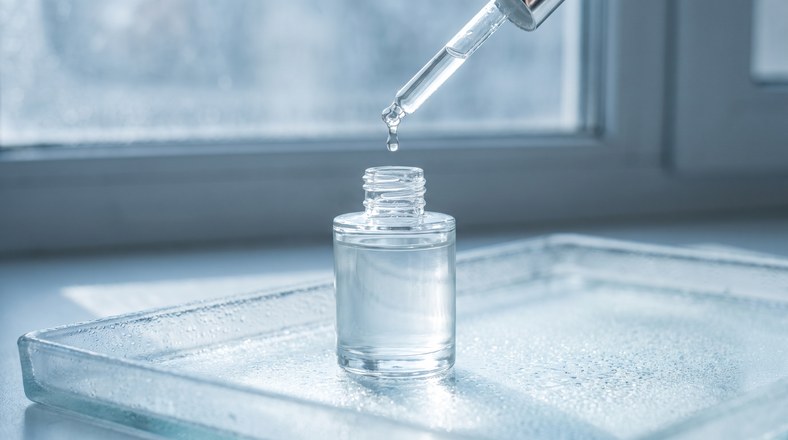
- Apply them to damp skin. The minute after cleansing, while your face is still slightly wet, is when a humectant can trap that surface water and draw it into the outer layer. Applied to bone-dry skin it has far less to work with.
- Always seal them in. Water drawn to the surface will simply evaporate into dry room air unless something slows it down, so a humectant layer needs moisturiser over the top. Serum first, cream second, every time.
Texture matters more than people expect. When skin is reactive from dry air, piling on a single heavy product can leave it hot and overloaded, while a thin serum layer under a normal moisturiser hydrates more effectively without the weight. The Ordinary Hyaluronic Acid 2% + B5 is the pick from our reviews here: a light multi-depth hyaluronic acid serum with ceramides that sits happily under any cream, morning and evening.
Rebuild Your Skin Barrier with Ceramide-Rich Moisturiser
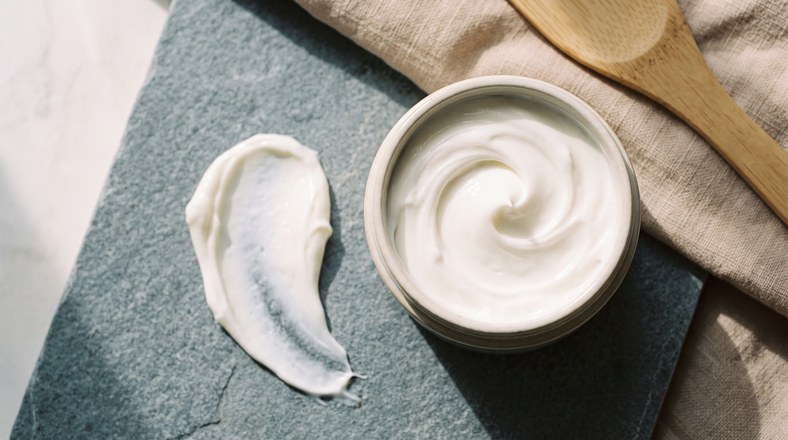
The outermost layer of your skin works like a brick wall: flattened cells are the bricks, and a mortar of ceramides, cholesterol and fatty acids holds it watertight. A healthy wall keeps its water content at around ten to twenty per cent, which is enough for the enzymes that run skin renewal to keep working. Dry heated air pulls that water out, the lipid mortar starts to separate, and tiny cracks open that leak still more moisture. This is why winter dryness worsens on its own: the damage accelerates its cause.
Moisturiser is how you rebuild the mortar rather than just masking the symptom. What to look for:
- Ceramides, cholesterol and fatty acids together, which most closely mirror the skin's own barrier lipids.
- A humectant such as glycerin or hyaluronic acid to draw water in, plus a light occlusive such as squalane or dimethicone to slow evaporation.
- A richer texture at night than in the morning. Evening is when you can afford a heavier layer, and it works undisturbed while you sleep.
CeraVe Moisturising Cream is our reviewed pick for the job: a face and body tub built around three ceramides and hyaluronic acid, simple enough for sensitive skin and rich enough to handle shins and elbows as well as your face. For areas that have already gone past dry into cracked, red or stinging (nostril edges, knuckles, patches of flaring eczema), keep La Roche-Posay Cicaplast Baume B5+ to hand: it is a repairing, soothing balm with panthenol that we reviewed, made for exactly this kind of compromised skin.
Then give it time. Barrier repair is cumulative: tightness usually eases within days of consistent care, but a properly restored barrier typically takes two to four weeks. Keep the routine boring and repetitive; that is what works.
Rescue Lips, Hands, Eyes and Scalp
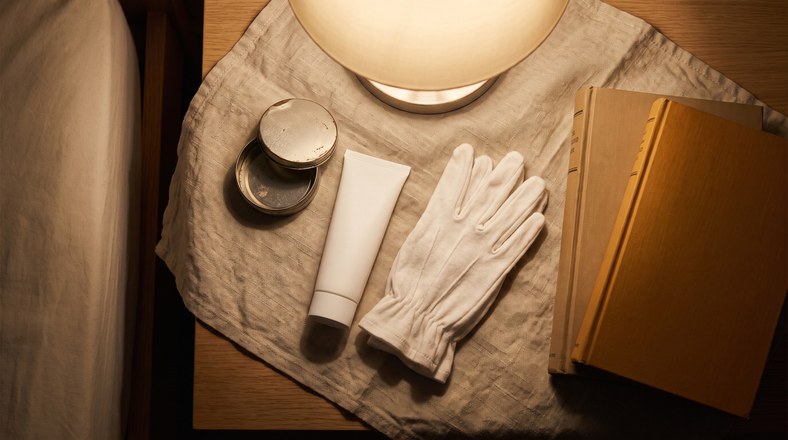
Faces get the attention, but the sharpest central heating complaints usually come from everywhere else. These four areas dry out first and recover slowest, so give each its own small fix.
Lips and nostril edges
Lips dry out overnight in a heated bedroom, especially if a blocked nose has you breathing through your mouth. Apply balm several times through the day and again at bedtime, taking it slightly over the lip line and around the nostrils, which chap from winter nose-blowing. Chapped, cracked lips are also a classic cold sore trigger, and around half of us carry the virus, so prevention matters twice over. A thin overnight seal of Vaseline Original petroleum jelly, which we reviewed, is the simplest occlusive there is: it adds no water itself, it just stops what is there from escaping until morning.
Hands
Hands take the triple hit: cold air outside, dry air inside and more hot-water washing than any other body part. Keep a hand cream by every sink and reapply after washing, then use a thicker layer at night. O'Keeffe's Working Hands is the pick from our reviews once hands have gone past dry into rough or cracked, and a pair of cotton gloves worn over a generous bedtime layer speeds the repair along.
Eyes
The skin around the eyes is thinner and holds less moisture than skin elsewhere, so heated offices and living rooms make eyelids itchy and irritable before anything else feels wrong. Resist piling on heavy eye creams at night, which mostly leads to morning puffiness. A light gel or serum texture applied more often works better: when you get home, before bed and under make-up, allowing 5 to 10 minutes for it to settle before anything goes on top. If your lids are flaring, swap powder eyeshadows, which often carry talc, for cream formulas until spring.
Scalp
Winter means more blow drying, and hot air on top of heated-room air leaves scalps flaky and itchy. Blot hair with a towel, let it dry naturally as far as you can, and finish on a cooler dryer setting only when you need to head out. If heavy flaking carries on however gently you treat it, you may be dealing with dandruff rather than simple dryness, which is a job for a targeted anti-dandruff shampoo rather than richer conditioner.
Back It Up with Diet, Water and Daily SPF
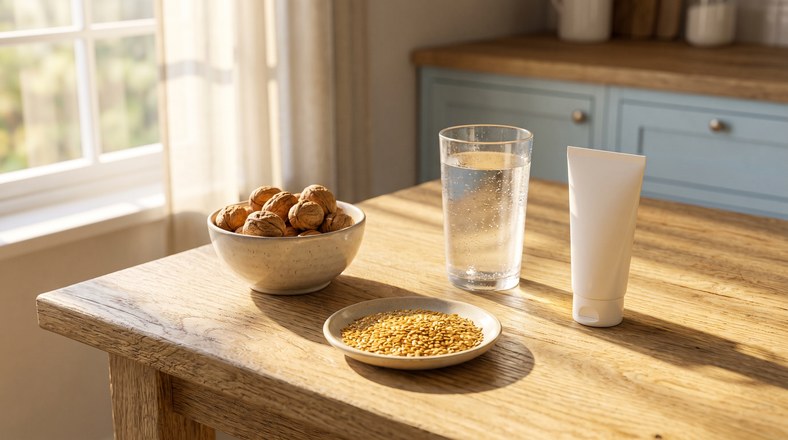
The barrier you are repairing is built from lipids your body has to make, so give it the raw materials. Oily fish, flaxseed and walnuts supply the essential fatty acids skin uses to build ceramides and cholesterol; vitamins C and E, zinc and copper support the enzymes behind collagen production and lipid repair; and steady water intake through the day keeps circulation delivering all of it to the skin. None of this replaces topical care, but a barrier rebuilt from both sides recovers faster than one patched from the outside alone.
Then protect the repair job. A dried-out barrier is more vulnerable to UV damage, and winter UV is not the non-event people assume: UVA passes through window glass, so a desk by the window or a long drive counts as exposure, and low winter sun reflecting off frost or snow can hit the skin more intensely than a grey sky suggests. Keep a facial SPF of at least factor 30 in the morning routine all year round; sitting over a humectant serum and a decent moisturiser, it doubles as the final protective layer of the routine.
Finally, treat late summer and autumn as preparation time. Sort the airer and the bowls, set the heating schedule, and restock balms and creams before the first cold snap rather than after your skin has already cracked. Dry skin from central heating is far easier to prevent than to chase back down in January.
Frequently Asked Questions
How long does it take to fix dry skin caused by central heating?
Tightness and flaking usually start to ease within days of raising indoor humidity and switching to gentler cleansing with richer moisturiser. A properly rebuilt skin barrier takes longer: expect two to four weeks of consistent care before skin holds moisture normally again. If it is still cracked, bleeding or intensely itchy after that, see a GP or dermatologist.
What humidity should my home be to prevent dry skin?
Aim for roughly 40 to 50 per cent relative humidity. Heated rooms can drop below 20 per cent, which actively pulls water out of skin. A humidifier is the most controllable fix, but bowls of water near radiators, indoor laundry drying and an open bathroom door after showers all raise the level. Ease off if you see heavy condensation on the windows, which signals damp risk in UK homes.
Should I turn the central heating off at night for my skin?
If you can sleep comfortably, yes: set it to switch off or step down overnight. Bedrooms heated all night lose humidity for hours at a stretch, which is why lips, eyelids and cheeks often feel worst first thing. A balm on the lips at bedtime, moisturiser as your last skincare step and a bedroom humidifier cover the same ground if you would rather keep the heating on.
Do humectants like hyaluronic acid still work in a heated room?
Yes, with one condition: they must be sealed in. Humectants pull water into the outer layer of skin, but in very dry air that water can evaporate away again unless a moisturiser or balm sits on top to slow the loss. Apply them to damp skin straight after cleansing, then layer a ceramide-rich cream over the top morning and night.
Related Reading
- How to Layer Skincare in the Right Order
- Best Face Moisturiser for Dry Skin UK
- The Best Face Cleansers for Every Skin Type
- Do You Put Sunscreen On Before or After Moisturiser?
- How to Reduce Puffy Eyes in the Morning
Disclaimer: This article contains Amazon affiliate links. We may earn a small commission from qualifying purchases at no extra cost to you.