
How to Stop Sunscreen Leaving a White Cast in the UK
Published 26 August 2026
White cast is caused by mineral UV filters scattering visible light, and it is completely fixable. Here is how to choose invisible formulas and apply them properly without losing any protection.
We earn commission from qualifying Amazon purchases. It costs you nothing and does not affect what we recommend.
Quick Answer
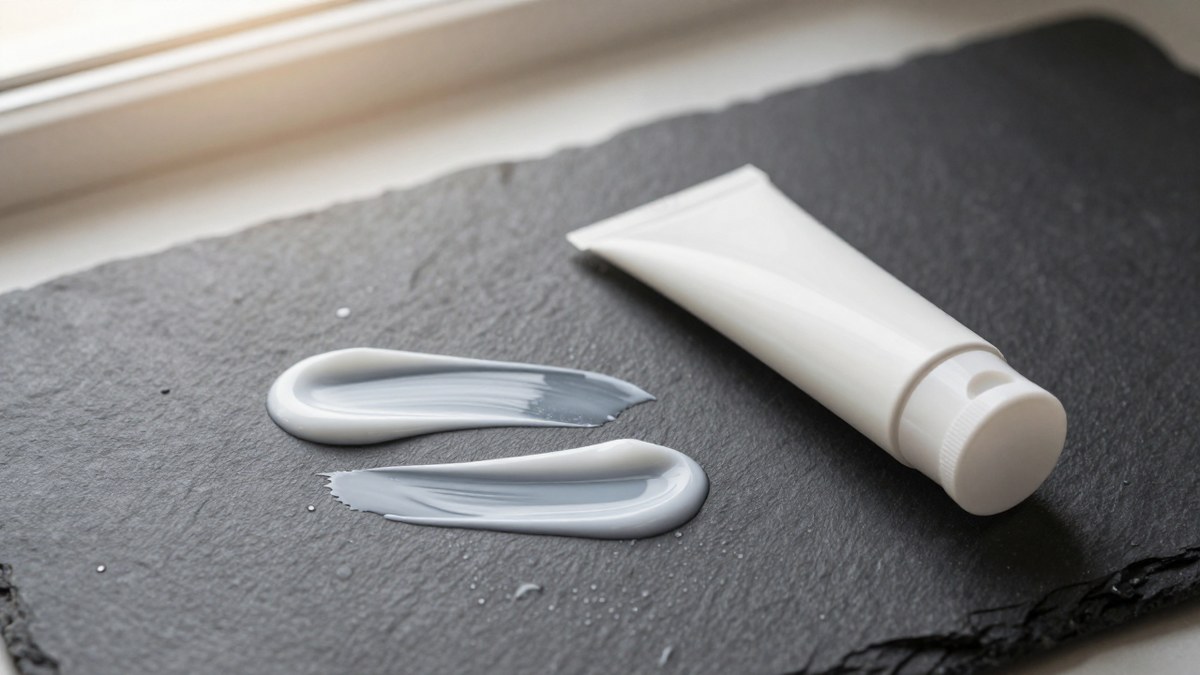
White cast comes from conventional mineral UV filters, zinc oxide and titanium dioxide, scattering visible light off the surface of your skin. The quickest fix is switching to a sunscreen built on organic filters or nano-sized minerals, which have nothing large enough to scatter light. Then apply the full two-finger dose to well-prepped skin, press it in rather than scrubbing, and give it a minute or two to settle clear.
You do the responsible thing, smooth on a generous layer of SPF 50, and ten minutes later the mirror shows a grey, ghostly version of you. On medium and deep skin tones the effect is harsher still, an ashy film that no amount of rubbing seems to shift, and it shows up again in every flash photo. The tempting fix is to use less sunscreen, and that is exactly the wrong move, because protection falls away fast when you under-apply.
The reassuring truth is that white cast is a formulation and technique problem, not a fact of life. This guide explains what actually causes the ghost effect, which of our reviewed sunscreens genuinely wear invisibly on UK shelves, and the application habits that keep full protection without the chalk.
Know What Causes the White Cast
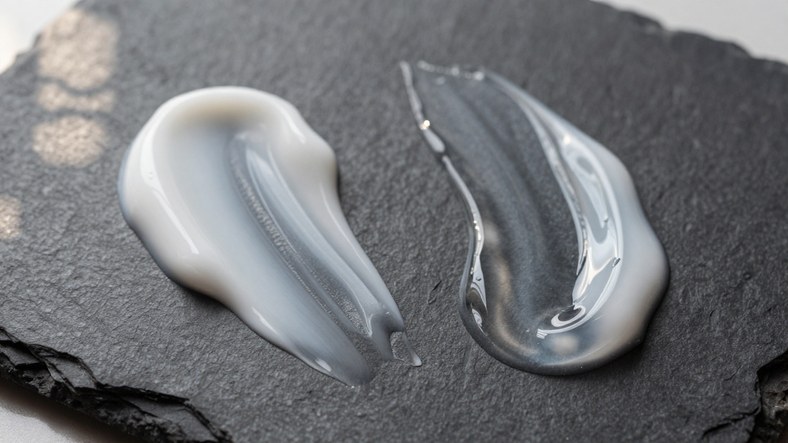
Sunscreens protect you with one of two filter families. Mineral filters, also called inorganic or physical filters, are zinc oxide and titanium dioxide, both naturally brilliant white powders. Organic filters, usually marketed as chemical filters, are carbon-based molecules that dissolve invisibly into the formula. Only the first group causes a cast, and the reason is pure physics.
Mineral particles sit on the surface of your skin. When those particles are a similar size to the wavelengths of visible light, roughly 400 to 700 nanometres, they scatter that light straight back at anyone looking at you, and your eyes read the scattered light as a white or grey film. How strongly a particle scatters comes down to how far its refractive index sits from your skin's. Skin measures roughly 1.45 to 1.55, zinc oxide about 2.0 and titanium dioxide about 2.7, so titanium is the harder of the two to hide and titanium-heavy formulas usually look the chalkiest of all.
A common myth says minerals work by reflecting UV away like a mirror while organic filters absorb it. Modern photobiology research shows both types work almost identically: mineral filters absorb around 95 percent of the UV they block and scatter only a few percent. The white you can see is scattered visible light, a purely cosmetic side effect, not evidence that the product is busy deflecting rays.
Three things make the cast worse:
- High mineral load. The more zinc or titanium in the tube, and the larger the particles, the more light bounces back at the viewer.
- Skin tone contrast. The scattering happens on every complexion, but on medium and deep skin tones the contrast makes it read as grey, ashy or even purple. On fair skin the same effect just looks like dullness, so it goes unreported.
- Rough, dry texture. Flaky patches and fine lines trap product and scatter extra light, which is why the cast often settles into exactly the places you least want highlighted.
Formulation science is chipping away at the problem. In early 2026, researchers at the University of California, Los Angeles published a mineral formula using tetrapod-shaped zinc oxide particles that resist clumping and read warmer against skin. It is not on UK shelves yet, but it underlines the key point of this guide: the cast is a property of specific formulas, not of sunscreen itself, so you can shop and apply your way out of it.
 Featured
15% OFF*Limited offer
One Sunday. A week of food, sorted.
23 high-protein recipes, cycle-synced for women who lift.
23 recipes · 60-page PDF · Instant download
£19.20 £16.32
See it on Etsy*Seller's discount on Etsy - may end at any time.
Switch to an Organic Filter Sunscreen
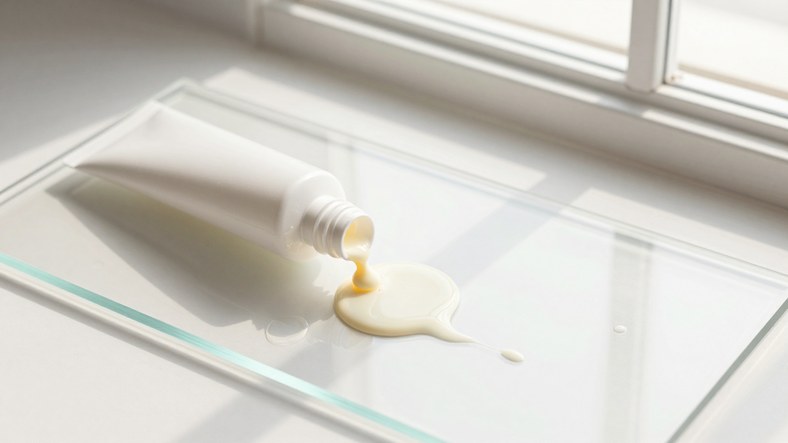
The single most reliable fix is moving your face sunscreen to a formula built entirely on organic filters. With no mineral particles in the product there is nothing to scatter visible light, so the finish is clear on every skin tone at any dose. That last part matters: you can apply the full protective amount without paying a cosmetic penalty for it.
Reading a UK ingredients list takes ten seconds. If zinc oxide and titanium dioxide are absent, you are holding an organic formula. Filter names to recognise include ethylhexyl triazone, octocrylene and diethylamino hydroxybenzoyl hexyl benzoate; they sound industrial, but they are the reason the lotion vanishes.
Keep protection front of mind while you switch. NHS guidance is at least SPF 30 with a UVA rating of at least 4 stars, and the two measures cover different things: SPF grades UVB, the burning rays, while the star rating on UK packs grades UVA, the ageing rays that pass through cloud and glass. A UVA logo inside a circle shows the product meets the EU standard. For summer days outdoors, step up to SPF 50.
Three of our reviewed products fit the brief:
- COSRX Ultra-Light Invisible Sunscreen SPF 50 is the cleanest answer in our line-up. We checked its filter list against the current listing and it is 100 percent organic with zero mineral content, so there is physically nothing in the tube that can leave a cast. The weightless lotion texture sits well under makeup.
- Beauty of Joseon Relief Sun Rice Probiotics SPF 50+ also runs entirely on organic filters, wrapped in a creamy, skincare-like base; its own listing now advertises the absence of a white cast. It dries to a natural, hydrated finish rather than a hard matte, which suits drier skins.
- La Roche-Posay Anthelios UVmune 400 Invisible Fluid SPF 50+ uses the Mexoryl filter family in one of the thinnest, most fluid textures you can buy. It spreads in seconds, dries down invisible, and it is designed to cover the longest UVA wavelengths, which is where the 400 in its name comes from and a genuine advantage if you are managing pigmentation.
One reason these formulas feel so far ahead: UK and EU rules permit a wider set of modern organic filters than some other markets, so brands selling here can build very light, photostable textures. If an invisible sunscreen disappointed you abroad, the UK shelf is a better hunting ground.
Consider a Hybrid with Nano Mineral Filters
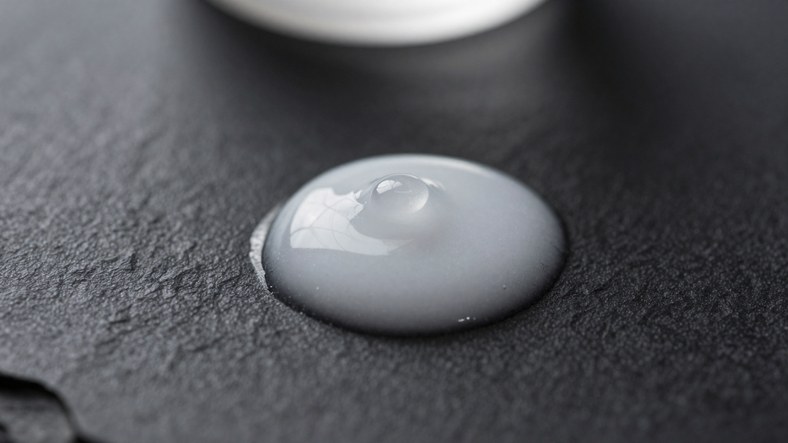
Plenty of shoppers still want a mineral element, often because sensitive skin tolerates it well. Here is the point almost every guide misses: mineral does not automatically mean cast. Particle size decides everything, and the difference is written on the label.
Visible light waves span roughly 400 to 700 nanometres. Conventional non-nano mineral particles are typically around 100 to 200 nanometres across, close enough to those wavelengths to scatter a great deal of visible light, and that scattered light is the white you see. Nano particles measure under 100 nanometres, small enough relative to the light waves that far more light passes them by instead of bouncing back. Same mineral, radically different look. UK and EU labelling rules make this easy to check, because nano ingredients must be flagged: you will see the word nano in brackets right there in the ingredients list.
Our reviewed example is Altruist Sunscreen SPF 50, a dermatologist-developed formula that pairs several modern organic filters with titanium dioxide in nano form. On skin it wears near-invisibly, which would be impossible with conventional titanium dioxide at the same protection level. It carries a 5-star UVA rating, and it currently comes as a twin pack of large bottles, which makes proper full-body dosing realistic rather than theoretical.
If the word nano gives you pause, the current evidence is reassuring: studies show these particles stay on the stratum corneum, the outermost layer of dead skin cells, rather than passing into living tissue, and UK and EU regulators review nano filters specifically before they are permitted.
The practical takeaway when you are comparing two mineral-containing bottles:
- Titanium dioxide (nano) or zinc oxide (nano) in the ingredients: expect a far lighter, clearer finish.
- The same minerals without the nano marker: expect visible whiteness, especially at SPF 50 concentrations, and plan your application technique accordingly.
Prep Your Skin So Sunscreen Blends In
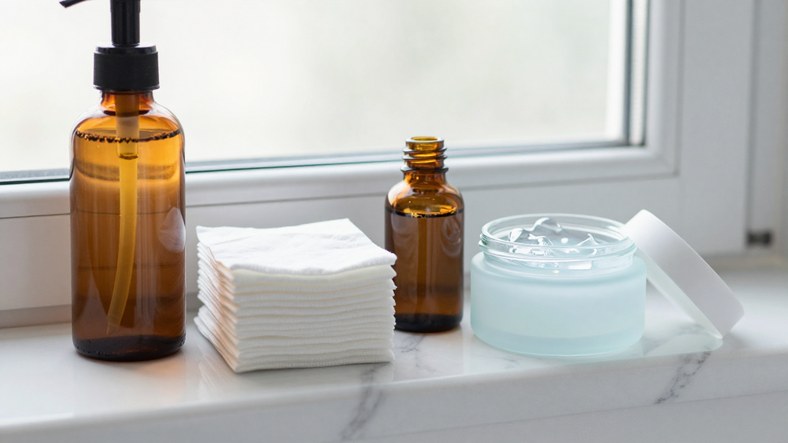
The same sunscreen can look invisible on one face and patchy on another, and the difference is usually the canvas. Rough, dehydrated skin scatters extra light on its own, then grips product unevenly so the formula dries in streaks. A little preparation removes most of that.
The night before: smooth the surface. A gentle chemical exfoliant dissolves the flaky patches that cast clings to. Sweeping The Ordinary Glycolic Acid 7% Exfoliating Toner over the face two or three evenings a week keeps texture even without the micro-scratches a physical scrub leaves behind. Keep acids to the evening, since they can heighten sun sensitivity, which is one more reason your morning SPF matters, and skip a session whenever your skin already feels tight or irritated.
In the morning: hydrate lightly and wait. A thin layer of fast-absorbing moisturiser plumps fine lines and gives sunscreen a smooth, even base. Neutrogena Hydro Boost Water Gel works well here because it is an oil-free gel that disappears in under a minute rather than sitting greasily on top. The waiting matters as much as the product: give any moisturiser about ninety seconds to settle fully, because sunscreen applied over a still-wet layer mixes with it, pills and dries patchy.
What to avoid underneath. Very rich balms and heavy occlusive creams stop sunscreen spreading into an even film, so save those for evenings. The same goes for thick waxy primers; if your sunscreen suddenly starts balling up into little crumbs, the layer underneath is nearly always the culprit.
Body skin follows the same rules on a bigger scale. Arms and legs carrying weeks of dry, flaky build-up will show a lotion's whiteness far more than smooth skin does, so regular moisturising pays off in how your sun protection looks as well as how it feels. Nothing specialist is needed: a plain, fragrance-light option such as Aveeno Daily Moisturising Body Lotion through the week is enough.
Apply Enough and Blend It Properly
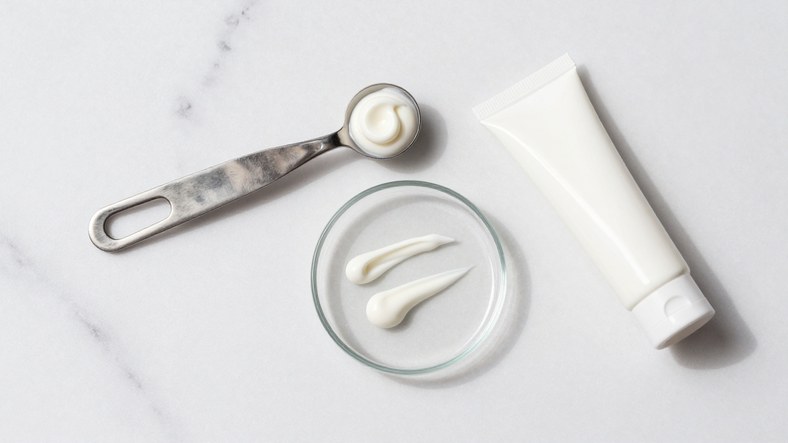
Here is the uncomfortable truth behind most white cast complaints: the fear of looking chalky pushes people to apply a fraction of the amount the SPF number assumes. Sunscreen testing uses two milligrams per square centimetre of skin, far more than a typical quick smear, and the NHS is blunt that protection drops sharply when sunscreen is applied too thinly. Solving the cast by using less swaps a cosmetic problem for a medical one.
The doses to memorise:
- Face, ears and neck: around half a teaspoon, which is the classic squeeze of cream run along the length of two fingers. A quarter teaspoon covers the face on its own, so add the rest for ears and neck.
- Whole adult body: six to eight teaspoons. Most beach applications use half that at best.
Technique then decides how that full dose looks:
- Dot, do not blob. Distribute the product in dots across forehead, cheeks, nose and chin before blending, so no single area starts overloaded.
- Two thin layers beat one thick one. Smooth on half the dose, give it a minute, then follow with the rest. Each layer dries thinner and clearer, and you still reach the full amount.
- Press, do not scrub. Vigorous back-and-forth rubbing drags particles into uneven clumps. Smooth the product outwards, then press your palms flat over each area to bed it in.
- Wait before judging. Many formulas flash white for a minute or two until the water in them evaporates. Check the mirror after five minutes, not five seconds.
- Set with a damp sponge before makeup. If a faint surface film remains, pressing a clean damp makeup sponge gently over the skin lifts the excess without stripping the protective layer, and foundation then goes on smoothly.
Timing rounds out the routine. The NHS advises applying sunscreen around thirty minutes before you go out and topping up just before you leave, then reapplying every two hours. Water, sweat and towel-drying all remove product, even from water-resistant formulas, so swim days need more diligence rather than less.
Stop the Cast on Your Body Too
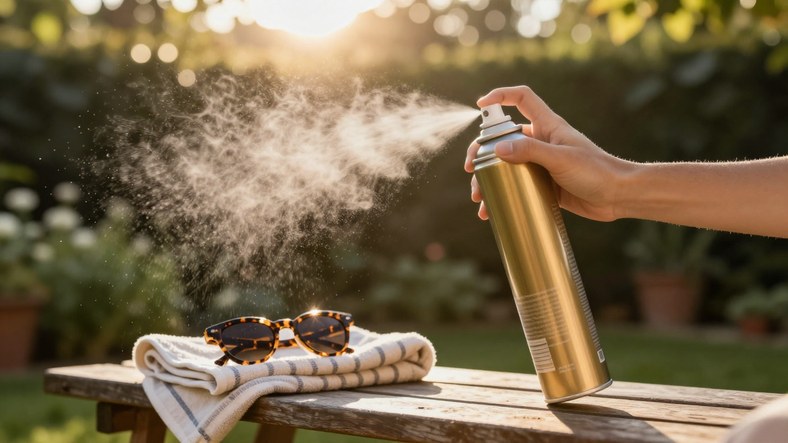
Faces get all the attention, but body sunscreen is where the largest volumes meet the least patience. Covering arms, legs, back and chest properly takes several teaspoons of product, and halfway through rubbing in a mineral-rich lotion many people give up, leaving streaks that dry bright white against summer clothes.
Format is the answer. Garnier Ambre Solaire SPF 50+ Sensitive Advanced Dry Mist is our reviewed pick for exactly this job: its verified filter list is fully organic, so nothing in it can scatter light, and the dry-touch mist covers large areas in seconds with no greasy film to work in. It is water resistant and fragrance free, and it turns the every-two-hours top-up from a chore into a ten-second pass, including over backs and shoulders you cannot easily reach. One habit makes sprays work properly: mist until the skin shows an even sheen, then sweep over it with your palm. A quick waft from a distance deposits far less product than any SPF test assumes.
Lotion loyalists should read labels with the nano rule from earlier in mind. NIVEA SUN Protect & Moisture SPF 30 is a well-rated, widely used body lotion with a hydrating, fast-absorbing feel, and it illustrates the trade-off honestly: alongside its organic filters it contains titanium dioxide, so during application it shows more whiteness than a fully organic formula, particularly on deeper skin tones. Massage it in section by section and the finish calms down as it absorbs. It remains a solid everyday choice, just one that rewards thorough blending rather than a hasty once-over. If you would rather have a lotion with no mineral filter in it at all, Piz Buin Moisturising Sun Lotion SPF 30 is the fully organic option in our reviewed line-up and it sinks in clear.
Finally, remember the UK context that guides written for other markets tend to skip. The sun here is strong enough to damage skin from March to October, especially between 11am and 3pm, and you can burn on a cloudy British day. Check the UV index on your weather app: from 3 upwards, protection is worth wearing. Cast-free formulas remove the last excuse for saving sunscreen for holidays abroad.
Frequently Asked Questions
Does a white cast mean the sunscreen protects better?
No. The white you can see is visible light scattering off mineral particles, a cosmetic side effect with no bearing on UV performance. Research shows mineral filters absorb around 95 percent of the UV they block, working much like organic filters, so an invisible formula at the same SPF and UVA rating protects just as well. The real risk runs the other way: if a cast tempts you to apply less, your actual protection falls well below the number on the bottle.
Why does my sunscreen look fine in the mirror but white in photos?
Camera flash is far harsher than daylight, and mineral particles bounce it straight back at the lens, an effect photographers call flashback. Skin that looked normal all evening can appear ghost-white in pictures. If an event with photography is coming up, take a quick flash selfie once your sunscreen has settled, or wear a fully organic filter formula, which has no particles to catch the flash.
What should deeper skin tones look for first?
Fully organic filter formulas are the most dependable route, because the ashy or purple-toned cast that minerals leave is most visible where contrast is highest. If you prefer or need mineral filters, tinted versions containing iron oxides neutralise the whiteness and add protection against visible light, which is genuinely useful if you are managing hyperpigmentation or melasma. Whatever you choose, never fix a cast by using less product; full coverage is what stops dark marks deepening.
Is white cast still a problem in UK winter?
Less sun, same principle. The UK sun is strongest from March to October, but UVA passes through cloud and window glass all year, so many people keep a daily face SPF on year-round, especially for pigmentation concerns. Modern invisible formulas make that painless: a fluid organic filter sunscreen disappears under winter moisturiser and makeup exactly as it does in July.
Related Reading
- COSRX Ultra-Light Invisible Sunscreen SPF 50 review
- Beauty of Joseon Relief Sun Rice SPF 50+ review
- La Roche-Posay Anthelios UVmune 400 Invisible Fluid review
- Altruist Sunscreen SPF 50 review
- The Ordinary Glycolic Acid 7% Exfoliating Toner review
- Neutrogena Hydro Boost Water Gel review
- Garnier Ambre Solaire Sensitive Advanced Dry Mist SPF 50+ review
- NIVEA SUN Protect and Moisture SPF 30 review
- Aveeno Daily Moisturising Body Lotion review
- Piz Buin Moisturising Sun Lotion SPF 30 review
- How to Fade Acne Marks on Your Face (UK Guide)
- AHA vs BHA for Clogged Pores in the UK: Which One Works?
Disclaimer: This article contains Amazon affiliate links. We may earn a small commission from qualifying purchases at no extra cost to you.