
How to Fade Acne Marks on Your Face (UK Guide)
Published 23 August 2026
Most post-acne marks are flat discolouration, not scars, and they fade with the right routine. Here is how to tell which marks you have, what to use on brown versus red, and how long it realistically takes.
We earn commission from qualifying Amazon purchases. It costs you nothing and does not affect what we recommend.
Quick Answer
Most post-acne marks are flat discolouration rather than scars, and flat marks do fade. Brown, tan or grey marks are post-inflammatory hyperpigmentation and respond to vitamin C, niacinamide, azelaic acid and gentle chemical exfoliation, while flat pink or red marks are post-inflammatory erythema, a blood vessel response that needs calming rather than brightening. Daily broad spectrum sun protection is the step that decides how quickly either type clears, and most marks take somewhere between three and twelve months.
- Step 1: Work Out Whether You Have Marks or Scars
- Step 2: Stop New Marks Forming While You Fade the Old Ones
- Step 3: Wear Sunscreen Every Day, Even in a British Winter
- Step 4: Match the Active to the Colour of Your Marks
- Step 5: Add Exfoliation and a Retinoid at Night, Slowly
- Step 6: Know the Timeline and When to See a Pharmacist or GP
- Frequently Asked Questions
- Related Reading
Almost every page ranking for this question quietly swaps between two different problems. They open on the flat brown or pink patches a spot leaves behind, then drift into ice pick scars, microneedling and laser resurfacing. Those are not the same thing, and the difference decides whether any serum you buy can help you at all.
Flat marks are discolouration sitting in otherwise intact skin, and they fade. True acne scars are structural changes in the deeper layer of the skin, and no cream will rebuild that collagen. Only about one in five people who get acne develops real scarring, so the odds are that what is annoying you in the bathroom mirror is a mark rather than a scar. That is genuinely good news.
This guide starts by helping you work out which one you are looking at, then gives you a UK routine for the marks that actually respond, in the order the steps matter. The honest summary: stop making new spots, protect the marks from daylight all year, add one sensible active, and judge it at twelve weeks rather than twelve days.
Step 1: Work Out Whether You Have Marks or Scars
Do this in daylight at a window, on a clean face with no makeup. Turn your head so the light rakes across your cheek from the side rather than hitting it straight on. Side lighting throws a shadow into any dip in the surface, which is exactly what you want to see. Then close your eyes and run a fingertip slowly over the area. You are feeling for a pit, a lip or a raised lump. Pure colour change feels like nothing at all.
Flat marks, the kind that fade
- Post-inflammatory hyperpigmentation (PIH) is tan, brown, grey or deep purple-brown. Inflammation from the spot pushes your melanocytes to overproduce melanin while the skin heals, and that pigment stays behind after the spot has gone. It is more common, more obvious and slower to shift in medium and deeper skin tones.
- Post-inflammatory erythema (PIE) is flat pink, red or purple. It is not pigment at all. It is capillaries near the surface that widened during the breakout and have not returned to normal. It shows most clearly in fair to medium skin, and rosacea-prone or reactive skin is more prone to it.
Both are flat. Neither has damaged your collagen. Plenty of people have both at once, in different patches, on the same cheek.
The blanch test takes five seconds
Press one clean fingertip firmly onto the mark, hold for two to three seconds, lift it and look immediately.
- If the mark whitens under the pressure and the colour then floods back, it is PIE. You briefly pushed blood out of the dilated vessels causing it.
- If the colour is identical before and after, it is PIH. Melanin sits inside skin cells and does not move with blood flow.
This beats judging by colour alone, which is unreliable in deeper skin tones where PIE often reads as brownish-purple rather than red.
Scars, the kind that need a clinic
- Ice pick - narrow, deep pits that look like the skin has been punctured.
- Boxcar - round or oval craters with defined edges, usually on the cheeks and temples.
- Rolling - broad, shallow undulations that make skin look wavy under side lighting.
- Hypertrophic or keloid - raised, firm tissue, most often on the jawline, chest, back and shoulders.
If the surface is altered, the structure underneath is altered, and topical skincare cannot fill it in. Skincare can still improve any discolouration sitting on top of a scar, which is worth doing, but the dip itself needs professional treatment. Being honest with yourself at this stage saves months of buying the wrong products.
 Featured
15% OFF*Limited offer
One Sunday. A week of food, sorted.
23 high-protein recipes, cycle-synced for women who lift.
23 recipes · 60-page PDF · Instant download
£19.20 £16.32
See it on Etsy*Seller's discount on Etsy - may end at any time.
Step 2: Stop New Marks Forming While You Fade the Old Ones
This is the step people skip, and it is the reason so many routines stall. Every fresh inflamed spot deposits a fresh mark, so chasing old marks while acne is still active is like repainting a wall while someone keeps knocking dents in it. Dermatologists routinely settle the acne first for this exact reason, and the same logic applies at home: get the breakouts under control and the fading you achieve finally becomes visible.
Three habits do most of the work, and none of them require buying anything.
- Do not pick or squeeze. Squeezing forces the contents of a spot sideways and deeper, widens the inflammation and turns a mark that would have faded in weeks into one that lingers for months, or into a permanent scar. It is the single biggest factor you control.
- Do not scrub. Grainy scrubs, flannels used with force and washing four times a day all irritate the skin, and irritation is inflammation, which is precisely what creates marks. Cleanse twice a day with your fingertips and pat dry.
- Treat spots early. The longer inflammatory acne runs untreated, the higher the risk of both marks and true scarring. Waiting it out is the expensive option.
What actually helps
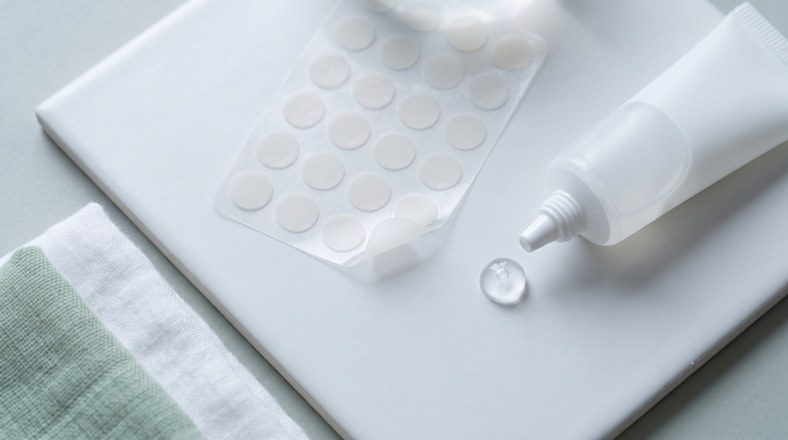
A translucent hydrocolloid patch over a whitehead draws out fluid overnight and, more usefully, puts a physical barrier between the spot and your fingers at 11pm. Dots for Spots Patches are a simple version of this: stick one on clean, dry skin, leave it until it turns opaque, and do not use them on unbroken cysts, where they have nothing to absorb.
Benzoyl peroxide tackles the bacteria involved in inflammatory spots and is one of the few over the counter actives with a real effect on the spots that leave the worst marks. Acnecide Face Gel delivers it at 5%. Apply a thin layer to affected areas rather than a thick spot dab, start every other night and build up if your skin stays comfortable, and buffer with moisturiser if it dries you out. It bleaches towels, pillowcases and clothing, so use white bedding while you are on it. If 5% stings or flakes your skin, use it less often rather than pushing through, because dryness and flaking make acne worse.
A salicylic acid cleanser keeps pores clear without any scrubbing. Salicylic acid is oil soluble, so it gets into the pore lining, it is anti-inflammatory, and it is well tolerated in darker skin tones. CeraVe Blemish Control Cleanser pairs it with niacinamide and ceramides, so it clears congestion without stripping the barrier you need intact for the rest of this routine.
If new cysts and nodules keep arriving despite all this, or you have been treating acne for three months with no progress, that is a pharmacist or GP conversation. Prescription treatment works faster, and every extra month of active acne is another month of new marks.
Step 3: Wear Sunscreen Every Day, Even in a British Winter
If you change only one thing after reading this, change this one. Ultraviolet light drives melanocytes to produce more melanin, so daylight re-darkens post-inflammatory hyperpigmentation faster than most actives can fade it. Using a brightening serum without daily sun protection wastes the serum. Every dermatologist source consulted for this guide says the same thing in different words: sun protection is the part of the plan that makes the rest of the plan work.
It matters for red marks too. UV worsens inflammation, and inflammation is what keeps those capillaries dilated. It also stops the contrast widening as the rest of your face picks up colour in summer.
Why the British weather is a trap
UVB, the burning wavelength, does drop off sharply here between October and March, which is why people stop bothering. UVA does not behave that way. It penetrates cloud and passes straight through window glass, and it is UVA along with visible light that drives persistent pigmentation. A grey commute, a desk by a window and a school run in drizzle all still count. If you are actively treating marks, this is a twelve-month job, not a summer one.
What to look for
- Broad spectrum, SPF 30 as a floor and SPF 50 while you are actively fading marks.
- Strong UVA protection. On UK packs that is shown by the UVA logo printed inside a circle.
- Enough product. Around two finger lengths of fluid sunscreen, or roughly a third of a teaspoon, covers a face and neck. Most people apply less than half of what the SPF number on the bottle was tested at.
- Reapply every two hours if you are outdoors, and after swimming or heavy sweating.
- Non-comedogenic fluid, gel or lotion textures if you are acne prone, so you are not trading marks for congestion.
- A tinted mineral formula if your pigmentation is stubborn. The iron oxides that create the tint also block visible light, which plain sunscreens do not.
La Roche-Posay Anthelios UVmune 400 SPF50+ is the straightforward answer for most faces here: very high UVA protection in a thin, fast-absorbing fluid that layers under makeup without pilling, and a fragrance-free formula that suits skin already being treated with acids or retinoids. Whichever you pick, the one that works is the one whose texture you can stand wearing every single morning.
Sun protection alone will not fade an existing mark. It stops it getting darker while everything else you do gets on with the fading, and it prevents the new spots you are treating from leaving deeper marks in the first place.
Step 4: Match the Active to the Colour of Your Marks
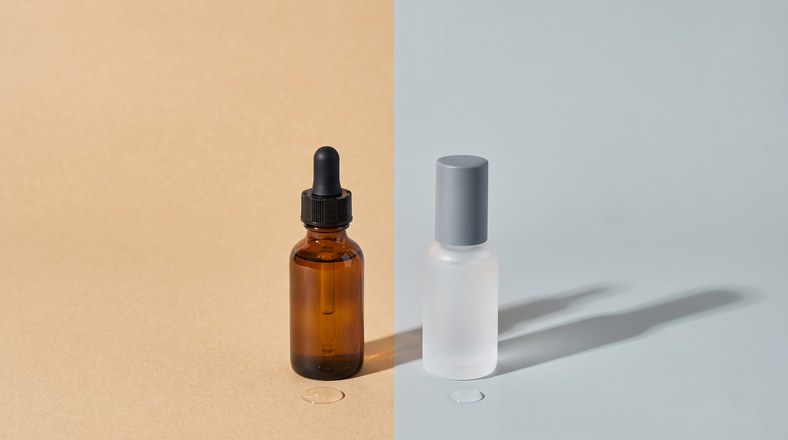
Brown marks and red marks are different biological problems, and the ingredients that fix them only partly overlap. Buying a pigment-fading serum for red marks is the most common wasted purchase in this whole category. Work out your colour with the blanch test in step one, then pick one lane and stay in it.
Brown, tan and grey marks (PIH)
Here the target is melanin: less of it made, less of it passed to the surface cells, and what is already there shed faster.
- Vitamin C inhibits tyrosinase, the enzyme that drives melanin production, and neutralises the free radicals from UV and pollution that push pigment production higher. The clinical evidence sits with L-ascorbic acid at 10 to 20% at a pH below 3.5; gentler derivatives are less potent but far more stable. Use it in the morning on clean skin, before moisturiser and sunscreen, and give it up to three months before judging it. Buy it in opaque or airless packaging, because light and air degrade it into uselessness.
- Niacinamide reduces the transfer of melanin from pigment cells to surrounding skin cells, calms inflammation and helps regulate oil. It is one of the easiest actives to tolerate and layers happily with almost everything, including vitamin C.
- Azelaic acid is anti-inflammatory, antioxidant and speeds cell turnover, and some studies rate it alongside hydroquinone for pigmentation. It comes in 10, 15 and 20% strengths; the higher two are prescription in the UK. It is a good choice if you have both marks and residual redness.
- Tranexamic acid works on several fronts at once, reducing tyrosinase activity, calming inflammation and limiting pigment transfer. Useful for marks that have not budged with vitamin C.
- Alpha arbutin and kojic acid are gentler tyrosinase inhibitors, worth trying if stronger actives irritate you.
- Hydroquinone is prescription-only in the UK and used in supervised cycles with breaks, never indefinitely. Overusing it can worsen pigmentation, which is why it is not a self-prescribe ingredient.
Garnier Vitamin C Brightening Serum is a sensible first move if you are starting from nothing: 4% vitamin C with niacinamide and salicylic acid, so it covers three of the mechanisms above in one morning step. Patch test it behind the ear first and build up to daily use, because the salicylic acid makes it more active than a plain vitamin C serum.
Pink, red and purple marks (PIE)
Pigment inhibitors do very little here, because there is no excess pigment to inhibit. The target is inflammation and capillary recovery, which means calming down rather than stripping back.
- Niacinamide and azelaic acid both reduce visible redness and are the two most useful actives for PIE.
- Vitamin C helps indirectly, since it is anti-inflammatory and supports collagen while the skin repairs.
- Barrier repair matters more than any active. Panthenol, madecassoside, ceramides and glycerin all help the skin settle.
- Cut anything that flushes the skin while you are treating it: very hot showers, harsh scrubs, three acids in the same routine. Red marks look dramatically worse for an hour after heat or exercise, which is normal and not a sign your routine has failed.
La Roche-Posay Cicaplast Baume B5+ earns its place in a PIE routine and in the recovery kit of anyone who has overdone an active. Panthenol and madecassoside in a fragrance-free balm, used as a nightly repair layer over marked areas or as a full-face rescue for a few days when your skin has had enough.
One rule covers both colours: do not run five actives at once. Two, applied consistently for three months, beat five applied erratically. Irritation from over-treating can trigger fresh post-inflammatory hyperpigmentation of its own, which is the exact thing you are trying to fix.
Step 5: Add Exfoliation and a Retinoid at Night, Slowly
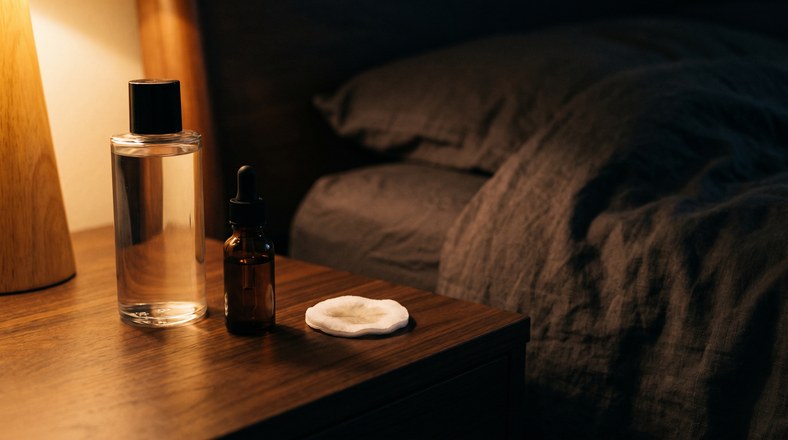
Pigmented skin cells fade as they shed, so anything that speeds up cell turnover speeds up the fading. That is why chemical exfoliants and retinoids sit at the centre of every dermatologist-designed routine for post-acne marks. Both also irritate skin that meets them too fast, and irritation makes marks worse, so the schedule matters as much as the product.
Chemical exfoliants
- Glycolic acid, an AHA, dissolves the bonds holding dead surface cells together, evens tone over a few weeks and improves how well whatever you apply next penetrates. Leave-on toners and serums do considerably more than wash-off cleansers containing the same acid.
- Salicylic acid, a BHA, is oil soluble so it works inside the pore. The better pick if you still get congestion alongside the marks.
- Lactic acid is the gentler AHA, worth choosing for dry or reactive skin.
- Two or three nights a week is plenty. Daily acid use is how people end up with a damaged barrier, more redness and slower fading than when they started.
- Skip physical scrubs entirely. They aggravate capillaries and worsen both redness and pigmentation.
The Ordinary Glycolic Acid 7% Exfoliating Toner is the straightforward version: sweep it over the face on a cotton pad on non-retinoid nights, keep it away from the eye area, and never use it on broken, freshly picked or stinging skin.
Retinoids
- Retinoids accelerate turnover so pigmented cells shed faster, and over months they stimulate collagen, which makes them the one topical class that does anything at all for shallow textural change. Research on retinoic acid combined with glycolic acid found the appearance of acne marks and scarring improved in 91% of people after twelve weeks.
- Over the counter you have retinol and retinal (retinaldehyde), plus adapalene 0.1%, which UK pharmacies sell without a prescription and which is specifically an acne treatment. Tretinoin and stronger combinations come from a GP or dermatologist.
- Start two nights a week, on dry skin after cleansing, and moisturise on top. Build to alternate nights only if your skin stays calm. Some flaking in the first fortnight is normal; stinging, burning and raw patches are not.
- Retinoids increase UV sensitivity, so they are a night-only product and the daily sunscreen in step three stops being optional the moment you start one.
- Do not use retinoids if you are pregnant, breastfeeding or trying to conceive. Ask a pharmacist about azelaic acid instead.
celimax The Vita A Retinal Shot Tightening Booster uses retinal at 0.1%. Retinal converts to the skin-active form in fewer steps than retinol, so it works at lower strengths, which suits skin that is already dealing with marks. Treat it as a two-nights-a-week product for the first month.
Do not layer an acid and a retinoid on the same night while you are building tolerance. Alternate them: acid on Monday and Thursday, retinoid on Tuesday and Saturday, plain moisturiser on the nights in between.
Step 6: Know the Timeline and When to See a Pharmacist or GP
Realistic expectations matter more here than any single product, because most of the products people abandon were working and got dropped at week three.
How long marks actually take
- Mild PIH usually starts lightening within six to twelve weeks.
- Moderate PIH commonly needs three to six months.
- Deep or long-standing PIH, especially after cystic acne, often runs six to twelve months. Pigment that has settled in the deeper layer of the skin reads blue-grey rather than brown and can take longer than a year.
- PIE is less predictable. Mild redness can settle in three to six months, while more significant redness stays visible for a year or more, because blood vessels repair more slowly than the surface does.
- Left completely alone, with no treatment and no sun protection, marks of either kind can hang around for well over a year, and a minority never fully clear.
Give any single active twelve weeks of consistent use before deciding it does not work. Photograph the same cheek in the same light, at the same time of day, once a fortnight. Comparing today with yesterday in a bathroom mirror tells you nothing.
One warning that catches people out after in-clinic treatment: pigment sometimes looks darker before it looks better, as deeper pigment rises through the layers. That stage is short and is not a sign the treatment failed.
Covering marks while you wait
There is nothing wrong with concealing marks in the meantime, as long as what you use does not cause the next round of them. Check makeup is labelled non-comedogenic, take it off properly every night, and be wary of heavy, oily formulas applied thickly over blemish-prone areas, which are a well documented cause of fresh breakouts. Green-toned correctors neutralise red marks and peach or orange tones counteract brown-grey ones on deeper skin. If marks are affecting your confidence badly, the NHS points people towards the Changing Faces Skin Camouflage Service, and camouflage products are sold over the counter in pharmacies.
What a clinic can do
If your marks have not moved after months of a consistent routine, or what you have turns out to be textural, professional options exist. Briefly, and without the hype:
- Chemical peels remove pigmented surface layers in a controlled way. Salicylic and glycolic peels are common for post-acne marks, usually as a course of monthly sessions.
- Microneedling creates controlled micro-injuries that trigger collagen production, used for shallow boxcar and rolling scars, typically four to six sessions spaced four to six weeks apart with results developing over three to six months.
- Laser and IPL can target either the vessels behind red marks or the melanin behind brown ones. Skin tone matters enormously here: several light-based treatments carry a real risk of causing more pigmentation in medium and deeper skin, so choose a practitioner with genuine experience of your skin type and ask directly how many patients like you they have treated.
- Subcision and dermal filler release and lift tethered, pitted scars. This is scar territory, not mark territory.
- Prescription topicals from a GP or dermatologist include tretinoin, stronger azelaic acid and supervised hydroquinone.
Two things are worth knowing before booking anything. Active acne should be settled first, because resurfacing inflamed skin risks more inflammation and more marks. And treatment for acne scarring is classed as cosmetic surgery in the UK, so it is not usually available on the NHS.
When to stop and get advice
- New inflamed spots keep arriving despite over the counter treatment. You need a prescription, not another serum.
- What you are treating is textural rather than flat. A clinic assessment will tell you what will and will not help before you spend anything.
- Your skin stings, burns, peels or gets redder after starting something. Stop it, go back to a plain moisturiser and sunscreen for a fortnight, and reintroduce one product at a time.
- A mark bleeds, itches persistently, grows or changes shape. Book a GP appointment. That is not a post-acne mark and it needs looking at properly.
None of this is a diagnosis, and no routine can promise a particular result on your skin. What it can do is stop you making new marks, stop the sun undoing your progress, and give the marks you already have the best conditions to fade in.
Frequently Asked Questions
How long do acne marks take to fade?
It depends on the type and depth. Mild post-inflammatory hyperpigmentation often starts lightening within six to twelve weeks, moderate marks take three to six months, and deep marks after cystic acne can run six to twelve months or longer, particularly when the pigment sits in the deeper layer of the skin and reads blue-grey. Flat red marks follow their own timetable because blood vessels heal slowly, settling in three to six months for some people and lasting a year or more for others. Daily sun protection is the single biggest factor in how fast any of it happens.
Can I use vitamin C and niacinamide together?
Yes. The old warning that the two cancel each other out came from lab conditions involving heat and unstable raw ingredients, not from finished formulas on skin, and plenty of products now deliberately combine them. Apply the thinner one first, give it a moment to absorb, then follow with the other. If your skin flushes or tingles uncomfortably, use vitamin C in the morning and niacinamide at night rather than dropping either one.
Will acne marks go away on their own without any products?
Usually, eventually. Flat marks are not permanent damage, so most of them fade without intervention, but it can take anywhere from several months to well over a year, and some marks in deeper skin tones never fully clear on their own. Sun exposure without protection slows the process considerably and can make marks look darker than when they started. Doing nothing except wearing sunscreen daily is still a legitimate plan, just a slower one.
Do I really need SPF for acne marks in a British winter?
Yes, if you want the marks to fade at a sensible rate. UVB drops sharply here in winter, but UVA does not, and it travels through cloud and window glass all year. UVA and visible light are the wavelengths most involved in persistent pigmentation, so a grey January is not the free pass it feels like. If you are also using acids or a retinoid, sunscreen stops being optional altogether, because both make skin more sensitive to UV.
Related Reading
- CeraVe Blemish Control Cleanser review
- Acnecide 5% Benzoyl Peroxide Face Gel review
- The Ordinary Glycolic Acid 7% Exfoliating Toner review
- Neutrogena Hydro Boost Water Gel review
- Garnier Vitamin C Brightening Serum review
- La Roche-Posay Anthelios UVmune 400 SPF50+ review
- La Roche-Posay Cicaplast Baume B5+ review
- Dots for Spots Translucent Hydrocolloid Patches review
- celimax Vita A Retinal Shot review
- AHA vs BHA for Clogged Pores in the UK: Which One Works?
- Micellar Water vs Cleansing Balm: Best for Makeup Removal?
Disclaimer: This article contains Amazon affiliate links. We may earn a small commission from qualifying purchases at no extra cost to you.