
When to start growing a Movember beard UK: why the answer is 1 November
When to start growing a Movember beard in the UK, what Movember's own rules say about beards today, and how to read your own stubble before you commit to a month of it.
We earn commission from qualifying Amazon purchases. It costs you nothing and does not affect what we recommend.
Quick answer
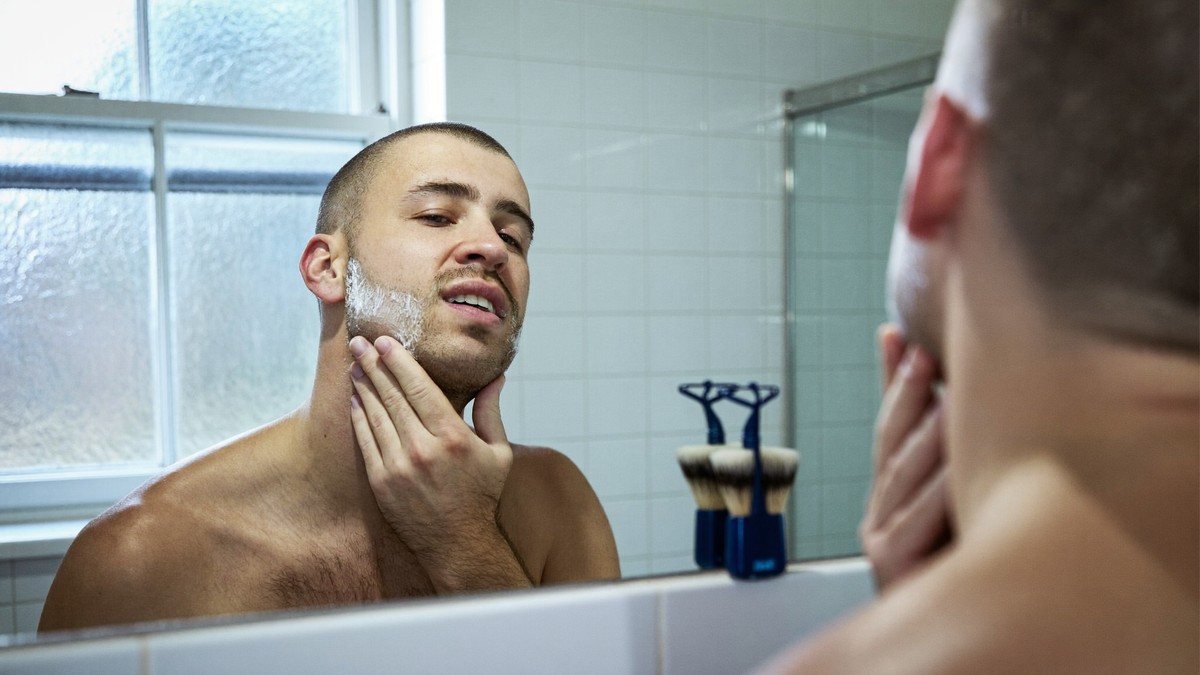
You start on 1 November, not before. Movember asks every participant to begin the month completely clean shaven and says head starts are not allowed, so the autumn is for preparation, not growth. Do this instead: shave tonight, look at your face in daylight 72 hours later to find your gaps, then decide what to grow and register.
What Movember actually asks of you
Movember's own FAQ is blunt. On Movember 1st, it says, all participants should start completely clean shaven, because Movember is for one month only and head starts are not allowed and go against the spirit of Movember. The Grow page puts it in six words: Start Movember clean-shaven. Then start growing.
On beards Movember says two things in two places, and you should know both. The FAQ is the soft version: a traditional Mo is one that ideally does not join upwards to meet your sideburns, which is technically a beard, and preferably does not join downwards across the chin, which would be a goatee. It adds that if you are a Mo Bro with a passion for another type of facial hair, it encourages you to jump on the Mo Train during Movember in the name of men's health.
The Grow Toolkit the same site hands you is the hard version, and rule three reads: don't fake it. No beards, no goatees and no fake moustaches. So the moustache is the ask and the beard is tolerated. Nobody is closing your Mo Space over it, but Movember's own rules card does not bless it.
Sign up at movember.com or in the app, choose Grow, set up a Mo Space. Funds go to mental health and suicide prevention, prostate cancer and testicular cancer.
 Featured
15% OFF*Limited offer
One Sunday. A week of food, sorted.
23 high-protein recipes, cycle-synced for women who lift.
23 recipes · 60-page PDF · Instant download
£19.20 £16.32
See it on Etsy*Seller's discount on Etsy - may end at any time.
Reading your own face before you commit
The date is fixed for everyone. Whether a moustache suits your face is not, and you can settle that this week. What follows here is our judgement on reading a face, not NHS or Movember guidance, apart from the ingrown hair advice.
The 72-hour test
Shave tonight, then look at your face in daylight after 24 hours and again after 72. The first tells you how fast hair arrives and whether your skin objects to being shaved at all. The second tells you what matters: where hair does not arrive.
Do it at a window, not under a bathroom downlight, which throws shadow into the philtrum and flatters thin growth exactly where you need an honest answer.
Where your gaps are, and whether a moustache hides them
Two places decide a Movember look: the philtrum, the groove between nose and top lip, and the corners where a moustache drops towards the smile lines.
This is where the moustache-versus-beard question answers itself. A beard is forgiving: sparse cheeks vanish into the growth around them. A moustache sits alone in the middle of your face, so a thin philtrum has nothing to hide behind. Gaps on the cheeks, and a moustache flatters you. A gap under the nose, and it does not.
If the gap is under your nose, do not force a Mo. The beard route is tolerated rather than blessed, and Move is a full alternative if you would rather not grow anything at all.
Which grower you are, and how to tell
At 72 hours, in daylight, stretch your top lip flat over your teeth. If the whole strip reads dark with no skin showing through, you are dense. If you can see any skin-coloured gap wider than a fingertip, or the corners fade out before the smile lines, you are patchy. That is your type, and it will not change between now and November.
Fast, dense growers have no growth problem, only a definition problem. A moustache on its own is well within reach.
Slow or patchy growers should decide now which they would rather be: visibly patchy for a good cause, which is our preference because a patchy Mo gets asked about and a tidy one gets ignored, or fuller in shape and lower in density.
This next one sits on top of either type, so read it whichever group you are in. Men with coarse or curly hair face something else. NHS advice on ingrown hairs says you may be more likely to get them if your hair is coarse or curly, and that the best way to prevent them is not to shave. That is awkward advice for a campaign opening with a shave, so treat 1 November as the riskiest day of your month and read the shaving section before you get there.
How your skin took it last time
If you have ever gone a week without shaving you already have most of the answer. Skin that coped with a fortnight of holiday stubble will cope in November. Skin that turned into a rash by day four needs the day-zero routine from day one, not from the point it complains.
Your countdown, from September to 30 November
Dates first, then the adjustment rule: if your moustache at day 14 still looks like the week-one description below, push every stage back a week and shape in the final ten days.
September, while it costs you nothing
Nothing to grow yet, so run the 72-hour test and check the state of your razor. It is blunt if it tugs instead of gliding, or if the strip has faded. Put a fresh blade on now rather than on the 1st.
If you are prone to bumps, stop chasing a close shave now.
October, the last-call jobs
Pick the style the 72-hour test pointed at, then register and set up your Mo Space.
If you intend to colour a grey moustache, test the dye now rather than in November, because day two of the campaign is a bad time to find out you react to it. And if you already have a moustache, Movember suggests making that your opening fundraiser, getting people to sponsor you to shave it off on the 1st.
31 October and 1 November
Guides disagree here: one says shave on 31 October, another insists the razor must not touch your face before the 1st. The rule as Movember writes it concerns the state of your face on 1 November, not a stopwatch on the razor, so shaving on Halloween evening and waking up clean shaven satisfies it. That is also easier on your skin, which gets a few hours to settle first.
Week one: 1 to 7 November
Stubble, and usually itch. Nothing will look deliberate this week, which is normal. Leave the moustache alone; the only thing you touch is the neck.
Week two: 8 to 14 November, the one that catches people out
The moustache has length but no shape, and the cheeks have gone from clean to unkempt. That is the point at which the whole thing stops feeling like a plan and starts feeling like neglect.
The fix is not to trim the moustache, which has nothing to spare. It is to clean the border around it so the growth looks chosen. If you are growing the Mo alone, take the neck back to a natural line and shave the cheeks clean. If you have gone the beard route, take the neck back the same way but only tidy the cheek line rather than shaving into it. Ten minutes of edges buys you the rest of the month.
Week three: 15 to 21 November
The first honest shaping, now there is enough length to see a shape rather than guess at one. Trim the lip line clear of your mouth and even the sides against each other, not against a symmetry your face does not have. Everything you take off has to grow back before the 30th.
Week four: 22 to 30 November
Maintenance, and the last push on fundraising, which was always the point. If you are shaving it off, say so a few days out and let people sponsor the shave. Nothing obliges you to remove it on the 30th.
Growth rate varies enormously between men and changes with age, so the dates above are when to look, not a promise of what you will see.
The day-zero shave, done properly
There is a real tension in that first shave. Movember wants you completely clean shaven. NHS advice on preventing ingrown hairs says not to shave too close, because leaving some stubble can stop bacteria getting in. Both are satisfiable if you accept a shave that looks clean rather than one chased to nothing with repeated passes against the grain.
Our call, if a blade wrecks your skin: run a trimmer over the whole face on its shortest guard on 31 October instead. You are trading strict compliance with the clean-shaven rule for not shredding your face, which is a trade we would make, and it leaves the stubble the NHS says can stop bacteria getting in. If a razor is all you own, one pass with the grain and stop, even if you can still feel it.
The NHS advice on shaving comes down to a few things:
- wet the skin with warm water and use shaving gel
- shave in the direction the hairs are growing
- use as few strokes as you can, and rinse the razor after every one
- do not use a blunt razor
- hold a cool, wet cloth against the skin afterwards to reduce irritation
An exfoliating scrub helps release trapped hairs, and our call is that it belongs in the run-up to the 1st rather than on raw skin straight after. A pharmacist can suggest products for shaving irritation and a mild antiseptic to help prevent infection.
After day one the razor has a smaller job: neck and cheeks, never the moustache. The NHS suggests not shaving every day where you can avoid it. Keep an unperfumed moisturiser going on the shaved skin and under the growth.
What goes wrong, and what to do about it
The week-one itch
Regrowth on freshly shaved skin itches, and November indoors is dry, which does not help. NHS advice for itchy skin is to pat or tap rather than scratch, hold something cool against it such as a damp towel, use an unperfumed moisturiser or emollient regularly, and keep your nails clean, short and smooth. Skip perfumed soaps and long hot showers. A pharmacist can help as well: antihistamines may help with some causes of itching, and menthol creams cool it.
See a GP if the itching is severe, is affecting your daily life, is not settling with self care, keeps coming back, is all over your body, or is caused by a new rash, lump or swelling that you are worried about. A new hard, painful lump filled with pus on your face is the exception: that one is the urgent route below.
One warning goes with all of this: keep away from fire, flames and cigarettes while you are using any moisturiser or emollient, paraffin-based or not, because the NHS notes that clothing and bedding that has been in contact with one can catch fire easily, and a hot wash reduces the build-up without removing it.
Ingrown hairs, and when a bump stops being cosmetic
Ingrown hairs are bumps, often itchy, where a hair has curled back into the skin, and you can sometimes see it trapped underneath. Infected ones are painful and you may see pus. Do not scratch, pick or squeeze them: the NHS says this can damage your skin and lead to infection. A pharmacist can suggest a cream for the itch and a mild antiseptic to help prevent infection in the first place.
Once that bump turns into a hard, painful lump filled with pus, though, the NHS calls it a boil, and the advice changes. NHS guidance on boils is to ask for an urgent GP appointment or get help from NHS 111 if a boil is on your face, if the skin around it feels hot, painful and swollen, if you feel hot, cold or shivery, or if your immune system is weakened, for example by steroids or diabetes. In this article the face bullet applies to everyone by definition, which is why this is worth knowing before the 1st.
Escalation matters more than treatment here. NHS advice on ingrown hairs is to see a GP if an ingrown hair or the area around it is very painful, hot or swollen, and any one of the three is enough. NHS guidance on cellulitis, a skin infection that starts in broken skin, treats painful, hot and swollen skin together as a reason to ask for an urgent GP appointment or get help from NHS 111, and the boils page agrees.
The pages set a different bar, so take the more urgent: if any one of those three is true, ask for the urgent appointment or call 111.
A razor nick is exactly the break that lets cellulitis start, and the NHS notes such a break is sometimes too small to notice. The ingrown hairs page also sends you to a GP if you have an ingrown hair and a high temperature, or you feel hot, cold or shivery or very unwell, even if nothing looks swollen.
Call 999 or go to A&E if hot, swollen skin comes with any of these:
- a very high temperature, or feeling hot, cold or shivery
- a fast heartbeat or fast breathing
- purple patches on your skin, but this may be less obvious on brown or black skin
- feeling dizzy or faint
- confusion or disorientation
- cold, clammy or pale skin
- unresponsiveness or loss of consciousness
NHS advice on sepsis adds that not everyone has every symptom, so if you are worried something is seriously wrong, treat that as reason enough. Do not drive yourself: ask someone to drive you, or call 999 for an ambulance. Untreated, the NHS says the infection can spread to the blood, muscles and bones.
Colouring a grey moustache
Plenty of men colour a grey Mo so it reads in photographs, and this is where Movember carries a real allergy risk. Many permanent and some semi-permanent hair dyes contain PPD, or paraphenylenediamine, which the NHS describes as known to irritate skin or cause allergic reactions.
- Wear gloves.
- Test the dye on a strand of your hair at least 48 hours before you want to use it, and follow the instructions on the packet. Buy a patch test kit to use at home if you think you may be allergic to hair dye. Our review of the best-selling Just For Men beard dye covers why long-term users are the ones caught out.
- Reactions can take up to 72 hours to appear, so 48 hours is the floor and three days is safer. That is another reason to do this in October rather than the night before.
- Your risk is higher if you have ever had a black henna tattoo, because the paste used contains high levels of PPD.
- Try to avoid products that contain PPD, especially if you have ever had a reaction to hair dye or a black henna tattoo, and choose a non-permanent hair dye if you have previously had a reaction to a permanent hair dye.
Common reactions include stinging and burning, an itchy rash, dryness, tightness and soreness, or blisters. Wash the area thoroughly with a mild shampoo straight away if you think you are having one, and do not carry on with a dye that reacted at the test or left you unwell. A pharmacist can help with mild symptoms, with an emollient or antihistamine tablets or cream for the itching, and you should see a GP if the symptoms get worse.
A serious allergic reaction to hair dye is rare, but possible. Call 999 if:
- lips, mouth, throat or tongue suddenly swell
- breathing becomes very fast or a struggle, and you may become very wheezy or feel like you are choking or gasping for air
- the throat feels tight or swallowing is difficult
- skin, tongue or lips turn blue, grey or pale, and if you have black or brown skin this may be easier to see on the palms of your hands or the soles of your feet
- someone becomes suddenly very confused, drowsy or dizzy
- someone faints and cannot be woken
There may also be a rash that is swollen, raised or itchy. Do not drive yourself to A&E.
Use an adrenaline auto-injector first if one is available, then call 999 and say you think it is an anaphylactic reaction. Then lie down and raise your legs, but if you are struggling to breathe, raise your shoulders or sit up slowly instead. Use a second injector after five minutes if nothing improves, and do not stand or walk at any point, even if you feel better.
November skin under a new moustache
The heating goes on, indoor humidity drops, and a face that was fine in October feels tight. Dry, cracked or irritated skin is one of the ordinary causes of itching, so moisturise under the moustache, not only around it. Our guide to fixing dry skin caused by central heating deals with the underlying problem.
Frequently asked questions
Can I start growing my moustache in October?
You can, but Movember asks you not to. It requires all participants to start 1 November completely clean shaven and says head starts are not allowed. Nobody is checking your face, but Movember's own wording is that a head start goes against the spirit of Movember.
Is a beard allowed for Movember?
Officially, no. Rule three in Movember's own Grow Toolkit is don't fake it. No beards, no goatees and no fake moustaches. In practice the FAQ is gentler: it says a traditional Mo ideally does not meet your sideburns and preferably does not cross your chin, and it explicitly encourages men with a passion for another type of facial hair to take part anyway. A beard will not get you excluded. It just is not what the campaign is asking for.
How long does it take to grow a moustache worth photographing?
Shaping needs length you will not have before week three, and shaping is what makes it read as a moustache rather than as growth: the lip line trimmed clear of your mouth, the sides evened against each other. Growth rate varies enormously between individuals and with age, so if day 14 looks like the week-one description, expect that to land later.
What if I cannot grow a moustache at all?
You can still take part. Movember runs Move, which is walking or running 60km over the month for the 60 men lost to suicide every hour worldwide, plus hosting a Mo-ment and Mo Your Own Way for anything else.
Do I have to shave it off on 30 November?
No. The commitment is to grow through the month, not to remove it afterwards. If you are shaving it anyway, announce it a few days ahead and let people sponsor the shave.
Movember has already started and I forgot to shave. Can I still join?
Yes. Shave clean today and start from there. A shorter Mo is an easier thing to explain than a perfect one.