
When to Start Using a Humidifier for Skin in the UK
The date on the calendar is the wrong trigger. What decides when to start using a humidifier for skin in the UK is your heating and what your skin does after washing. Here is how to read both, month by month from September to March.
We earn commission from qualifying Amazon purchases. It costs you nothing and does not affect what we recommend.
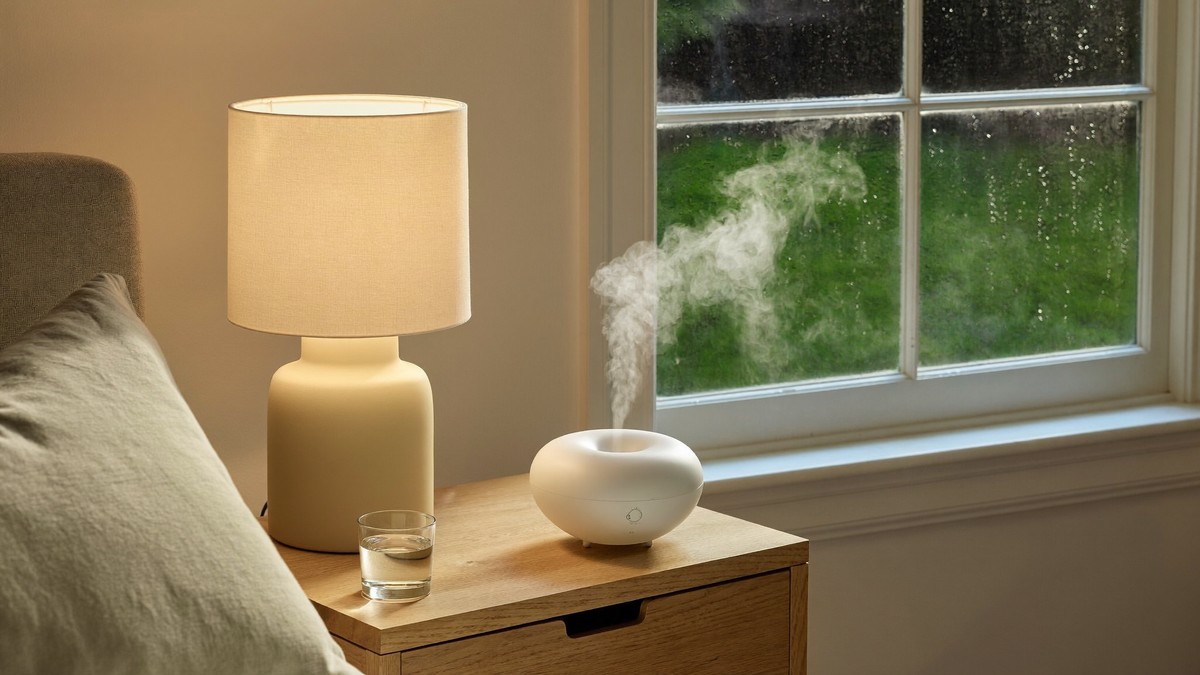
Quick answer
Start when your heating does, not when the calendar turns. In most UK homes that lands somewhere in October. The signal that settles it is your own: skin tight within minutes of washing, flaking round the nose, and a hygrometer reading under about 40 per cent indoors. Stop when the heating goes off, usually in March.
Most advice on when to start using a humidifier for skin in the UK hands you a month, and a month is a guess about your house. Cold outdoor air holds very little water, so once it comes inside and you warm it to 21 degrees its relative humidity collapses: your home gets drier the harder you heat it, which is why the driest weeks are the coldest ones. A sealed new-build flat can be under 35 per cent by mid-October while a draughty terrace does not get there until December. The question is not what date it is, but what your air and your skin are doing now.
The signs your indoor air has dried out
None of these is conclusive alone. Three or four together is your answer.
Skin feels tight before you leave the bathroom
Wash your face as normal, pat dry, apply nothing, and count the minutes until it feels tight when you raise your eyebrows. Comfortable air buys you ten or fifteen minutes; a dry room, two or three. That gap measures how fast water is leaving your skin, which is the whole question.
Flaking turns up in the same few places
Dry-air flaking is predictable: the sides of the nose, the eyebrows and between them, the hairline, sometimes the eyelids. It looks like fine powder rather than crusting and returns within a day. A patch that weeps or stings sharply is a different problem, and a humidifier will not touch it.
Lips crack and the corners split
Lips have almost no barrier of their own, so they register a dry room days before the rest of the face. A heavy occlusive at night is the direct fix, and plain petroleum jelly on cracked lips overnight does that without the drying flavourings lip balms often carry.
Static, a dry throat, and a cream that stopped lasting
Hair lifting off a jumper, sheets crackling when you turn over, a shock off the car door: static needs dry air to build, and it stops being an everyday nuisance once a room sits above 40 per cent. Waking hoarse, or with a nostril blocked and no cold in sight, is the same signal from another direction. So is a moisturiser that stopped lasting the day: the cream did not change, the air did.
The ninety second check that settles it
A basic digital hygrometer is the equivalent of taking a temperature instead of guessing at a fever. Put it in the bedroom at head height for someone lying down, away from the radiator, the window and any outside wall, and leave it half an hour.
Standard guidance gives 40 to 60 per cent relative humidity as the comfortable band for a home. Under 40 per cent is where dry-air symptoms start; under 30 per cent, most people are visibly flaking and should not wait for a month to arrive. Read it in the evening with the heating on and again first thing, because the overnight figure governs your skin.
When it is not the air at all
If your skin got worse before the heating came on, look at your routine first: a squeaky-finish cleanser, showers hot enough to redden the skin, a new retinoid, or acids more than twice a week all cause tightness in a perfectly humid room. Our guide to dry skin caused by central heating covers that side.
 Featured
15% OFF*Limited offer
One Sunday. A week of food, sorted.
23 high-protein recipes, cycle-synced for women who lift.
23 recipes · 60-page PDF · Instant download
£19.20 £16.32
See it on Etsy*Seller's discount on Etsy - may end at any time.
Different homes, different starting points
Two people in the same postcode can need a humidifier six weeks apart, and the difference is the building, not their skin.
A modern, sealed flat with the heating on constantly. The driest case and the earliest start: tight seals mean little exchange with outdoor air, the heating still runs, and almost no moisture arrives from anywhere. Expect October, and expect a lower mid-winter reading than anyone you know.
An older, draughty house. More outside air gets in, but it is cold and nearly moisture-free, so the room is not necessarily better off. Readings swing about and unheated rooms can hold damp of their own, so humidifying the whole house is a bad idea. Treat one room and leave the rest alone.
Bedroom rather than whole flat. If you are choosing, choose the bedroom: longest uninterrupted exposure, door shut, and a volume small enough that a modest unit moves the reading. A living room needs a far bigger machine to achieve less.
Eczema, rosacea or reactive skin. Dry air is a recognised trigger for flares, and easing it can make a hard month less hard. It is not a treatment: a humidifier does not treat eczema or rosacea and does not replace emollients or anything a GP has prescribed. Persistent, spreading or painful skin problems are a GP or pharmacist question. Barrier creams matter more here, which is why an oat-based gel moisturiser for easily irritated skin is usually the better winter buy.
Contact lens wearers. Often the first to notice, with lenses going gritty by mid-evening well before the face flakes. If your eyes started complaining in October, your skin is next.
Month by month through the heating season
The UK is not one climate. Heating goes on two to four weeks earlier in northern Scotland than on the south coast, and the season shifts by a fortnight between a mild year and a cold one. Use these months as the shape of the season and let the thermostat and the hygrometer set the dates.
September
Nothing to do yet in most homes: the heating is off or on briefly in the evening, and readings usually sit fine. Buy the hygrometer now and take a baseline, so that when the number drops you know it dropped.
October
The turning point for most households. Watch for the heating staying on two or three days running rather than the first cold night: that is when readings fall and stay down, and when the first tightness, lip cracks and nose flakes appear. Under 40 per cent for several days is your cue to start.
November
Settled in. The heating is routine and the humidifier becomes a habit rather than a decision. Get the cleaning cadence right now, because it is the one you will still be following in February.
December
Colder snaps, higher thermostat settings, and a battering from overheated shops, offices and other people's houses. Check the window in the mornings: December is when people first over-correct and find condensation.
January
Usually the hardest month, and it catches people out because they assume more heating means more comfort. The opposite happens: the coldest outdoor air holds the least moisture, so air drawn into the house starts drier and heating it hard drives humidity to its yearly low. Run the unit nightly this month if no other.
February
Still cold, still dry, and by now the maintenance has slipped. The musty smell, the film on the tank, the unit that seems weaker: February complaints are usually cleaning problems rather than air problems.
March
Taper, then stop. The heating goes off during the day, outdoor air warms and carries more moisture, and the machine that was barely keeping up in January will push a bedroom past 60 per cent overnight. Running it into a mild damp spring turns a skin fix into a mould problem. Stop when the heating stops, then empty, dry and store it.
Running one properly in a bedroom
Setup matters more than the machine. Take a hygrometer reading before you switch anything on, then check daily for the first week and weekly after that.
Up off the floor and away from things. A bedside table or chest of drawers at waist to chest height; on the floor the mist settles into carpet and skirting. Keep it 30cm clear of walls and curtains, and not above a radiator, where the warm plume skews readings.
About a metre from your head, not beside the pillow. Closer gives you a damp pillow and a cold face while the rest of the room stays dry. Aim the outlet into open space, not at the bed, wall or wooden furniture.
Target 45 to 50 per cent, not as high as it will go. Mid-band leaves room for the overnight rise. Above 60 per cent for hours at a time is a dust mite and mould question, and in a bedroom with cold external walls it shows as condensation and damp corners.
Run it overnight rather than all day. Door shut, seven or eight hours, nobody in and out. All-day running in a living room needs a bigger unit and gets diluted every time a door opens.
Keep moisturising, and moisturise damp. Humidified air slows how fast water leaves the skin; it puts nothing back. The cream still does the sealing, and works best within a minute of washing. A ceramide-based moisturising cream in a tub is the unglamorous partner for this.
Mind the water. Cool tap water suits most evaporative units. Ultrasonic units in hard water areas atomise everything dissolved in it and leave white dust on dark surfaces, so use cooled boiled or distilled water, or the demineralisation cartridge. No essential oils unless the unit is built for them.
Clean it more often than feels necessary. Empty and rinse every morning and refill fresh; never top up a tank that has stood part full. Once a week, descale with white vinegar or whatever the maker specifies and dry it fully.
Where it goes wrong
Over-humidifying. The most expensive mistake: condensation inside the window, a musty smell, black spotting behind the wardrobe. Turn the output down, open the windows for ten or fifteen minutes, wipe the frames rather than letting water sit, and get back under 55 per cent.
A dirty tank. Cool-mist units do not sterilise the water, so anything growing in a tank left standing gets sprayed into the room you sleep in. Slimy walls and a sour smell mean strip it, clean it, empty it daily.
White mineral dust. A pale film on the bedside table and dark bedding is hard water plus an ultrasonic unit, not a fault. Change the water, or the type of unit.
Expecting it to replace skincare. It changes the conditions. It does not repair a damaged barrier or offset a routine that strips the skin every morning.
Treating the wrong cause. If the flaking started in August, or is confined to your hands, or began the week you switched cleansers, the air is not the culprit. Fix the routine first.
Frequently asked questions
Does a humidifier actually help dry skin?
It helps with one specific cause: air so dry that water leaves the skin faster than the barrier can replace it. Raising room humidity slows that loss, which is why tightness and flaking often ease within a few nights. It does not treat eczema, psoriasis or rosacea, and it will not fix skin being stripped by a harsh cleanser or hot water.
What humidity should a UK bedroom be in winter?
Typical guidance puts the comfortable band at 40 to 60 per cent relative humidity, and the middle of it, around 45 to 50 per cent, is the sensible target. Below 40 per cent is where dry-air symptoms start; above 60 per cent sustained is where dust mites and mould take over.
Can a humidifier cause damp or mould?
Yes, if you push the room past about 60 per cent and leave it there. Older UK housing with cold external walls shows it first as morning condensation and a musty smell behind furniture. A hygrometer and a willingness to turn the unit down are the defence.
Do I still need moisturiser if I have a humidifier?
Yes. The jobs differ: humidified air lowers the pressure pulling water out of the skin, while a moisturiser puts lipids back and seals what is there. Dropping it because the room feels better undoes the gain.
When should I switch it off for the year?
Stop when the heating stops, which for most UK homes means some point in March. Outdoor air warms and carries more moisture, and a unit still running into a mild damp spring pushes the room the wrong way. Empty it, dry it fully and store it.