
How to Stop Foundation Separating on Oily Skin
Published 2 August 2026
Oily skin does not have to mean a base that splits by 11am. Here is how to prep, match your formulas and set your foundation so it stays where you put it.
We earn commission from qualifying Amazon purchases. It costs you nothing and does not affect what we recommend.
Quick Answer
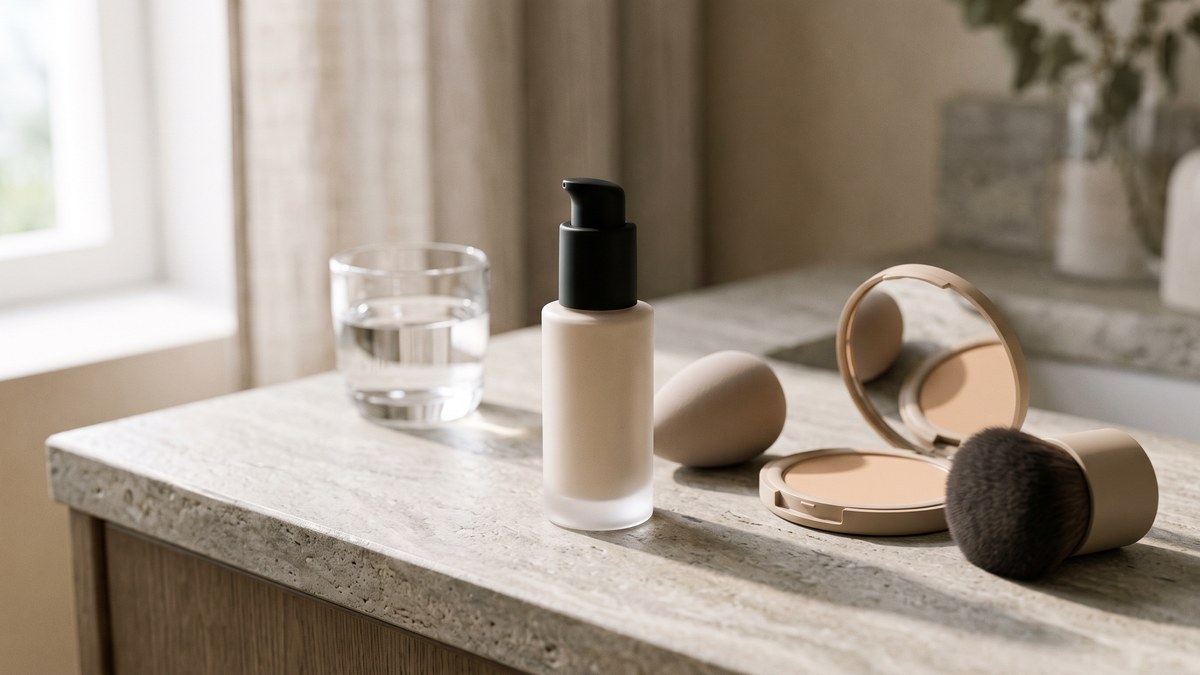
Foundation separates on oily skin for three reasons: sebum lifting the base, skincare that has not finished absorbing, or a primer and foundation built on incompatible bases. Fix it by cleansing without leaving a film, using a light gel moisturiser and waiting 60 to 90 seconds before makeup, pairing a water based primer with a water based foundation, then pressing powder only where you actually get oily. Two thin layers with a pause between them outlast one thick pass every time.
Oily skin does not ruin foundation on its own. What breaks a base down is usually a short chain of avoidable things: a moisturiser that has not sunk in, a primer working against the foundation on top of it, too much product in one pass, and powder pressed into places that were never oily to begin with.
Most advice stops at prep your skin and use a primer. That is fine as far as it goes, but it does not explain why your base still splits around the nose by 11am, or why a primer everyone raves about pills into little grey rolls on your face and not theirs. Both have specific causes and specific fixes.
This guide runs in the order you would actually do it: work out the pattern first, then prep, then match your formulas, then apply and set, and finally rescue a base that has already gone. It is written for oily and combination skin in UK conditions, where a humid August afternoon and a dry centrally heated flat in November are both difficult days for different reasons.
Work Out Where Your Foundation Is Splitting
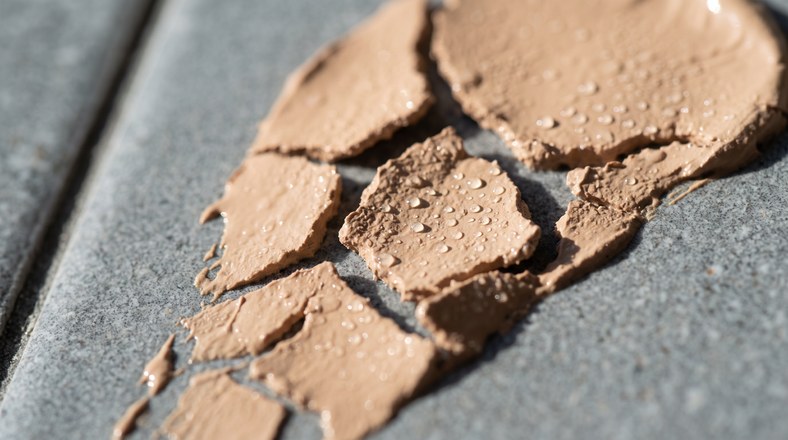
Foundation separates in three recognisable patterns, and each one has a different fix. Work out which one you have before you change anything, otherwise you will buy a new foundation to solve a skincare problem.
It splits within minutes and rolls into tiny balls
This is pilling, and it is nearly always an absorption or compatibility problem rather than an oil problem. Either your skincare had not finished sinking in when the makeup went on, or the primer and the foundation are built on different bases. The third section deals with that.
It looks fine for a few hours, then breaks up on the nose, forehead and chin
This is sebum. Your own oil gradually dissolves the film of foundation and floats it off the skin. The answer is not more foundation, it is better prep, targeted setting and a realistic blotting routine during the day.
It is patchy from the very first pass and clings to flaky bits
This is dehydration and surface texture, and it catches out a lot of oily skinned people who assume they never need hydration. Skin that is oily and dehydrated at the same time is extremely common, particularly if you use acids or a retinoid several times a week. Foundation grabs onto the dry flakes and skips the smooth skin between them.
Three quick checks
- Press a plain tissue to your nose two hours after cleansing, with nothing else on the skin. Visible oil means sebum is your main problem.
- Run a clean fingertip across your cheek. If it catches or feels papery, texture and dehydration are involved.
- Put primer on a small patch of jaw, wait two minutes, then buff foundation over it. If it rolls, you have a compatibility problem.
If your skin is currently peeling, stinging or looking raw, ease off exfoliating acids and retinoids for a week or two and let the surface settle before you judge any makeup product. Nothing sits evenly on a compromised surface, and no primer will hide it.
 Featured
15% OFF*Limited offer
One Sunday. A week of food, sorted.
23 high-protein recipes, cycle-synced for women who lift.
23 recipes · 60-page PDF · Instant download
£19.20 £16.32
See it on Etsy*Seller's discount on Etsy - may end at any time.
Prep Oily Skin Without Overloading It
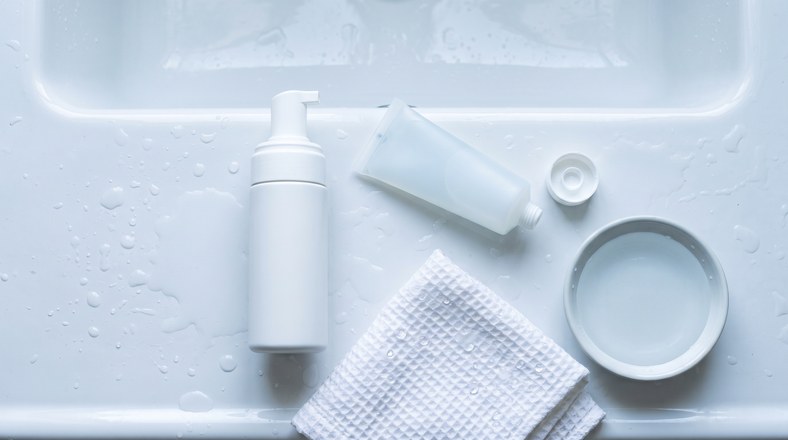
The target for oily skin is a clean, evenly hydrated, touch dry surface. Not stripped, not slippery.
Cleanse without stripping
Use a gel or foaming cleanser that rinses clean and leaves no film. Rich cream cleansers and balms are lovely at night, but they can leave a residue that foundation slides around on. Use lukewarm water rather than hot. Hot water leaves skin flushed and tends to push oil production up over the following couple of hours.
Pat dry, do not rub
Rubbing with a towel roughs up any flaking and makes patchiness worse. Press a clean flannel against the skin and leave it very slightly damp.
Hydrate lightly, then wait
A water gel or light lotion gives oily skin the water it needs without the emollient load that makes makeup slip. A blueberry sized amount covers a whole face. Use less on the nose and a little more on any dry patches. Save facial oils, thick balms and rich night creams for evenings when you are not wearing makeup.
Then wait. Sixty to ninety seconds is usually enough for a light gel, but judge it by touch rather than the clock. Press a knuckle to your cheek: it should feel cool and dry, not tacky or slippery. If you are wearing SPF, and you should be, give it a full three to five minutes and choose a fluid or lotion rather than a rich cream.
The prep order, timed
- Cleanse with lukewarm water for 30 to 60 seconds, rinse thoroughly
- Pat dry, leave the skin slightly damp
- Light gel moisturiser, blueberry sized, less on the nose
- Wait 60 to 90 seconds until the skin is touch dry
- SPF, then a further 3 to 5 minutes before anything else
Match Your Primer and Foundation to the Same Base
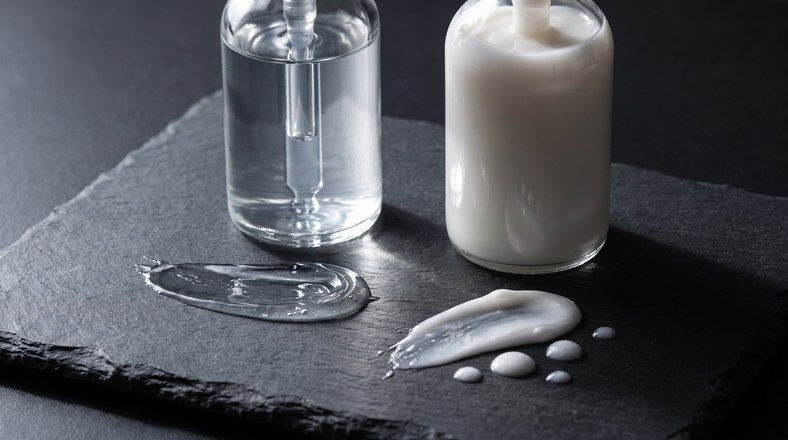
This is the step almost nobody mentions, and it explains most of the primers that work brilliantly for one person and pill on sight for someone else.
Water based or silicone based
Turn the bottle over and read the first five ingredients. If water or aqua comes first and nothing ending in -cone or -siloxane appears near the top, treat it as water based. If dimethicone, cyclopentasiloxane or a similar silicone sits in the first three, treat it as silicone based.
Water based products struggle to sit on top of a silicone layer. The water in the foundation beads on the slick surface, gathers into droplets and drags into little grey rolls as you blend. Pair like with like: a gel or water based primer under a water based foundation, a silicone primer under a silicone foundation. Most budget foundations sold on long wear are silicone heavy, while most gel primers marketed as gripping or hydrating are water based, which is exactly why that pairing pills so often.
Use less primer than you think
A pea sized amount covers a whole face, concentrated on the T-zone and around the nostrils. Pat it in with fingertips rather than rubbing it around, and let it turn tacky before foundation goes on. Gel primers usually need about 60 seconds. Going in while a grip primer is still wet is the quickest way to make it roll.
The two minute patch test
Before you commit to a full face, put primer on a two centimetre patch along the jaw, wait two minutes, then buff foundation over it with whatever tool you normally use. If it stays smooth, the pair works. If it beads, rolls or turns grey, one of the two has to change, and the cheaper swap is usually the primer.
Apply Thin Layers and Set Only Where You Get Oily
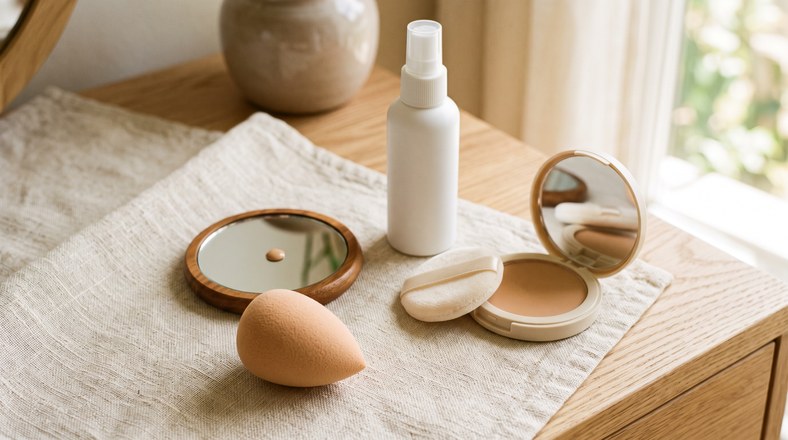
Oily skin does not need more foundation. It needs less foundation, applied more carefully, and set in fewer places.
Half a pump, warmed first
Dispense onto the back of your hand rather than straight onto the face. It warms slightly, and you can see exactly how much you are working with. Half a pump is enough for most faces as a first layer.
Press it in, then build
Stipple with a damp makeup sponge or buff with a dense brush, starting in the centre of the face and working outwards. The centre needs the most coverage and the edges need almost none. Let the first layer set for 30 to 60 seconds, then add a second thin layer only where you still want coverage. Two thin layers with a pause between them survive a working day far better than one thick pass.
Powder only where you get oily
Press powder into the skin with the flat of a puff or a small dense brush rather than sweeping it across. Sweeping drags foundation out of place before it has properly set. For most oily and combination skin that means the sides of the nose, the centre of the forehead and the chin, and nothing on the cheeks. Powder pressed over an area that was never oily is one of the most common reasons a base looks visibly split by mid afternoon.
Finish with setting spray, properly
Hold the bottle 20 to 30 centimetres away and mist in an X across the face, then a T, so the whole surface gets an even coat instead of one drenched patch. Let it dry on its own. Touching or blotting while it is still wet undoes the point of it.
Fix a Base That Has Already Split
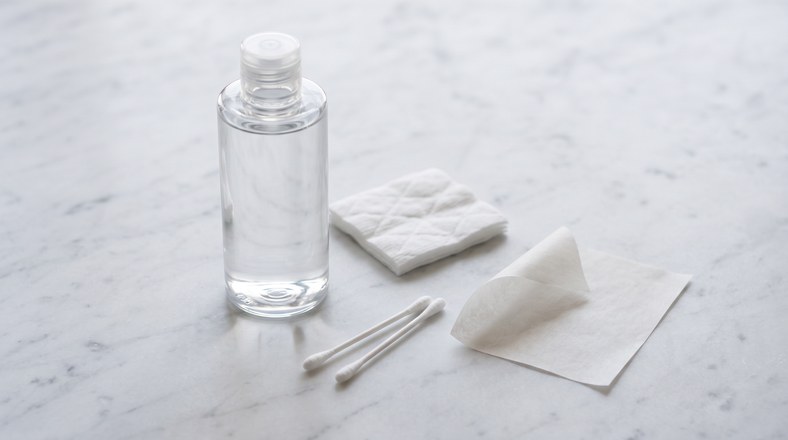
The instinct when a base splits is to paint more foundation over the top. That almost always makes it worse, because you are adding fresh product to a surface that is already oily and unstable.
Blot first, always
Press a plain tissue, a sheet of blotting paper or the folded corner of a napkin onto the area for five to ten seconds. Press and lift, do not wipe. You are lifting the oil that broke the film, not removing the makeup.
One small patch: spot repair it
For a single broken area, usually the sides of the nose, dip a cotton bud in micellar water and lift that patch off completely. Let it air dry for about 30 seconds, tap a small amount of foundation back with a clean fingertip, then press powder over it. Rebuilding one small area is quicker and looks far better than trying to blend over the damage.
Whole T-zone gone: reset it
Blot the entire area, press powder in with a puff, then mist lightly with setting spray and leave it alone. Do not add foundation at this stage. A slightly lighter, cleaner T-zone reads much better than a rebuilt cakey one.
What to carry
- Blotting papers, or plain tissues if you would rather not buy anything
- A compact of pressed powder with its puff
- Two or three cotton buds and a small bottle of micellar water
On a humid UK summer day, expect to blot once mid morning and once after lunch. That is normal maintenance for oily skin rather than a sign your base has failed.
Frequently Asked Questions
Does primer actually help oily skin, or make separation worse?
It helps when the base matches your foundation and you use a small amount. It makes things worse when a silicone primer sits under a water based foundation, or when you apply so much that it never fully sets. If your foundation genuinely wears better with no primer at all, that is a real result and worth keeping.
Why does my foundation always separate around my nose first?
The sides of the nose carry the densest oil glands on the face, they get touched and rubbed more than anywhere else, and the crease collects product. Use the smallest amount of moisturiser and primer there, press rather than sweep when you powder, and expect that to be the first area you blot.
Can I stop foundation separating without using powder?
Prep and formula matching will improve it a lot on their own, and some oily skinned people do fine on setting spray alone. Most will still get longer wear from a light press of powder on the T-zone only. If powder makes you look dry or cakey, you are almost certainly using too much of it or spreading it too widely.
How long should I wait between skincare and foundation?
Around 60 to 90 seconds after a light gel moisturiser, and 3 to 5 minutes after sunscreen. Judge it by touch rather than the clock. The skin should feel cool and dry, not tacky or slippery, before anything else goes on top.
Related Reading
- How to Make Your Makeup Last in Hot Weather
- How to Layer Skincare in the Right Order
- The Best Face Cleansers for Every Skin Type
- The UK Drugstore Makeup Bag: 8 Budget Classics Compared
- Maybelline Grippy Serum Primer review
Disclaimer: This article contains Amazon affiliate links. We may earn a small commission from qualifying purchases at no extra cost to you.